
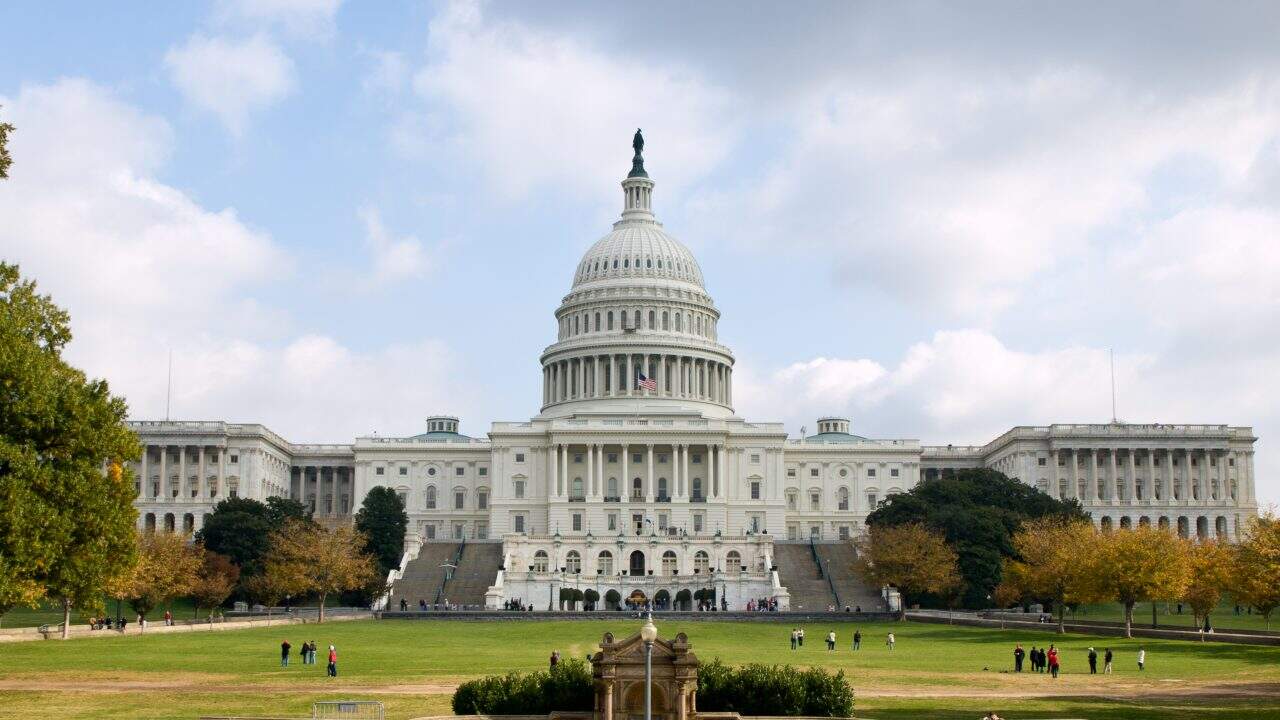
 United States Capitol by William Warby is licensed under Creative Commons.
President Trump’s executive order halting collective bargaining at federal agencies that work on national security issues has cleared its latest legal hurdle.
Back in late March, President Trump signed and issued an executive order using authority granted by the Civil Service Reform Act of 1978 to suspend collective bargaining with public-sector unions across an estimated 67 percent of the federal workforce. In particular, the order released by the White House detailed an end to collective bargaining for most international, interior security, energy and economic security, and defense agencies on account of the national security missions these programs and agencies engage in on the regular.
The White House specifically invoked Section7103(b)(1), established by the Civil Service Reform Act of 1978, which says the President “may issue an order excluding any agency or subdivision thereof from coverage under this chapter if the President determines that (A) the agency or subdivision has as a primary function intelligence, counterintelligence, investigative, or national security work, and (B) the provisions of this chapter cannot be applied to that agency or subdivision in a manner consistent with national security requirements and considerations.”
For nearly a decade, Americans for Tax Reform has directly advocated and petitioned for using said authority granted to the President under 5 U.S.C. § 7103(b) to de-unionize federal agencies with national security functions. Most recently, Americans for Tax Reform has been widely circulating a memo explaining how President Trump can use these powers to end collective bargaining at a number of agencies, with a central focus on the Department of Defense, the Department of Veterans Affairs, and the Transportation Security Administration (TSA). ATR notes in the memo that, “These agencies are only a start. There are further subdivisions within the Department of Transportation, Department of Homeland Security, Department of the Treasury, Department of State, and other government bodies which can be excluded from inefficient collective bargaining rules under the presidential powers contained in 5 U.S.C. § 7103(b).”
In late April, U.S. District Judge Paul Friedman in Washington, D.C., blocked the order on account of a supposed violation of “federal workers’ labor rights and the U.S. Constitution.” Judge Friedman’s injunction of the executive order follows a trend of judges nationwide roadblocking President Trump’s agenda.
However, a U.S. appeals court from the District of Columbia slashed the injunction last week, allowing for the collective bargaining ban on most federal workers to take effect once again. As a result, public-sector union bosses affiliated with 75 percent of the unionized federal workforce will no longer be able to negotiate against the American taxpayer. This will, in turn, save the American taxpayer money and increase the efficiency of government as agencies are redirected toward their actual missions.
These policies have been generated in response to the snowballing effect of public-sector labor unions, whose bosses have swamped government agencies with an inefficient and excess allocation of funds. Because of these union boss abuses, tax dollars have even been paying full-time salaries to union boss lobbyists working to secure themselves higher wages for doing less work. Additionally, the Institute for the American Worker has found that the time and resources spent on collective bargaining has likely cost hundreds of millions of dollars for the taxpayer.
As demonstrated, banning collective bargaining with public-sector unions at national security agencies is not only a feasible plan, but one which could return millions to the American taxpayer, increase the efficiency of the government, and allow agencies to reorient themselves toward their actual purpose and mission.