

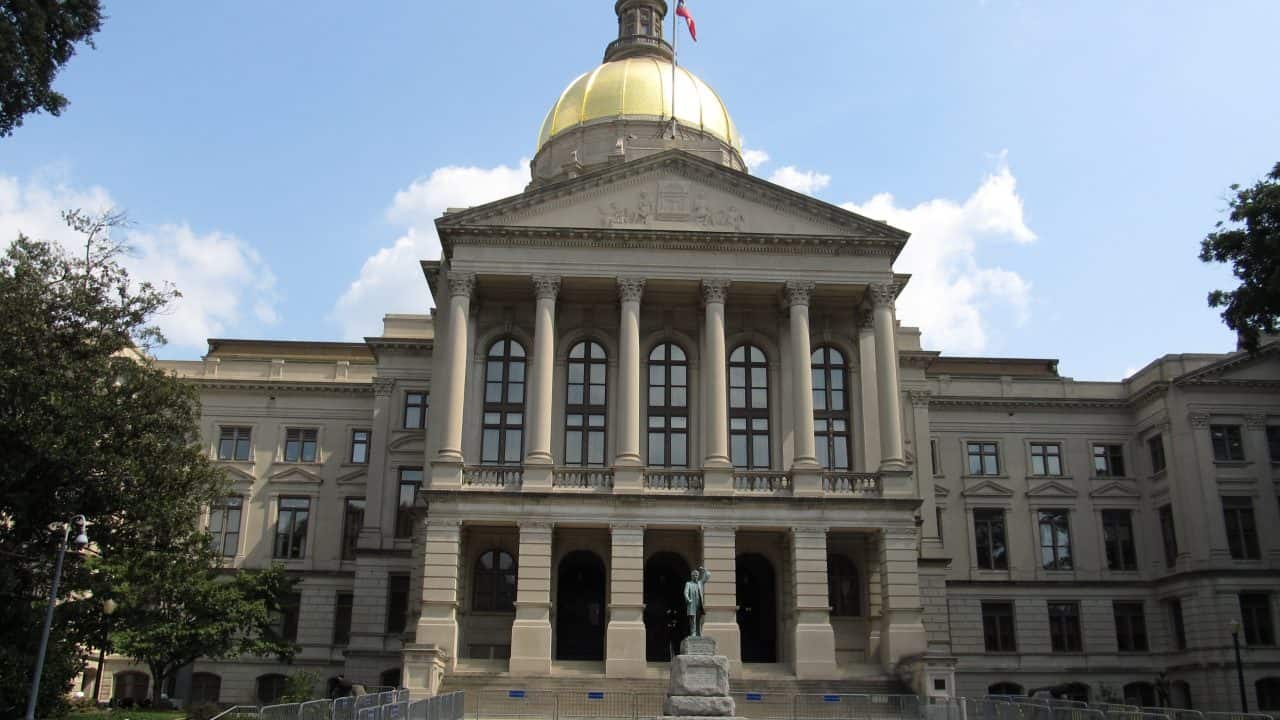
 New Jersey State Capitol by Carol M Highsmith is licensed under CC 1.0 Universal Deed
In the midst of an affordability crisis that has demanded the attention of politicians from the right and left, New Jersey legislators are considering a radical plan that would make things much worse.
Often referred to as the climate superfund, the misleadingly named “Polluters Pay to Make New Jersey More Affordable Act” (A. 3735) will be heard in the Assembly Appropriations Committee June 23rd.
The policy would loot energy producers for at least $50 billion dollars over past carbon emissions, worldwide.
Yes, the state of New Jersey would tabulate worldwide carbon emissions for companies, and impose what is effectively a massive retroactive tax on them – even though they were following the law during their past operations.
Energy costs have been a big focus as Americans – and New Jersey residents – feel the sting of cumulative inflation from money printing, COVID spending, and Biden-era spending packages.
There are many reasons New Jersey families and businesses are facing higher costs than most Americans. The state has the highest business tax in the nation, high income and sales taxes, and usually ranks as having the worst property tax burden in the U.S.
New Jersey also imposes various regulations driving up the cost of energy, including being a member of the northeast carbon tax pact known as the Regional Greenhouse Gas Initiative which costs $400 million-plus per year (and costs are rising).
Reducing any or all of the state’s high taxes, or leaving RGGI, as Governor Christie did, would reduce the cost of living in New Jersey. But that is not the point of the climate superfund.
The superfund is simply an excuse to loot energy producers in order to spend more money on politically-entrenched interests. The bill allows the state to use $50 billion in bonds to immediately start spending their planned windfall.
The Department of Energy, Department of Labor, Department of Transportation, Department of Community Affairs, Department of Agriculture, and others, would shower pet projects with cash. Unions would benefit as all these projects go to them thanks to project labor agreement and prevailing wage rules.
This outrageous, likely unconstitutional, scheme will make New Jersey a more expensive place to live, work, or run a business. It would make the state even more uncompetitive, driving out taxpayers and continuing the trend of businesses leaving the state. Samsung, a darling of the A.I. computing boom, just announced its departure, adds to the loss of 7 fortune 500 companies since 2018.
New Jersey just saw a glimpse of sanity as Gov. Sherrill lifted the state’s moratorium on nuclear power. Legislators need to follow that glimmer, reject the outrageous superfund, and start moving New Jersey toward a brighter future.