

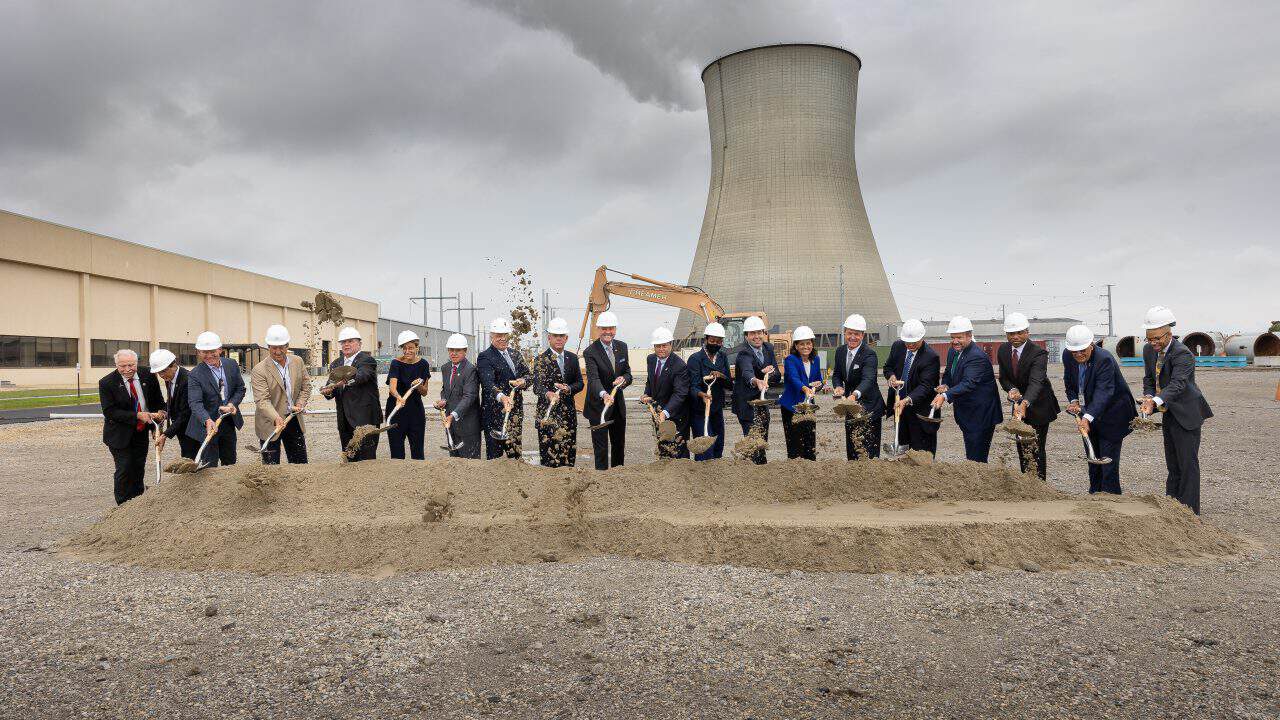
 Nuclear Power Plant by Shawn T. Moore is licensed under CC 2.0
A glimmer of sanity shone through in New Jersey, as the state opened up, bringing new nuclear power capacity online.
On April 8, 2026, Governor of New Jersey Mikie Sherrill signed legislation that would end the state’s de facto nuclear moratorium. Pushed by a bipartisan coalition of state legislators, including Senate President Nicholas Scutari and Republican Budget Officer Declan O’Scalon Jr., it is clear New Jersey is trying to tackle the rising energy costs plaguing the state.
Previously, New Jersey’s Commissioner of the Department of Environmental Protection was barred from issuing permits for nuclear energy power plants unless there was federal approval of a permanent high-level waste repository, even as ample evidence shows that on-site dry cask storage is safe and effective. This constrained New Jersey’s energy options and greatly limited the supply available.
The impacts are very clear. In 2018, the Oyster Creek Nuclear Generating Station, one of the oldest nuclear power plants in the United States, had to be shut down due to the high cost of complying with the New Jersey Department of Environmental Protection standards.
As basic economics would suggest, constraining supply while demand grows leads to high prices, and that is what New Jersey has been experiencing. According to New Jersey Policy Perspective, New Jersey residents pay a 20% higher rate for electricity than the national average. This is made all the worse by PJM, the regional grid operator for Pennsylvania, New Jersey, and Maryland, slow-walking connecting energy projects to the grid.
Additionally, New Jersey’s participation in the Regional Greenhouse Gas Initiative (RGGI), an interstate cooperative effort to limit CO2 emissions, has worsened the situation by effectively subsidizing inefficient power plants in non-RGGI states, increasing costs and emissions.
Even with the tough regulatory environment, it is clear that New Jersey still relies on nuclear energy. The two remaining nuclear power plants in New Jersey account for 40% of the in-state electricity generation.
This new law would modify the Coastal Area Facility Review Act to allow nuclear power plants that comply with Nuclear Regulatory Commission standards. This cuts burdensome red tape and allows for more energy to be built in the state.
Speaking at the Hope Creek Nuclear Generating Station in Salem County, New Jersey, Governor Sherrill said: “One law required any new project to point to a method of disposal that, quite literally, does not exist. It was written in the 1970s, tied to a technological requirement that made sense then but not today.”
Governor Sherrill is right. It is 2026, and we should not be held back by the fearmongering of the 1960s and 70s. At a time when New Jerseyans are paying more for energy and having to choose between heat and food, streamlining and eliminating these burdensome regulations is a step in the right direction toward a more affordable New Jersey. Other blue states need to recognize that nuclear energy must be included in any clean energy movement and start pushing to cut the red tape that’s blocking it.