

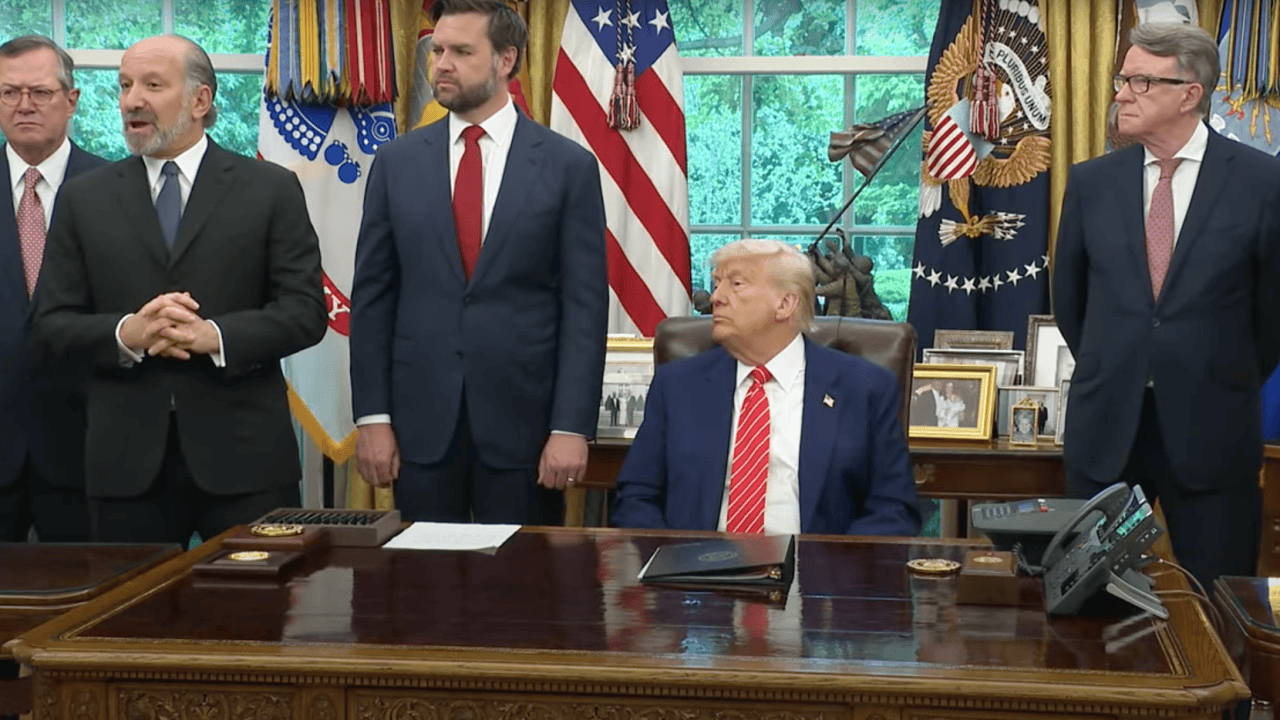
President Trump and Prime Minister Starmer announced the U.S.-U.K. trade deal billed as a win for American workers and companies. The agreement cuts tariffs, opens up billions in new export opportunities for U.S. beef and ethanol and streamlines customs to speed up trade. But for all the celebration, major problems that have severely damaged U.S. – U.K. trade relations remain unaddressed: U.K. policies that punish and discriminate against U.S. tech companies, such as the Digital Services Tax (DST) and antitrust rules, are left on the table. This deal is a step forward, but it’s far from finished business.
Despite the fanfare, the U.S.-U.K trade deal fails to address the most pressing issues facing American businesses.
The U.K’s Digital Services Tax, a protectionist measure that unfairly targets American tech companies such as Amazon, Google and Meta, remains intact. The DST singles out U.S. innovations for punishment simply because they’re successful. This trade deal does nothing to eliminate this discriminatory policy.
Even worse, the Digital Markets, Competition and Consumer (DMCC) Bill, a far-reaching regulatory regime designed to break up and restrict large U.S. companies in the U.K.-was also entirely overlooked.
The U.K. isn’t alone in targeting U.S. tech. A factsheet from the CCIA shows that EU digital rules cost major American firms over $2.2 billion a year in compliance alone. Add in fines and legal risks, and the total exposure could exceed $20 billion annually. The U.K.’s DST and DMCC follow the same playbook—and this trade deal does nothing to stop them.
Rather than promoting fair, pro-growth digital trade, the agreement turns a blind eye to the anti-American, anti-innovation policies distorting the market and violating the spirit of reciprocal trade. These measures aren’t just unfair, they’re hostile to free enterprise and they threaten jobs, investment and American technological leadership.
A true “new paradigm” in the U.S.-U.K. trade needs to address these problems and defend American innovation from biased antitrust policy, targeted taxes, and heavy-handed regulation. Anything less is just business as usual.