

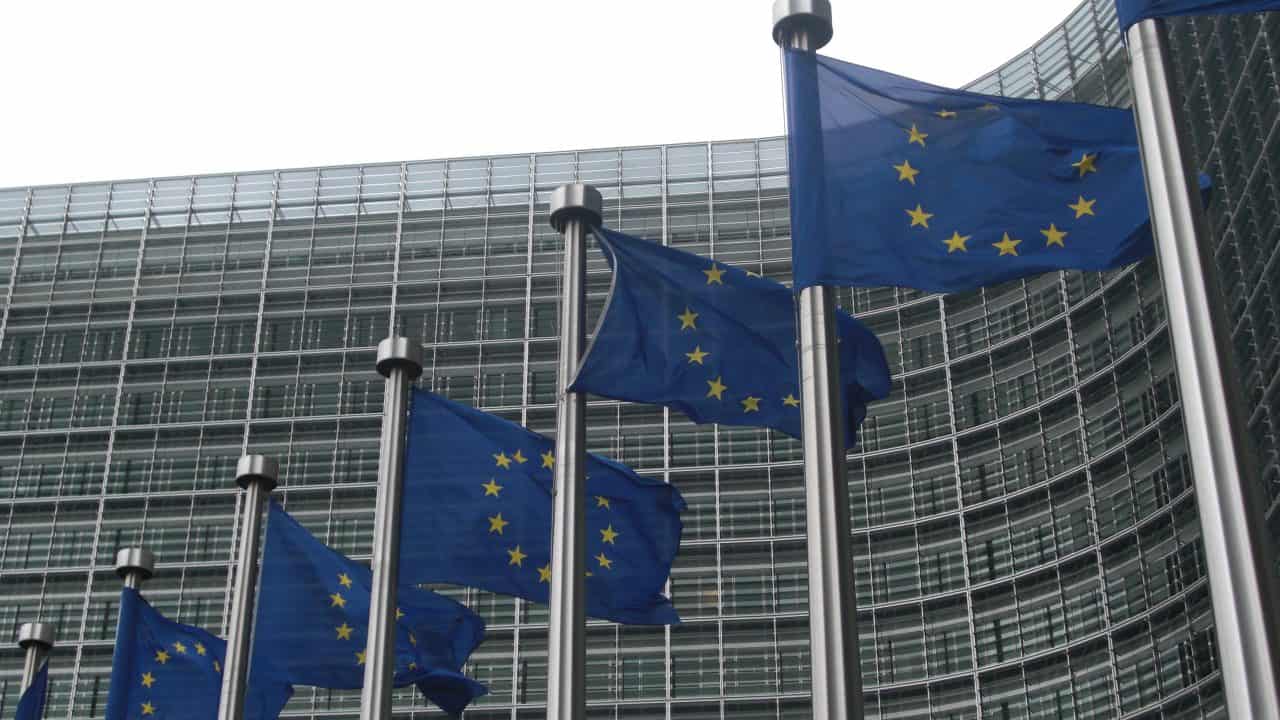
 European Commission Flags by Sébastien Bertrand is licensed CC Attribution 2.0 Generic license
The EU is musing about a potential Digital Services Tax (DST) that would apply to the entire Union. This is a grave threat to digital commerce and freedom.
On June 2, the European Commission estimated it could rake in roughly $5.8 billion every year by levying a 3% DST on firms that generate over $750 million in annual global revenue. The commission is also eyeing a 3% tax on online gambling and a 0.1% tax on cryptocurrency transactions, projected to yield €1.9 billion and €3-4 billion, respectively.
Unfortunately, DSTs are not without precedent in Europe. Within the last 9 years, ten European countries have already implemented a DST. One of them, Poland, is even attempting to expand their DST. Seven other countries are either considering or actively developing one.
EU leaders have hungrily watched these developments and now believe they can implement a DST of their own. Not only would this tax send more money to fund the sprawling EU bureaucracy, but it would establish an independent revenue stream for the European Commission. Andreas Hellmann of the Tholos Foundation summarized the proposition as a “first step to more European Union independence.” Independence, that is, from its very member states.
The tax is blatant discrimination against American firms. The Tholos Foundation found that over 60% of firms liable for DSTs in Spain and Turkey were American firms. Investigations by the United States Trade Representative found DSTs enacted across Europe to unfairly target American companies and restrict U.S. commerce. U.S. tech firms already pay nearly $3 billion annually due to DSTs––a figure that could double by 2030.
However, the cost of these taxes will ultimately fall on consumers. When the UK implemented its 2% DST in 2020, Google, Amazon, and Apple all followed suit by raising advertising charges, marketplace fees, and app store commissions by 2%, respectively. While the tax is framed as making tech giants pay their “fair share,” the real cost will be borne by everyday users.
DSTs also violate fundamental principles of taxation. Traditionally, governments may only tax what they protect. Because no European country provided the institutional infrastructure for the success of U.S. tech firms, seizing revenue from them is not justified. These companies also have no say in the political process of the foreign countries in which they operate, meaning that this tax is little more than extortion. For the millions of Americans that use these platforms, this is the kind of taxation without representation that their ancestors fought against 250 years ago.
The new, perverse form of taxation represented by DSTs come from the Organization for Economic Cooperation and Development’s “Pillar One” of international taxation goals, which aims to move the burden of taxation to the locus of consumption rather than that of production.
The EU needs to learn that their citizens and those of the U.S. are not simply an ATM from which they can draw cash. The Trump Administration has already sent strong messages opposing the DSTs. Under Section 301 of the 1974 Trade Act, the United States Trade Representative can investigate and retaliate against foreign countries that unfairly burden American commerce. President Trump will have to not only reiterate his opposition to DSTs but threaten tangible retaliation measures to protect consumers at home and abroad.