

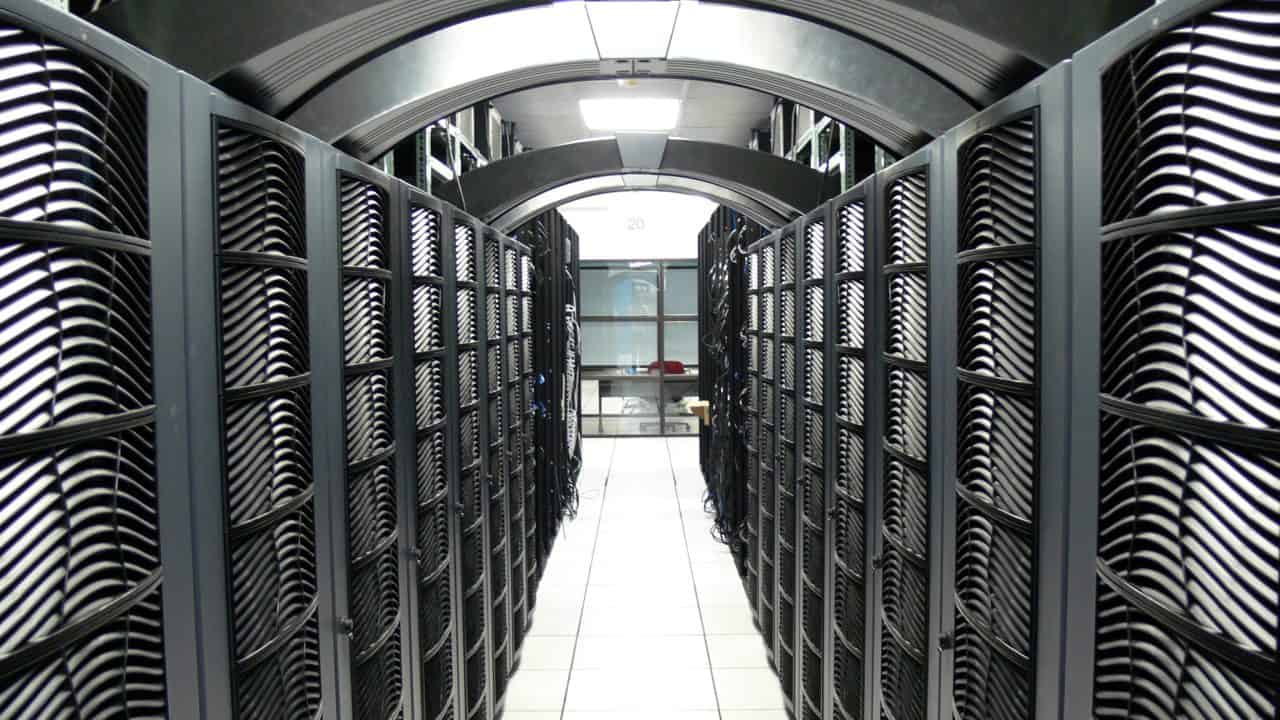
 Virginia Tech - data center by Christopher Bowns is licensed under Creative Commons Attribution-Share Alike 2.0 Generic license
America is facing a rapidly growing demand for electricity, driven in part by artificial intelligence and the expansion of data centers. Instead of responding to that demand by building needed generation and transmission infrastructure, utilities are caving to growing backlash against data centers – even after projects have already been approved.
Data centers have become highly visible symbols of the AI boom. Their enormous electricity consumption has generated political opposition and regulatory scrutiny, with critics questioning whether utilities should build new infrastructure to accommodate them. In some cases, that scrutiny has contributed to utilities pausing or reconsidering projects that had already received approval. This risks creating a self-inflicted electricity shortage at precisely the moment when America needs more reliable power.
PJM Interconnection, the nation’s largest regional transmission organization, is at the center of this challenge. PJM serves the region with the country’s highest concentration of data centers, covering Pennsylvania, New Jersey, and Maryland, and is already facing a significant capacity shortfall. An earlier capacity auction failed to attract enough commitments to satisfy projected demand on peak-use days, prompting PJM to pursue a special auction intended to address a 6.8-gigawatt shortfall.
The Federal Energy Regulatory Commission accepted PJM’s proposal to procure additional power but suspended implementation until February 28, 2027, while questions surrounding cost allocation, collateral requirements, and exit rules are addressed.
The concerns themselves are legitimate. Existing customers should not be forced to subsidize infrastructure built exclusively for new customers, particularly if those customers can later abandon their commitments. But addressing those concerns should not mean making it harder to build the electricity supply America needs.
That creates a serious problem for the electricity market. Power plants and transmission infrastructure can’t be built overnight. Projects require years of planning, financing, permitting, and construction. When utilities begin putting approved projects on hold because of uncertainty surrounding future demand or regulatory treatment, the consequences extend well beyond the data centers themselves.
America can’t simply decide that it wants less electricity demand without also accepting the economic consequences of limiting electricity supply.
Data centers are new electricity customers. Their demand can create incentives to build new generation and transmission, increasing available supply, and potentially benefiting the broader electricity market. If policymakers believe particular customers should bear the costs associated with the infrastructure built to serve them, the answer is transparent cost allocation and enforceable contracts – not stopping construction after the need for additional power has already been established.
Earlier this year, the Trump administration pushed for a one-time auction using 15-year contracts to encourage generators to make longer-term commitments to meet anticipated demand. Long-term contracts can give generators greater certainty, encourage investment in new capacity, and ensure that developers have customers for the electricity they produce.
If the concern is that data centers could leave customers responsible for their costs, the solution is to structure those contracts appropriately. Stronger collateral requirements, enforceable commitments, and clear exit rules can protect existing customers without preventing new generation from being built.
The alternative is increasingly difficult to justify. If utilities pause construction, regulators delay procurement, and developers become uncertain about whether new projects will be approved or compensated, America could find itself with too little generation to meet demand.
That would mean higher electricity prices, greater reliability concerns, and potentially slower economic development – not just for data centers, but for manufacturers, businesses, and households that depend on the same electric grid.
The debate should therefore focus on how to responsibly accommodate new electricity demand, not whether the demand should exist in the first place.
America needs transparent cost allocation, reliable long-term contracts, regulatory certainty, streamlined permitting, and more generation. A moral panic that causes utilities to pause infrastructure after already being approved is counterproductive.
The data center boom is not going away. Neither is America’s need for reliable electricity.
If policymakers want the economic benefits of AI, advanced manufacturing, and a growing digital economy, they must be willing to build the power infrastructure necessary to support them.