
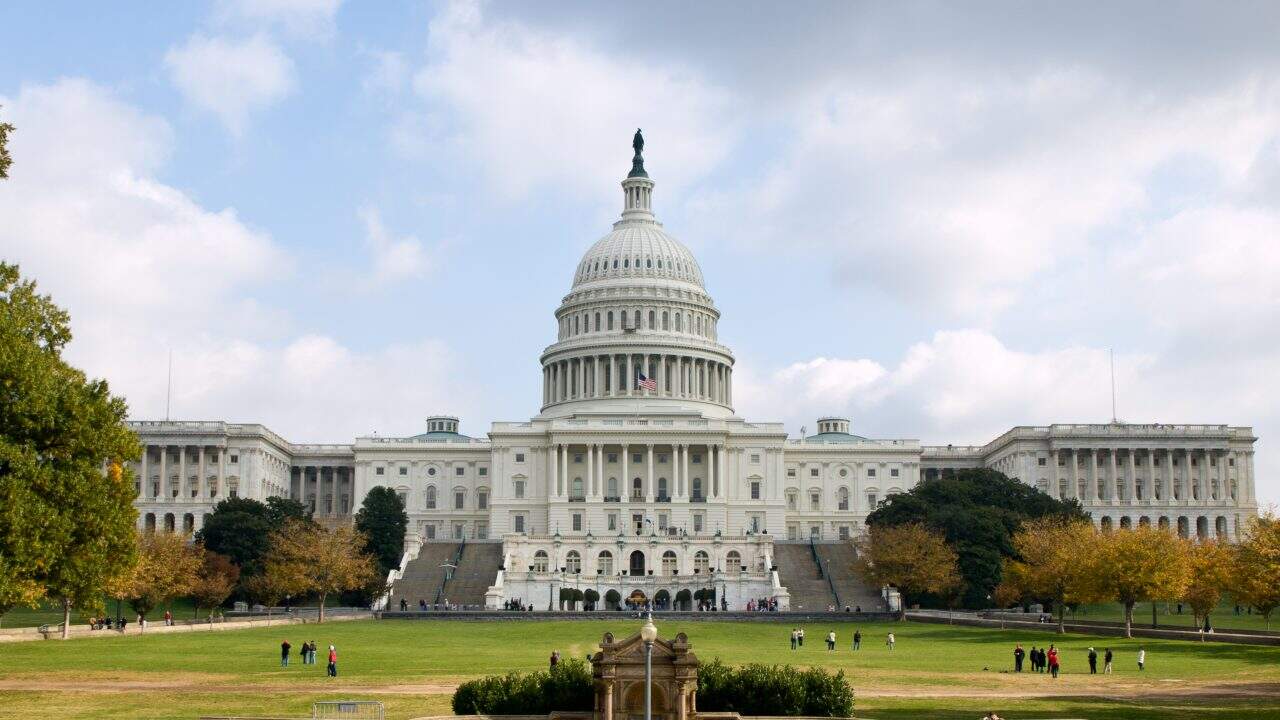
 United States Capitol by William Warby is licensed under Creative Commons.
Under the One Big, Beautiful Bill Act passed by the House, the Federal Communications Commission would have the authority to hold Spectrum auctions for the first time in nearly four years. The FCC would also be tasked, along with the National Telecommunications and Information Administration (NTIA), with finding 600 MHz of spectrum for a pipeline for future actions and selling it within six years. These auctions are a win for innovation and are projected to generate nearly $90 billion in revenue that helps pay for the bill’s defense and border security spending without raising taxes.
The 600 MHz in question can come from Spectrum that is under exclusive government use, non-government use, or shared use. This will sufficiently sustain auctions over the next few years, and the bill imposes a timeline for ensuring this opportunity is utilized effectively and not wasted. At least 200 MHz must be auctioned within three years of enactment, and the remaining 400 MHz must be auctioned within six years.
Expected Revenue of Spectrum Auctions
Spectrum auctions have generated over $233 billion since 1994 while wireless investment has added $260 billion to GDP. Of this, $118 billion has come in since 2018 – demand is growing rapidly. In a Wall Street Journal op-ed earlier this month, Chairman Guthrie of the Energy and Commerce Committee revealed that the Congressional Budget Office has projected these auctions will generate $88 billion in revenue. This figure should factor in the 110 percent relocation costs the FCC is required to cover for incumbents to vacate the bands they are using, which comes out of the auction proceeds. But even if these costs exceed current estimates, CBO has a bizarre practice of scoring spectrum auctions at 50 percent their expected revenue on the off chance that the auction never takes place.
Absurd though this may seem given the black-letter law mandated auctions within six years and the very public willingness by FCC Chairman Brendan Carr to get it done, it nonetheless provides a ballpark for net revenue after relocation costs. CBO likely projected over $170 billion in revenue before cutting it in half, and demand is likely high enough to bring in more revenue than even that figure.
Not Only Will This Generate Revenue, but Improve Innovation Through Private Licenses
Aside from the revenue produced by these auctions, which will help preserve the Trump tax cuts, spectrum auctions move resources away from government and into the private sector through exclusive licenses. Giving licensees skin in the game akin to private property will encourage innovation well beyond what government can do with the spectrum. It could generate close to $400 billion in consumer benefits.
Next Steps with Budget Reconciliation
With the Budget Resolution narrowly passing the House on May 22, 2025, the Big, Beautiful Bill now moves to the Senate where leadership will have to manage a delicate balancing act between the more fiscally conservative and the moderate Republicans in the chamber. Budget reconciliation is one of the few processes by which Congress can bypass the Senate filibuster to pass legislation. The Senate’s standing rules usually allow any Senator to speak as long as they want to without time limits, and debate on any measure usually continues indefinitely until a supermajority of 60 Senators votes to “invoke cloture” – that is, end debate and proceed to a final vote. Since winning a 60-vote majority in the Senate is rare for either party, most measures must have bipartisan support to pass the Senate.
Under the Congressional Budget Act of 1974, the Senate and House can pass a budget resolution by a simple majority. Once a budget is established, they can pass one “reconciliation bill” each fiscal year, which “reconciles” future spending and revenue to the budget resolution. This too passes the Senate by simple majority so that a minority of 41 Senators cannot obstruct basic fiscal policy.
The resulting effect of this is that most of a party’s agenda must be passed by party-line budget votes if there is no bipartisan support. These budget items can only affect spending and revenue, so policy changes cannot ride on reconciliation votes unless there is a clear budgetary impact, per the Byrd Rule. Spectrum auctions raise revenue, so they easily clear this bar and have historically been authorized by reconciliation.
While most of the debate on this bill has been over the important issues of taxes and Medicaid reforms, the telecommunications portions deserve attention. Spectrum auctions will serve as a major revenue generator and encourage innovation. While so much of this bill is heavily debated, this spectrum auction policy is a clear and necessary step forward.
See also:
List of Tax Cuts in the Big Beautiful Bill
Americans Making $30,000 – $80,000 Will Get a 15% Tax Cut in the Big Beautiful Bill
No Tax on Tips in the Big Beautiful Bill Will Help Millions of Americans
Big Beautiful Bill Expands Tip Tax Credit to Barbershops and Salons
Big Beautiful Bill Repeals Biden-era IRS 1099-K Venmo Tax
Big Beautiful Bill Expands Child Tax Credit to $2,500
Big Beautiful Bill’s Opportunity Zone Tax Cuts Will Help Distressed Areas Across All 50 States
Big Beautiful Bill Expands Health Savings Accounts to Another 20 Million Americans
Five Myths About Medicaid Improvements in the Big Beautiful Bill
Every House Democrat Just Voted Against These Tax Cuts
Spectrum Auctions in Big Beautiful Bill Will Boost American Innovation
Big Beautiful Bill Includes Moratorium on State AI Regulation
Grover Norquist Op-Ed in The Daily Caller in Support of The Big Beautiful Bill
