

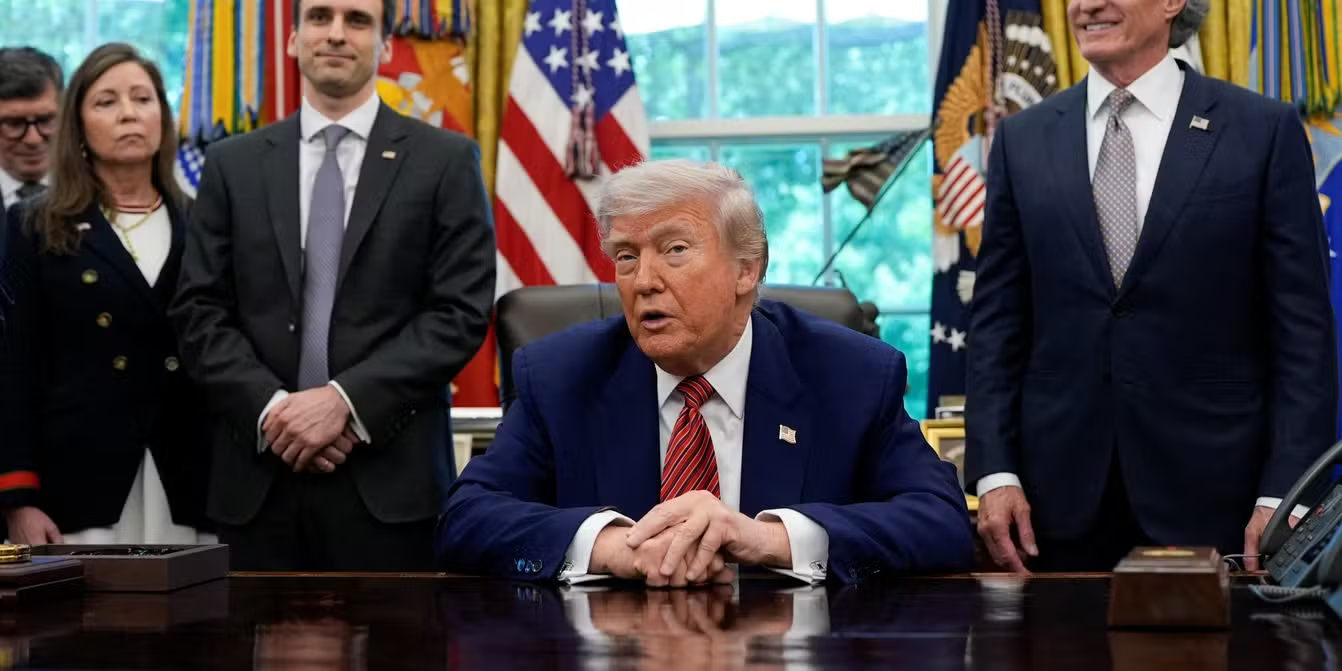
 Donald Trump is licensed under Creative Commons.
President Trump has reiterated his strong opposition to foreign policies that discriminate against the American tech sector, criticizing measures “designed to harm” U.S. companies operating abroad. These policies, including digital services taxes and strict content regulations, have been implemented by trade partners such as the E.U., systematically limiting the competitiveness of American enterprise.
Coming just days after the U.S. and E.U. published a joint statement formalizing a trade deal signed last August, Trump’s statement shows that tensions linger between the trading partners. He specifically referenced “digital service” and “digital market” regulations, a direct nod to the Digital Services Act (DSA) and Digital Markets Act (DMA) of the European Union.
The DMA and DSA were designed by the European Commission to target American digital service providers such as Apple and Google, subjecting them to heightened regulatory scrutiny. Under these regulations, European authorities have the power to impose large fines and pursue lengthy legal challenges—a situation Trump described as treating American tech companies like a “piggy bank.”
Trump signaled that he is willing to take strong action in response, including the possibility of reciprocal tariffs and export controls on critical technologies. The potential scale of these measures mirrors President Trump’s resolve to eliminate non-tariff barriers, echoing a previous episode with Canada.
A day before Canada’s digital service tax was set to take effect, Trump threatened to end ongoing trade negotiations if the tax was implemented. The next day, Canada paused, and eventually canceled, all plans for the tax’s implementation. President Trump may now be looking to replicate his success, applying pressure on trading partners to drop openly discriminatory policies.
The White House’s continued opposition to foreign trade policies seen as discriminatory has been welcomed by American tech companies, which have long raised concerns about regulatory practices in international markets.
Brussels’ current regulatory regime is a direct attack on global competition and innovation. For reciprocal trade and mutual prosperity to occur, Europe’s abuse of the U.S.’s most prosperous sector must end.