

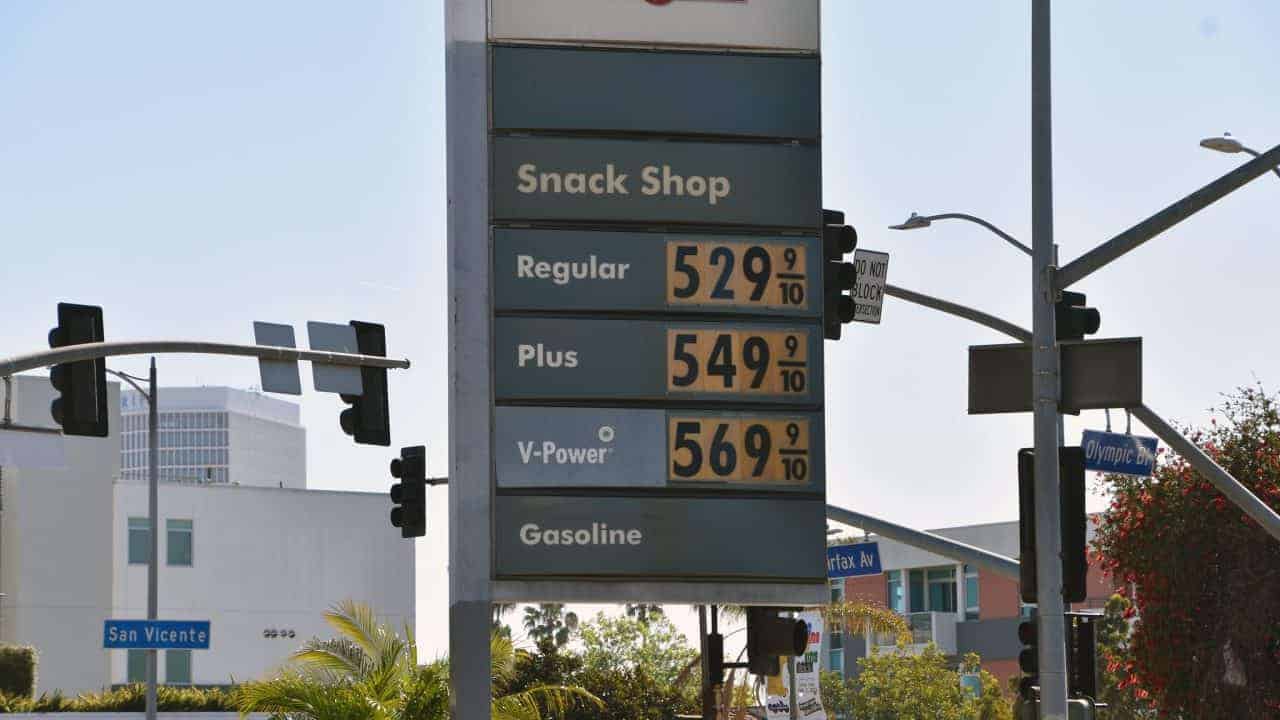
 Los Angeles Gas Prices
by
fourbyfourblazer, licensed under CC
Los Angeles Gas Prices
by
fourbyfourblazer, licensed under CC
Gavin Newsom’s disastrous attempt at restraining California’s sky-high gas prices has backfired so tremendously it’s almost comical. Just days after signing his new bill, ABX 1-2, several of the state’s largest oil refineries shut down operations, erasing 8% of California’s gas capacity instantaneously.
Problems, however, afflicted ABX 1-2 well before it passed. When Newsom advanced the bill in special session a month before the state legislature adjourned, forcing his legislature to decide without sufficient time to debate, Senate Pro Tem Mike McGuire nearly tanked the session in protest. Unfortunately, McGuire caved, bringing the bill to where it is now.
In essence, ABX 1-2 forces producers to maintain a minimum level of stock, no matter the circumstances, unless ordered otherwise by the state.
The inspiration for Newsoms’ rather draconian policy is his theory that suppliers are responsible for California’s inflated gas prices. According to him, oil refineries purposely deplete their stock and use the resulting supply shock as an excuse to raise prices.
For those who understand economics, his hypothesis has a number of glaring issues. However, most people don’t, and this talking point allows Newsom to blame the consequences of his policy on big companies, who the public is already primed to hate.
In other words, it’s a diversion tactic – it’s not meant to make sense.
But, before getting into that, let’s hear him out. Demand for gas is inelastic, meaning ordinary people, who have no choice but to buy it, will consume the same amount regardless of changes in price.
If you’re looking at that factor alone, then yes, an evil company would profit from making gas more and more expensive.
Fortunately, the gas industry is not a monolith: like all industries, it’s made up of competing companies. Oil refineries not only have to contend with each other’s prices, but with the cost of importing from around the world. Distributors like gas stations will flock to refineries that sell the cheapest gas in an effort to acquire more customers. Thus, market forces push prices down, counteracting potential nefarious incentives.
For Newsom’s argument to be true, every oil refinery in the world, independent of one another, would have to simultaneously pursue policy that depletes their own supply for no other purpose than to keep prices high.
But the governor’s bill wouldn’t make sense even if he were right: preventing refineries from selling their whole stock only makes their available supply smaller. According to Newsom’s own argument, lower supply enables oil refineries to raise prices. What would be the result, then, of forcing them to withhold their supply?
Higher prices, of course.
Let’s continue to grant Newsom’s premise. Oil refineries would have the incentive to raise prices all over America, right?
Why does California have the highest, then?
By the governor’s own logic, there must be another explanation. It doesn’t take a professional economist to implicate California’s highest-in-the-nation gas tax, as well as its “special blend” regulation: a requirement that refineries use expensive ingredients to produce cleaner, but higher costing, gasoline.
However, there actually is a situation where companies might be able to use up their supply on purpose. Unfortunately for Newsom, that situation has less to do with corporate greed, and more to do with bad policy.
Imagine a state that heavily regulates gas imports and refuses to build pipelines to anywhere else in the U.S., restricting itself effectively to gas within its own borders. Then, suppose that said state systematically pushes energy companies out with excessive environmental policy, reducing its suppliers down to a mere seven major refineries.
That state is California.
Whether refineries intentionally use up their supply or not, California’s energy policy has guaranteed that the entire gas market is subject to the choices of these seven producers. Competition which would normally prevent prices from rising too high no longer exists.
So, when Gavin Newsom claims that low supply is to blame for California’s gas prices, he might actually be right, but he’s completely ignoring the years of bad policy which caused the problem in the first place.
This isn’t the first time Democrats have turned to blaming so-called “corporate greed” when their own policy is the real culprit, a strategy that doesn’t backfire nearly as often as it should. One can only hope that oil refineries will continue to abandon California and force Governor Newsom to finally take a look inward. In the meantime, Californians can expect gas prices to continue rising, and it’s any self-respecting journalist’s civic imperative to show them exactly who to blame.