

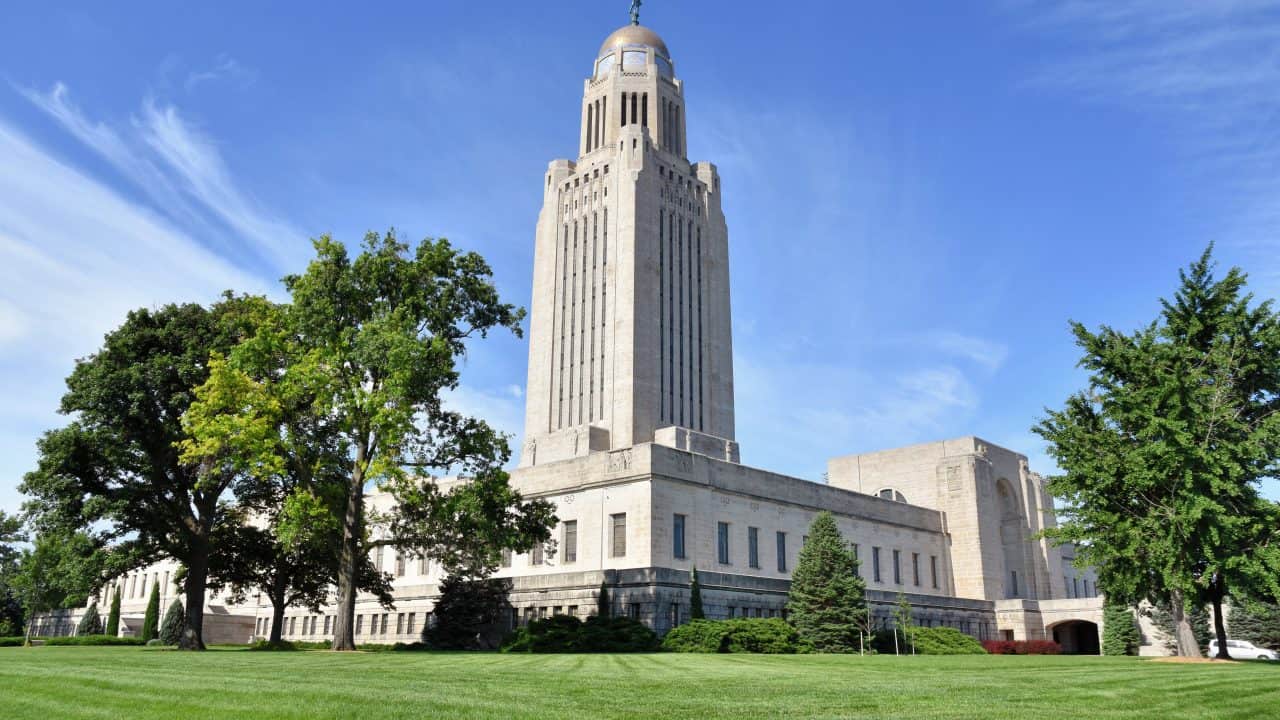
 Nebraska State Capitol by jpellegen is licensed under CC BY-NC-ND 2.0
Nebraska remains one of just five states in the country that imposes an inheritance tax, leaving families, farms, and small businesses with a tax bill simply for passing assets from one generation to the next.
A new report from the Platte Institute makes the case that it is time for Nebraska to finally repeal the more than century-old tax. The full report can be found here.
Nebraska’s inheritance tax dates back to 1901, before the state had either an income tax or a sales tax. More than 120 years later, the tax remains on the books and is collected at the county level.
The tax reaches well beyond wealthy estates.
Immediate family members, including children, parents, siblings, and grandparents, pay a 1 percent tax on inheritances exceeding $100,000. Aunts, uncles, nieces, nephews, and certain other relatives face an 11 percent tax above $40,000. Other beneficiaries can face a 15 percent tax on inheritances exceeding just $25,000.
The Platte Institute report notes that Nebraska is one of only two states, along with Pennsylvania, to impose an inheritance tax on immediate family members.
These low exemption thresholds can also create problems for family farms and small businesses. Unlike an inheritance consisting primarily of cash, families inheriting farms or businesses may receive valuable assets without the liquid cash necessary to cover the resulting tax bill. Beneficiaries may be forced to borrow money, sell other assets, or sell part of the inherited farm or business to pay the tax.
Nebraska’s inheritance tax raised $101.5 million in fiscal year 2026, according to the report, with more than 60 percent of collections coming from the class that includes children and other close family members.
Despite that revenue, inheritance tax collections can be highly unpredictable for the counties that receive them.
Over the past two years, 73 of Nebraska’s 93 counties experienced a year-over-year change in inheritance tax collections of at least 50 percent.
Polk County, for example, collected roughly $845,000 in fiscal year 2024 before collections jumped to nearly $3 million in 2025. One year later, collections fell to just $584,000.
Other counties experienced similarly dramatic swings. Greeley County collected $3.63 million in fiscal year 2024 before collections dropped to $427,000 the following year and $304,000 in fiscal year 2026.
The inheritance tax can also encourage taxpayers to change where they live and invest. The Platte Institute cites research finding that when a typical wealthy retiree relocates five years before death to avoid estate or inheritance taxes, a state could lose $1.73 in other tax revenue for every $1 eventually collected through the tax.
Nebraska’s inheritance tax also puts the state at a competitive disadvantage. Every state bordering Nebraska operates without an inheritance tax, and Nebraska is the only state west of the Mississippi River that still imposes one.
Nebraska has already taken significant steps in recent years to make its tax code more competitive, including lowering income tax rates and eliminating the state tax on Social Security benefits.
The inheritance tax is an outdated holdover that continues to tax family savings, farms, and businesses when they are passed to the next generation.
Forty-five states have figured out how to operate without an inheritance tax. Nebraska should become the next.