

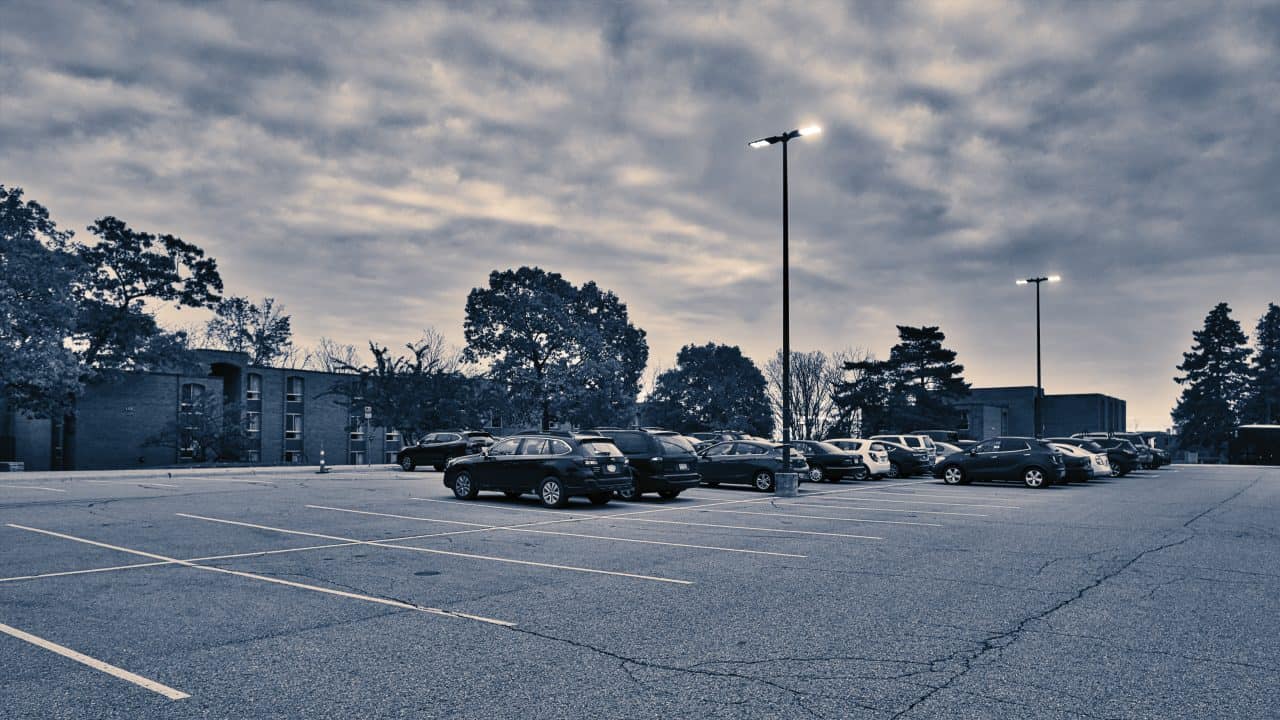
 NC32 Parking Lot by Chris Rycroft is licensed under Creative Commons Attribution 2.0 Generic license
Michigan lawmakers are currently considering the Housing Readiness Package, a series of bills aimed at making housing more affordable by expanding property rights, cutting unnecessary government red tape, and allowing the free market to better respond to the state’s housing needs.
One of the bills included in the package is HB 5582, legislation which would eliminate one of the most burdensome housing regulations afflicting Michigan: mandatory parking minimums.
Parking minimums force developers to dedicate valuable land to parking spaces regardless of whether residents actually need them, driving up construction costs and reducing the amount of land available for housing. By eliminating mandatory parking minimums and allowing developers to determine how much parking a project actually requires, HB 5582 would remove an unnecessary barrier to housing construction, lower development costs, and allow more homes to be built on the same amount of land.
A common misconception is that eliminating parking minimums means eliminating parking altogether. It does not. Instead, it simply removes government mandates dictating how many parking spaces every new development must provide. Developers would still have every incentive to provide parking where residents, customers, and the market demand it, while local governments could continue to maintain public parking and regulate street parking. The difference is that builders would no longer be forced to construct unnecessary spaces simply to satisfy an arbitrary government requirement, allowing parking supply to better reflect the actual needs of each community and development.
HB 5582 is a commonsense reform that removes an unnecessary barrier to housing without eliminating parking. By letting demand, not government mandates, determine how much parking developments need, Michigan can lower construction costs, make better use of valuable land, and make it easier to build more housing.