
Left-wing advocacy groups are already laying the groundwork for a cigarette tax hike during Montana’s 2027 legislative session, reviving a proposal that would raise costs on consumers, burden small businesses, and disproportionately impact lower-income Montanans.
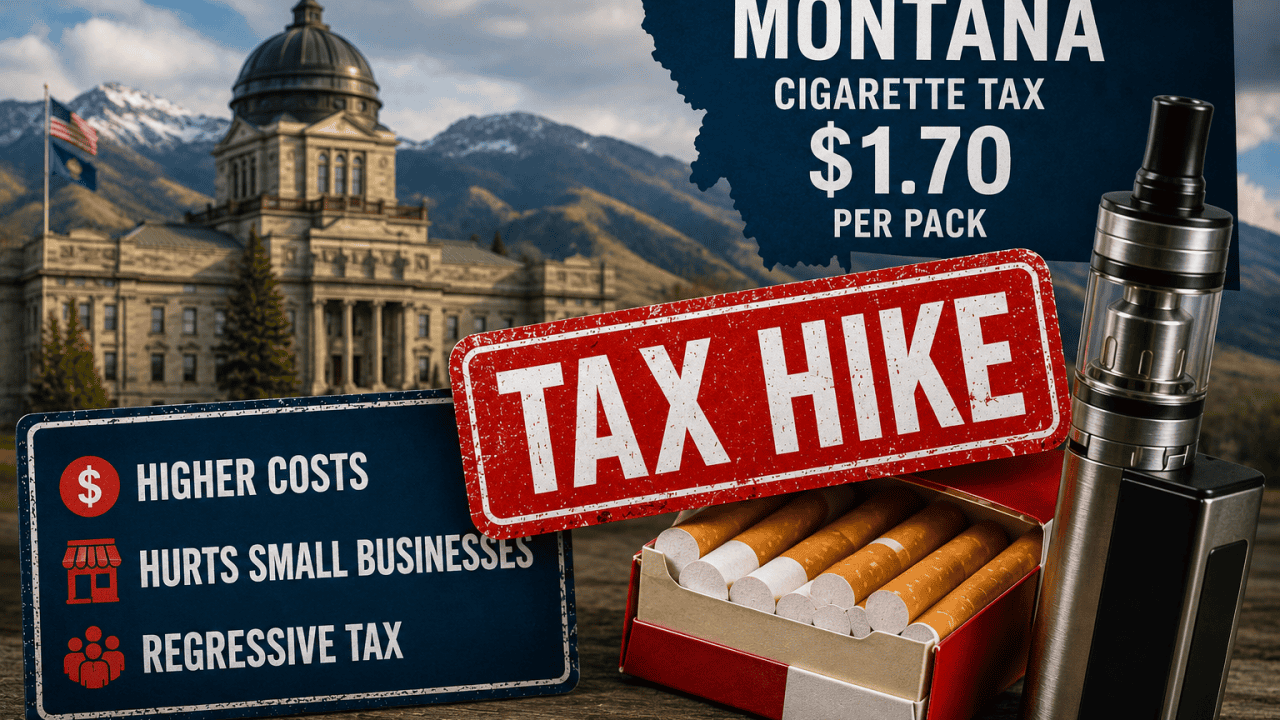
According to local reports, left-leaning advocacy groups plan to make raising Montana’s tobacco tax a priority when lawmakers return to Helena in 2027. They claim a cigarette tax hike will both reduce smoking and generate additional revenue for government programs, yet experience shows those promises rarely materialize. Montana’s cigarette tax currently stands at $1.70 per pack, and the proposal would raise that rate as part of a broader tobacco control agenda.
A cigarette tax hike would also hurt Montana’s small businesses. Convenience stores, gas stations, and other local retailers rely heavily on tobacco sales to attract customers and drive in-store purchases. Nationwide, tobacco products account for nearly 30 percent of all convenience store sales, making them one of the industry’s largest revenue drivers. When cigarette taxes increase, consumers have greater incentives to purchase tobacco products in neighboring states, online, or through illicit markets rather than from local retailers. That shifts sales away from Montana businesses while undermining the very revenue projections used to justify the tax increase. For many small retailers operating on thin margins, losing tobacco sales also means losing purchases of fuel, food, and other everyday items that customers often buy during the same visit.
These two promises cannot both be true over the long term. If cigarette taxes succeed in reducing smoking, the tax base shrinks, making the promised revenue increasingly unreliable.
History shows that cigarette tax hikes rarely deliver the stable, long-term revenue their supporters promise. A studyexamining 32 state tobacco tax increases between 2009 and 2013 found that only three met their projected revenue targets. When cigarette taxes rise sharply, the legal tax base often shrinks much faster than forecasts anticipate as consumers purchase tobacco products in neighboring states, online, or through illicit markets. Large tax disparities between neighboring states can further encourage cross-border purchases and smuggling, reducing expected collections even more. As revenues fall short of projections, lawmakers are often pressured to pursue additional tax increases or alternative sources of revenue.
Montana already imposes a cigarette tax that is higher than most of its neighboring states. At $1.70 per pack, Montana’s cigarette tax exceeds those in Idaho, Wyoming, North Dakota, and South Dakota. Raising the tax even further would widen those disparities, creating stronger incentives for cross-border purchases and cigarette smuggling while making it more difficult for Montana retailers to compete. Rather than generating the additional revenue supporters promise, a higher tax would encourage more consumers to purchase cigarettes elsewhere, reducing legitimate sales for Montana businesses and further undermining projected tax collections.
The proposal would also expand Montana’s tobacco tax to electronic cigarettes and other vapor products. Taxing vapor products would raise costs for consumers and small businesses while discouraging adult smokers from switching to lower-risk alternatives. Rather than encouraging harm reduction, the proposal would treat vapor products much like traditional cigarettes despite important differences between the products. Expanding the tax would also create additional incentives for consumers to purchase these products online or outside Montana, further hurting local retailers while offering little assurance that the state would realize the projected revenue gains.
What advocates often fail to acknowledge is that cigarette taxes are among the most regressive taxes governments impose. Unlike broad-based taxes that are spread across a wide population, tobacco taxes fall disproportionately on lower-income Americans, who are more likely to smoke than higher-income individuals. As a result, cigarette tax hikes place the greatest burden on those least able to afford higher costs.
Montana has spent the past several years improving its tax climate through pro-growth reforms. Republican lawmakers have focused on lowering income taxes and making the state more competitive, allowing taxpayers to keep more of what they earn. A cigarette tax hike would move Montana in the opposite direction by embracing higher taxes instead of continuing policies that encourage investment, economic growth, and opportunity.
Montana lawmakers should reject any proposal to increase cigarette taxes. Hiking a regressive tax that fails to deliver the promised results will do little to improve either the physical health of Montanans or the state’s fiscal outlook. Rather than reversing course with another tax hike, lawmakers should continue pursuing pro-growth policies that strengthen Montana’s economy, support small businesses, and protect taxpayers.