
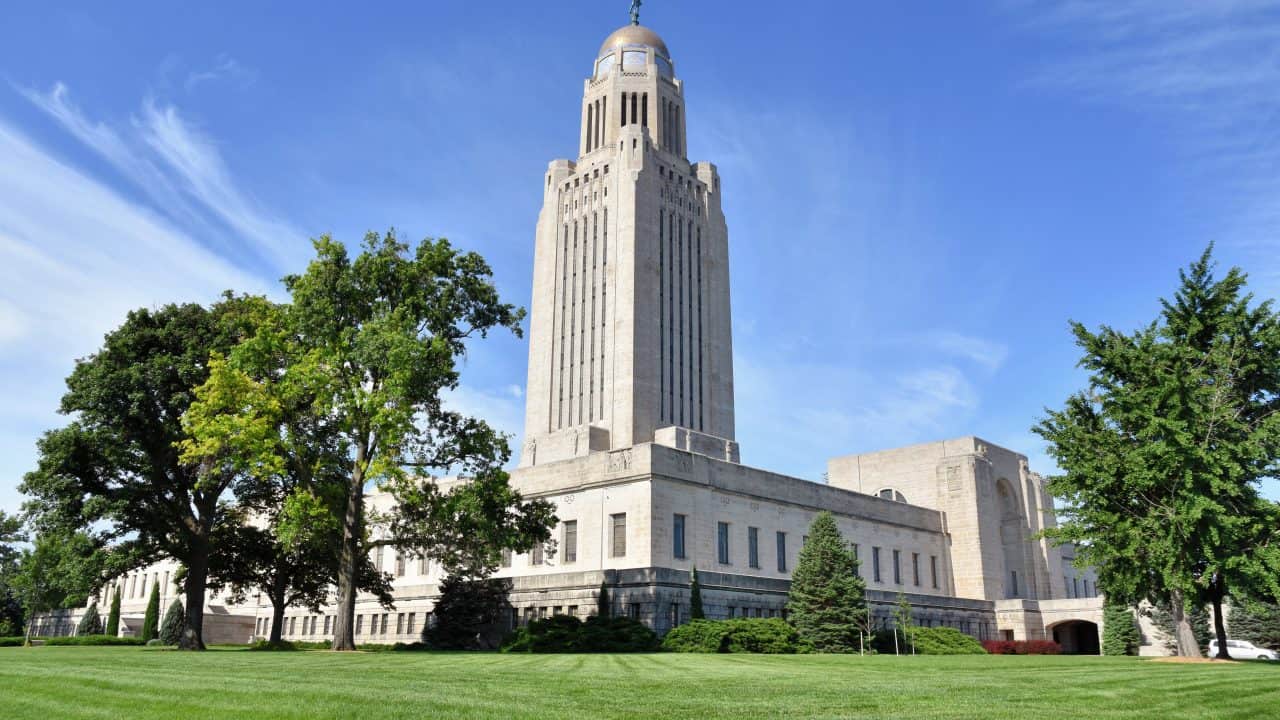
 Nebraska State Capitol by jpellegen is licensed under CC BY-NC-ND 2.0
Nebraska lawmakers are considering a pair of bills that would significantly increase taxes on cigarettes, vape products, and other nicotine items, an approach that threatens to raise costs for consumers while putting new pressure on small retailers across the state.
LB 1124 would more than double Nebraska’s cigarette tax, increasing it from 64 cents per pack to $1.64 per pack. LB 1238 would replace the current flat, per-pack cigarette tax with a 30 percent tax on the retail dealer’s purchase price, raise the tax on alternative nicotine products from 20 percent to 30 percent, and apply that same 30 percent rate to other tobacco products as well.
These steep tax hikes would have serious economic consequences for the state. At a time when many businesses are already under pressure, dramatically raising taxes on products that small, family-owned vape shops, convenience stores, and gas stations depend on for a meaningful share of their revenue would leave many of these businesses struggling. Businesses operating on thin margins, especially those near state borders, would face intense competition from lower-tax jurisdictions and untaxed sources, putting jobs and businesses at risk across the state.
Cigarette taxes are also among the most regressive taxes for which reliable data exists, falling disproportionately on lower-income consumers. In Nebraska, roughly 28 percent of residents earning less than $25,000 are smokers, compared to just 8.7 percent of those earning $75,000 or more, meaning these tax increases would fall most heavily on those with the least ability to absorb the added cost.
Despite proponents’ arguments, higher cigarette taxes do not reliably translate into higher state revenue. Between 2009 and 2013, only three of 32 state tobacco tax increases actually met their projected revenue targets. When tax rates jump dramatically, the legal tax base tends to shrink far faster than projections predict. Consumers look for lower-tax alternatives across state lines, turn to online purchases, or enter illegal markets, especially in states surrounded by neighbors with lower rates. Nebraska should be cautious about building its fiscal plans around revenue projections that history shows are unlikely to come true.
Taxing vape products more heavily also weakens incentives for smokers to switch to lower-risk, healthier alternatives. A growing body of public health research has found that e-cigarettes are substantially safer than combustible cigarettes, with research from Public Health England showing that vaping is at least 95 percent safer than smoking.
Vape products also play a key role in helping smokers successfully quit combustible cigarettes. Clinical studies have shown that vape products can be more than twice as effective at helping smokers quit compared to traditional nicotine replacement therapies such as patches or gum, and a large-scale analysis from Georgetown University Medical Center estimates that if most smokers switched to vaping, 6.6 million American lives could be saved, including more than 44,000 lives in Nebraska.
LB1124 also treats “heat-not-burn” products the same as traditional cigarettes, ignoring important scientific distinctions. These devices heat tobacco to release nicotine without combustion, producing no smoke and far lower levels of the toxic chemicals most closely associated with smoking-related disease. Taxing reduced-risk products as if they were combustible cigarettes overlooks the fundamental role that burning tobacco plays in driving health harms and risks, discouraging smokers from switching to alternatives that substantially reduce exposure to harmful chemicals.
Legislative Bills 1124 and 1238 would take Nebraska in exactly the wrong direction. Together, they would move the state from one of the lower cigarette tax states to well above nearly all of its neighbors, creating the perfect conditions for cross-border shopping, lost local sales, and growing illegal markets. At the same time, these proposals would squeeze small Nebraska businesses and reduce incentives for smokers to switch to lower-risk alternatives.
Americans for Tax Reform opposes efforts to increase Nebraska’s cigarette and vape taxes and urges all lawmakers to oppose LB 1124 and 1238.