

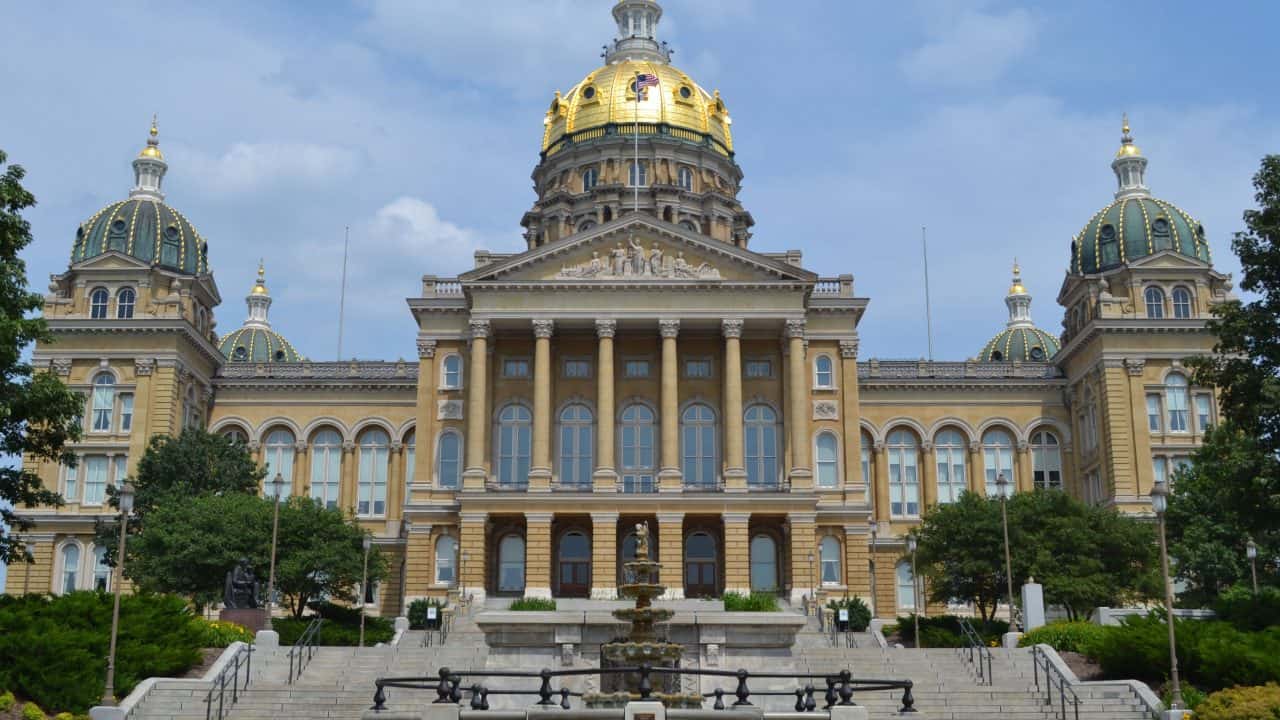
 Iowa State House by Stephen Matthew Milligan is licensed under CC BY-SA 3.0
This November, Iowa voters will have an opportunity to protect taxpayers for generations to come by voting yes on Constitutional Amendment 1.
Amendment 1 would add a commonsense taxpayer safeguard to the Iowa Constitution by requiring a two-thirds vote of both chambers of the state legislature to increase individual or corporate income tax rates or impose a new state tax on income. Currently, any of these could be enacted with a simple majority in both legislative chambers.
Tax increases should face a high bar, and taxpayers should be protected from having years of pro-growth tax reform reversed following a single election. At least 16 states currently have some form of supermajority requirement in either their constitution or state law.
That protection is particularly important in Iowa, where Governor Kim Reynolds and legislative Republicans have spent years transforming what was once one of the nation’s most burdensome state income tax codes.
Iowa’s individual income tax previously featured nine brackets and a top rate of 8.98%. Years of continued tax reform have since moved the state to a dramatically more competitive flat income tax of 3.8%. These reforms have allowed Iowa families to keep more of their hard-earned money while making the state a more attractive place to live, work, invest, and do business.
Amendment 1 would help ensure those gains cannot easily be undone.
A supermajority requirement encourages lawmakers to first look for spending restraint, eliminate waste, and prioritize existing resources before turning to taxpayers for even more money. Tax hikes should be a last resort, not the easiest option available to lawmakers looking for additional revenue.
Iowans overwhelmingly agree that tax increases should face a higher hurdle. A June poll from the Iowans for Tax Relief Foundation found that nearly 74% of likely general election voters support requiring a two-thirds vote of the legislature to increase income taxes. Support cuts across party lines, with 85% of Republicans, 72% of independents, and even 60% of Democrats backing these taxpayer protections.
A coalition of labor unions and progressive organizations recently launched a campaign against Amendment 1. Their opposition underscores exactly why this protection matters. Groups that routinely advocate for higher taxes and greater government spending recognize that Amendment 1 would make it more difficult for a future legislative majority to quickly reverse Iowa’s hard-won tax reforms. If the loudest opponents of taxpayer protections are already mobilizing to defeat Amendment 1, that is a pretty good indication that the amendment would do exactly what it is intended to do: put a meaningful and lasting check on politicians’ ability to raise taxes.
Taxpayers have benefited tremendously from the direction Iowa has taken over the past several years. Amendment 1 would help lock in that progress by ensuring future income tax hikes cannot be so easily imposed.