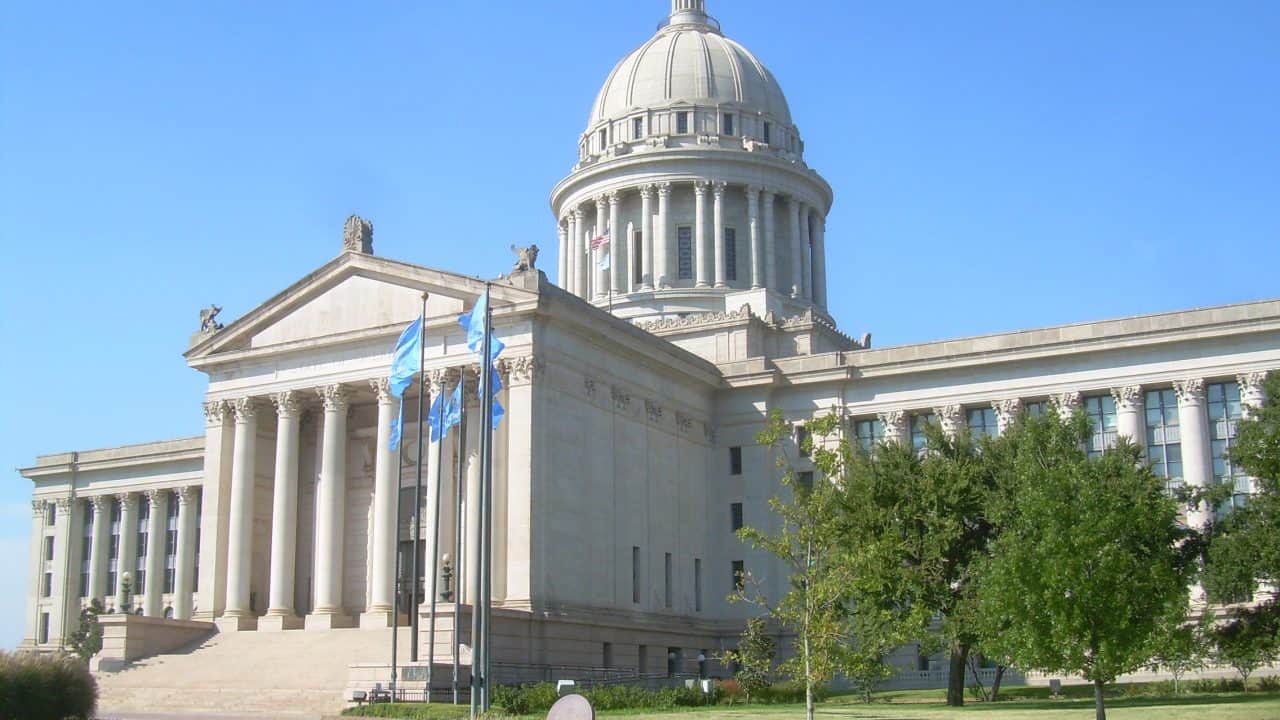
 Oklahoma State Capitol by Caleb Long is licensed under CC Share Alike 2.5 Generic
On June 16, 2026, Oklahoma will decide whether to hike in the state’s minimum wage. If residents approve this measure, the state economy will suffer severely.
State Question 832 has been years in the making, being first filed in 2023. It proposes raising the state minimum wage to $15 per hour by 2029. Should the measure pass, the minimum hourly wage would immediately jump to $9 and thereafter increase annually by $1.50 for four years. This means that the minimum wage would more than double from its current $7.25 (the federal minimum since 2009) within five years, massively distorting the state’s economy.
Raising the minimum wage would hurt consumers and spell doom for businesses and workers in Oklahoma. One cautionary tale can be seen in the California fast food industry. When Assembly Bill 1228 took effect in 2024, large fast-food chains were forced to pay their workers at least $20 an hour, a roughly 25% increase. This caused employers to drastically reduce labor hours available and forced workers to find other part-time jobs. In other words, the ostensible wage hike turned out to be an overall pay cut. Companies like McDonald’s and Burger King were also compelled to raise prices, close the lowest performing franchises, and accelerate the replacement of workers with automated kiosks.
The fallout in the fast-food industry follows a trend by the statewide minimum wage. California Democrats have overseen a steady rise the minimum wage in recent years. Little surprise, then, that the Sunshine State has one of the highest youth unemployment rates in the country. Other states with high minimum wages such as Connecticut and Colorado, as well as the District of Columbia, also have some of the highest youth unemployment.
SQ 832 would therefore deprive many young Oklahoma residents of valuable entry-level work experience that prepares them for jobs later in life. On a related note, the economist Jonathan Meer found that the vast majority of minimum wage workers are under the age of 35. This means that most minimum wage-earners are not trapped in poverty, as proponents of SQ 832 may claim, but are seeking a launching pad to start their career.
Another feature of SQ 832 is tying the minimum wage to the Consumer Price Index after 2029, meaning that other high-tax, high-cost states will drive set the wage. Oklahoma is currently one of the lowest-cost states in the union and should not be punished because other states are unaffordable.
The Oklahoma City chapter of Democratic Socialists of America and other proponents of this measure claim that it is a step closer to a “living wage” and will jumpstart an economy “stuck in 2009.” In fact, the average wage in Oklahoma has risen 71% from 2008 to 2024, faster than in eight other states with $15 per hour minimum wage. Those states also became, on average, more expensive than Oklahoma in those years. One can imagine that if Oklahoma had passed this measure a decade ago, it would be in a similarly unaffordable condition as California, New Jersy, and Massachusetts, among other states.
The good news is that some Oklahoma political leaders have made real progress in making the state more affordable. On January 1, 2026, income tax reform passed last year took effect, reducing the top rate from 4.75% to 4.5% and consolidating the original ten income brackets down to three. Also, the government will use revenue past certain thresholds to continually phase down the income tax over time, eventually eliminating it entirely. Rather than forcing businesses to pay higher wages––a cost passed ultimately paid by workers and consumers––cutting the income tax simply lets people keep more of their own money.
While hiking the minimum wage may sound good on a bumper sticker, it does not translate to economic wellbeing. Oklahoma should avoid the mistakes of progressive-run, high-cost states and maintain the health of their economy.