

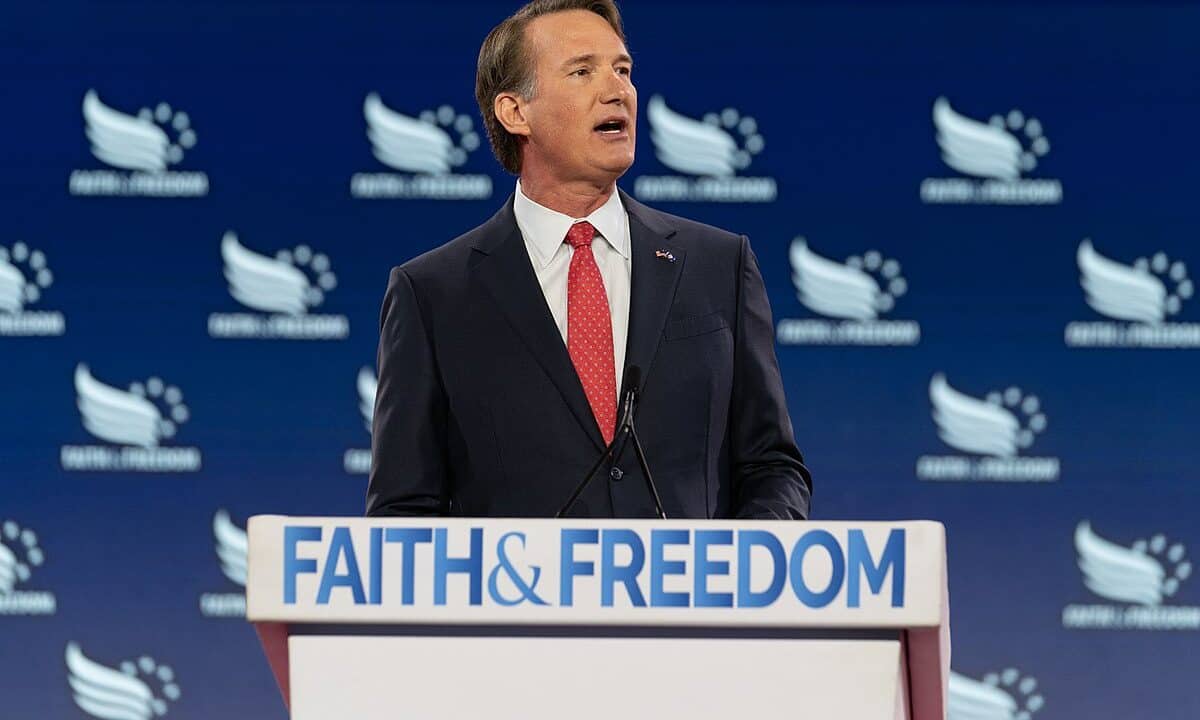
 Official Photo by Christian Martinez, Office of Governor Glenn Youngkin. Licensed by CC
Governor Glenn Youngkin has set his sights on the future of the Commonwealth of Virginia, outlining ambitious budget goals for 2025. These proposals underscore Youngkin’s commitment to building an economy that works for everybody. Among the highlights of his proposed future economic plan is a “no tax on tips” initiative, an increase to the standard deduction, and car tax relief in the form of income tax credits. These measures aim to reduce the financial burden on working Virginians while encouraging continued economic expansion.
Eliminating Taxation of Tips
Youngkin’s proposal would allow tipped workers to claim a deduction for tipped income on their state tax returns. According to the Virginia Department of Taxation and the Virginia Employment Commission, more than 250,000 Virginians would receive tax relief under the Governor’s proposal, returning an estimated 70 million back to the pockets of hardworking Virginians.
The proposal will provide financial relief for working-class Virginians who rely on tips as a substantial portion of their income. Taxing tips creates a heavy burden not just for workers but also for employers, who are required to pay payroll taxes on reported tips. By eliminating state taxation of tips, both workers and businesses would experience financial relief.
The idea of “no tax on tips” gained significant traction in mid-2024 when President Trump announced his plan to eliminate federal taxation of tipped wages. With the Governor’s strong push to include the policy in his budget submission, Virginia could be the first state to implement a ‘no tax on tips’ policy, despite politicians at both the state and federal levels introducing similar proposals in recent months.
Permanently Increase the Standard Deduction
Governor Youngkin’s plan to permanently increase the standard deduction will provide significant benefits to Virginia taxpayers. In 2023, Governor Youngkin raised the standard deduction to the current $8500 for individuals and $17000 for joint filers until 2026, when the provision is set to expire.
Now, the Governor wants to make the higher standard deduction permanent. By permanently raising the standard deduction, taxpayers can shield more of their income from state taxes, reducing their overall tax burden. If the higher deduction is not made permanent, it’s expected that Virginians will see tax increases of $557.2 million and $1.2 billion in 2026 and 2027 respectively. At a time when 77% of Americans feel anxious about their financial situation, the only question should be which taxes to cut—not which to raise.
Car Tax Relief
In addition to proposing a “no tax on tips” policy, a higher standard deduction, and other economic reforms, Governor Youngkin has introduced a plan to address what is known as “the most hated tax in America.” The proposal comes in the form of a refundable income tax credit of $150 for individuals and $300 for joint filers that fall below certain income thresholds. It’s estimated the proposal would impact roughly 2.4 million Virginians.
Officially known as the “Personal Property Tax,” the car tax is a significant financial burden for many Virginians. Youngkin’s proposed credit would reimburse taxpayers for a portion of their car tax payments, directly putting money back into their pockets. This credit is particularly valuable for individuals and families who rely on vehicles for daily life, such as commuting to work or accessing essential services. While not a permanent solution, this initiative represents a major win for Virginians who are tired of the government nickel-and-diming them at every opportunity and will provide meaningful relief to residents across the commonwealth.
With a pivotal election approaching in November, Youngkin continues to position himself as a champion for Virginia’s progress. While his efforts to cut taxes have faced resistance from State Democrats, his administration remains committed to finding solutions that benefit all Virginians. These ongoing efforts reinforce his focus on reducing the tax burden, driving economic growth, and fostering a brighter future for the Commonwealth. As he continues to secure wins for the state, the foundation is being laid for a more prosperous and resilient Virginia.