
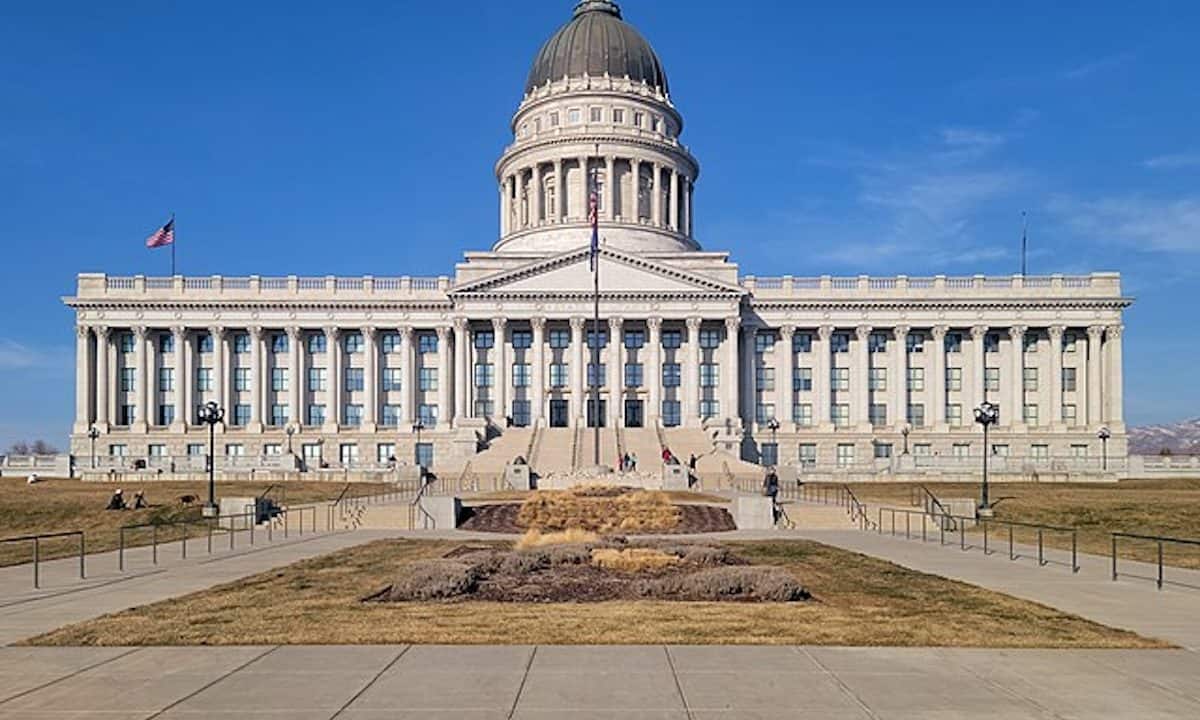
 GyozaDumpling, CC BY-SA 4.0
 The Utah state legislature formally approved a bill revoking the ability of public sector unions to collectively bargain in a momentous achievement for Utah taxpayers and public sector workers, who will ultimately benefit from a fully funded and fiscally sound pension system. If approved by Governor Spencer Cox, this legislation will be considered among the most significant of its kind.
“When you have government employees negotiating with other government employees, and you don’t have market forces underlying those negotiations, you’re negotiating against yourself to the detriment of the taxpayer,” explained Senator Kirk Cullimore, the chief sponsor of the bill who successfully shepherded the legislation through the Senate in the face of enormous backlash from government union officials terrified at the prospect of losing their monopoly power to the free market.
Utah would not be the first state to impose a ban on collective bargaining, though it would be among the strictest. It joins the ranks of states including Georgia, Indiana, Kentucky, North and South Carolina, Texas, Virginia, and Wisconsin that have already cemented taxpayer protections against public sector unions into law.
While public sector unions claim to represent the interests of government employees, the collective bargaining process leaves Utah’s taxpayers in the dark, even though they are the ultimate funders of union contracts – not to mention their role as elected officials’ chief constituents. The one-sided nature of these negotiations may lead to results that provide lavish benefits to public sector workers at the expense of taxpayers, without their express consent.
On top of that, many public employees have no say in the negotiations that ultimately determine their pay, their hours, and their working conditions. That power is reserved for union bosses.
“In a lot of our government agencies that do collective bargaining today, that voice is made up by a minority of the employment base across the board… There are literally thousands of voices across our state that just don’t get heard as part of that negotiation process,” pointed out Rep. Jordan Teuscher, the bill’s main sponsor in the House, in a hearing on Monday.
This legislation is sure to create enormous savings for taxpayers. A similar bill in Wisconsin, known as Act 10, which made exceptions for police and firefighter unions, has saved over 15 billion dollars over the ten years it has been in effect. Wisconsin’s government expenditures on health benefits, which had been growing exponentially before Act 10, subsequently plateaued at a number that was comfortable for both government employees and the taxpayers who fund their salaries.
Despite union hysteria and protests over Act 10, public sector workers retained most of the benefits they already had, and paychecks did not significantly decline. Instead, the pay flexibility resulted in a better, more efficient workforce due to the new ability to deduct pay – or even fire employees – based on performance, something the private sector can do in any state without difficulty. On top of that, Wisconsin’s pension system is now more than fully funded, thanks to reasonable benefit packages free of the perverse incentives created by government officials negotiating with government employees.
Ultimately, government programs do not have a profit motive. That means that they do not have an in-built limiter on their expenses. An employee who is being paid $60,000, for example, need not provide equal or greater value to the agency, as would be expected in a private company. This can result in large amounts of waste and inefficiency if not properly monitored.
Public sector unions often serve to exacerbate the issue of waste, as state governments, unlike the private sector, lack a profit motive. Because public sector unions are government employees negotiating with the government itself, there is an inherent conflict of interest and a perverse incentive to funnel money to agencies that may not be deserved or even needed at all. Of course, Utahns would have to shoulder the burden of this excess in the form of higher taxes, if not for the protections that may soon be enacted in the form of HB 267.
Given the exact data provided by Wisconsin’s Act 10, as well as the strong arguments in favor of prohibiting collective bargaining, HB 267 will be a crucial victory for taxpayers in Utah. Hopefully, its success will inspire other states to follow suit, doing away with the potentially unconstitutional ability of public sector unions to collectively bargain altogether.
Rep. Teuscher and Sen. Cullimore, the bill’s two primary sponsors, have made laudable progress despite intense pushback from the unions themselves – which were, of course, well-funded by dues that came straight out of taxpayer wallets. ATR commends these officials and the entire Utah House and Senate for making enormous progress and setting an example for other states to follow in the months and years to come.