

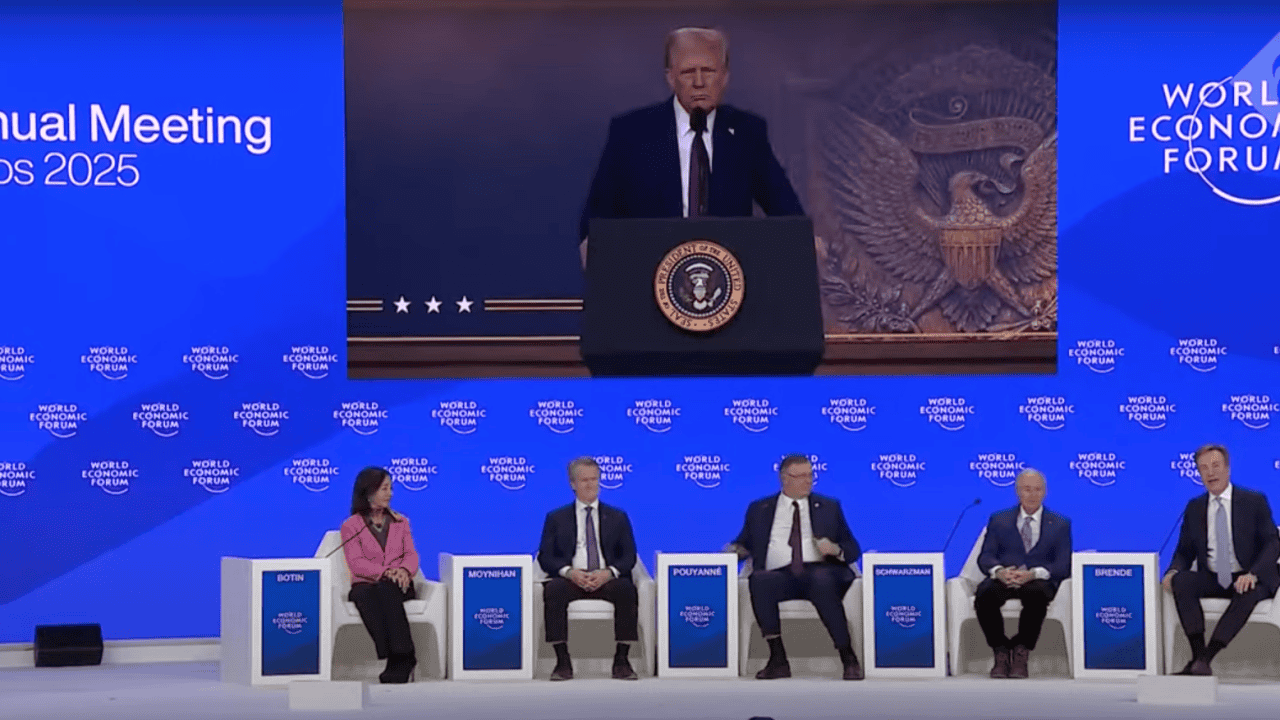
 World Economic Forum 2025 by The Telegraph licensed under CC.
European and American business leaders are growing restless, and for good reason—burdensome regulations and stifling bureaucracy have turned the EU into a cautionary tale of how overreach can strangle innovation and economic growth. At the World Economic Forum in Davos, President Trump strongly rebuked the European Union’s regulatory regime, emphasizing how excessive rules and bureaucracy are stifling innovation and economic growth. President Trump didn’t hold back, delivering a clear message, that prosperity comes from cutting red tape, not creating it.
Trump shared an example of EU inefficiency, recounting how a project in Ireland was delayed for over five years despite swift local approval—an example of how overregulation stifles progress and deters investment. He also pointed to Europe’s trade barriers, including high VAT taxes and restrictions on U.S. goods, which tilt the playing field in favor of European exports.
Beyond trade, Trump called out the EU’s punitive approach toward American tech companies like Apple, Google, and Meta, where massive fines, amounting to billions of dollars, function as a backdoor tax on innovation. These policies not only penalize success but also risk pushing global leadership in technology away from Europe entirely.
Trump’s message was clear: the EU needs to reform. Scaling back on heavy-handed regulations and promoting free, fair trade would open the door to stronger economic growth, more investment, and better opportunities for businesses across the board. If the EU wants to stay competitive in the global economy, it has to prioritize freedom and innovation over red tape.