
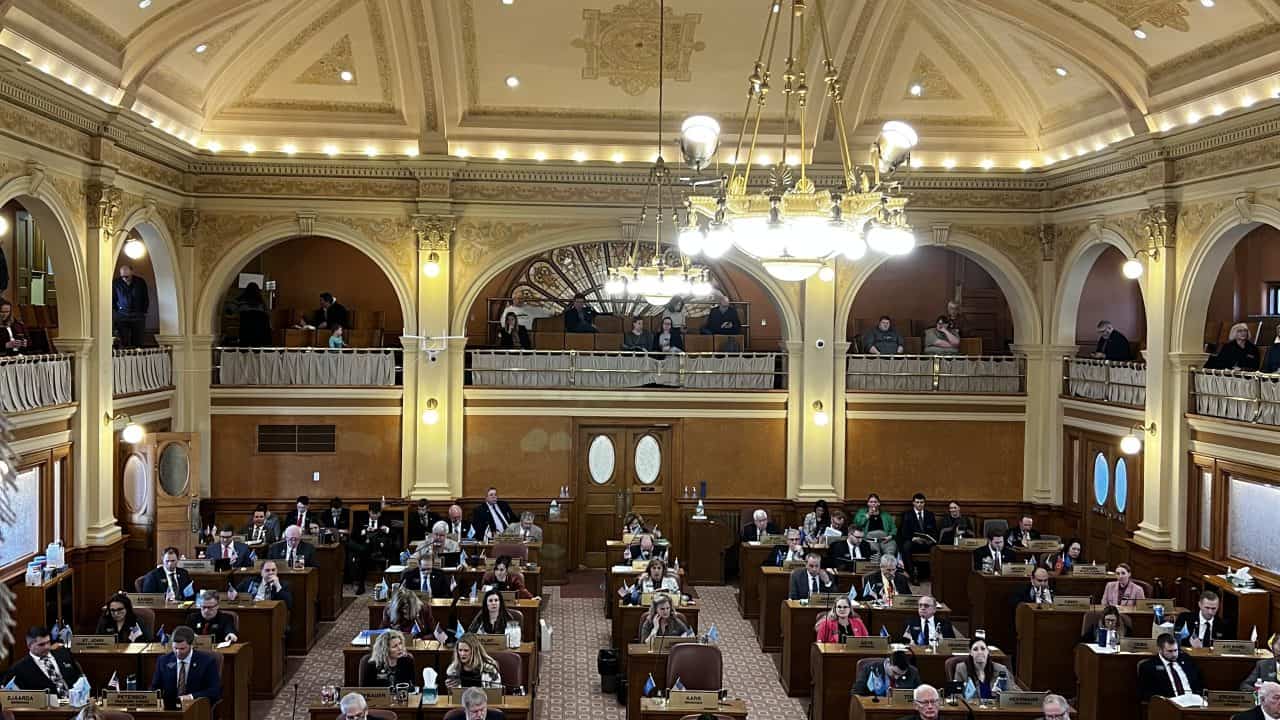
 The South Dakota State Senate.
South Dakota concluded its 2026 legislative session with the adoption of three major tax reform bills. Two bills keep dollars in the hands of taxpayers, while the third allows counties to raise sales taxes by up to 1 percentage point to fund unnecessary new projects.
Thanks to Senate Bill 245, South Dakota taxpayers will avoid a tax increase of $115 million after a temporary sales tax cut expires on January 1 and the rate increases from 4.2% to 4.5%. Instead of keeping that money for lawmakers in Pierre to spend, every dollar will go towards permanently reducing the local owner-occupied mill levy for education funding collected by the state. Property taxes are expected to be reduced accordingly by 14-22%. SB 245 also immediately redirects another $55 million of excess state reserve funds toward property tax relief, making the bill a net tax cut for South Dakota.
Ideally, the 4.2% sales tax, enacted as a three-year temporary measure in 2023, should have been extended or made permanent to maximize tax relief for all South Dakotans, not just property owners. Legislation to do just that – SB 195 – died on the Senate floor this year in a 17–17 vote and never made it to the House. Identical legislation also failed in both 2024 and 2025, thanks to dozens of lawmakers who call themselves conservatives but are more interested in spending money than returning those dollars to the pocketbooks of taxpayers, where they belong.
With competition to reduce and eliminate income taxes heating up across the nation, South Dakota risks falling behind. Five states have enacted legislation to phase out their income tax, while leaders in another eight states are committed to joining them in the next few years. Lawmakers in Pierre should make it a top priority to reintroduce the lower sales tax rate of 4.2% in the next legislative session to remain competitive with neighboring states like Iowa and allow all taxpaying families to keep more of their hard earned money.
Unfortunately, while the legislature successfully avoided an automatic tax increase next year by passing SB 245, lawmakers also passed two other bills that authorize local governments to levy higher sales taxes.
SB 96 allows counties to vote for a half-percent sales tax increase, but requires all new sales tax revenue to go toward reducing property tax mill levies. Combined with existing limitations on local government spending, this bill ensures no extra money will be collected by any local government, making this a revenue neutral tax shift.
On the other hand, HB 1245 includes none of these protections. Passed by razor-thin margins in each chamber, HB 1245 authorizes a massive 1% sales tax increase at the county level, with the money explicitly earmarked for “capital improvement projects.” That means counties can collect tens or hundreds of millions of new dollars to spend on public buildings. Not a cent would return to taxpayers if counties choose to take advantage of their new authority to levy higher sales taxes. While the new 1% tax requires the support of 60% of voters in a county, there is no justification for allowing higher local taxes to facilitate unnecessary government spending.
While SB 245 commendably avoided a tax increase, HB 1245 undermines its success by giving counties the ability to raise taxes for no good reason. Lawmakers should repeal this legislation at the first opportunity next year in addition to passing a new bill to keep the sales tax at its previous rate of 4.2%.