

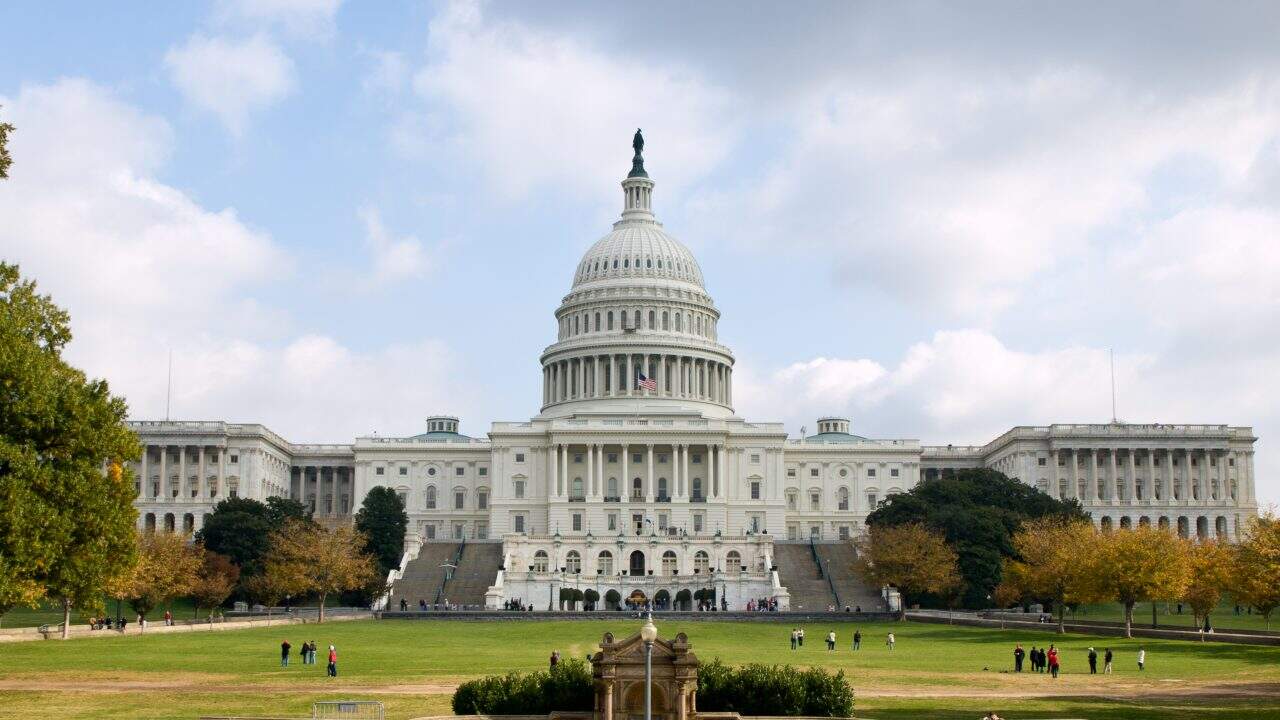
 United States Capitol by William Warby is licensed under Creative Commons.
The Republican Study Committee (RSC) chaired by Rep. August Pfluger (R-Texas) recently released their Reconciliation 2.0 framework, Reconciliation 2.0: Making the American Dream Affordable Again. Through cutting waste, restoring market forces, and codifying President Trump’s pro-growth agenda into law, the framework works for taxpayers, not against them.
Following the historic passage of the Working Families Tax Cuts Act last July, which delivered the largest tax cut in American history, Republicans have another opportunity to use reconciliation to deliver real relief to taxpayers. Reconciliation 2.0 allows Republicans the chance to eradicate lingering Biden-era policies and costs.
Americans are still paying the price for the Biden Administration’s bloated spending, inflation, and bureaucratic overreach. Energy bills remain high, health care costs continue to increase, and housing is out of reach. Unlike Democrats, affordability is more than a talking point for House Republicans, it’s a governing principle.
Restoring Homeownership
The RSC recognizes that government regulation, not free markets, is pricing families out of homeownership. The framework incentivizes the sale of affordable homes, directs the sale of underused federal properties, expands tax-advantaged home savings accounts, and eliminates cap gains barriers. While reducing subsidies, the framework increases supply.
The government should sell what it doesn’t need rather than asking taxpayers to subsidize an asset-management problem. This provision alone could generate $115 billion in increased federal revenues without distorting the market.
Further, the framework emphasizes a complete repeal of the federal death tax. This would remove a major barrier of intergenerational homeownership, especially for family-owned homes, farms, and small businesses. The obvious double taxation often forces heirs to sell homes or land just to pay the IRS. The provision ends that punishment and allows families to keep their homes.
Importantly, the reforms are paired with strong guardrails to guarantee that taxpayer dollars are benefitting Americans and not foreign investors or sanctuary jurisdictions that defy federal law.
Promoting Health Care Freedom
The RSC framework puts patients back in charge. In establishing Health Freedom Accounts, expanding competition, and codifying Trump-era reforms like TrumpRx, the framework lowers costs without expanding government control over health care decisions.
The RSC targets some of government’s most wasteful spending, ending the failed Prevention ad Public Health Fund, instituting site-neutral payments in Medicaid, and tightening the eligibility rules to ensure benefits only go to lawful residents.
The healthcare and welfare-related provisions in the RSC Reconciliation 2.0 framework alone generates more than $1.3 trillion in taxpayer savings. Lowering costs for families and protecting taxpayers are indeed able to go hand in hand.
Energy Independence
The framework offered by the RSC advances the reality of energy affordability and economic security by codifying President Trump’s deregulatory executive orders, streamlining permitting, and constraining third-party litigation lawsuits that delay American energy production.
Newfound regulatory certainty and blocking of unelected bureaucrats from imposing economically significant rules without congressional approval will put pressure on energy prices to decrease. This will benefit families at gas pumps, on their utility bills, and throughout the economy.
Serious Spending Cuts and Action
Spending is dramatically reduced in the RSC framework. In total, the proposals achieve more than $1.6 trillion in spending reductions and over $1 trillion in net deficit reduction.
Nearly 70 percent of these proposals have already been introduced or passed by House Republicans, making this framework not merely an aspirational wish-list but an achievable roadmap.
Democrats have made it clear that they have no interest in bipartisan solutions or fiscal restraint. As the RSC correctly asserts, reconciliation remains a viable path to undo the damage of the Biden Administration and solidify pro-taxpayer reforms.
Reconciliation 2.0 does not grow government. It restores the American Dream through provisions that enable families to keep more of what they earn while cutting wasteful federal spending.
Americans for Tax Reform applauds the Republican Study Committee for advancing a reconciliation framework that cuts spending, lowers costs for families, and puts taxpayers first.