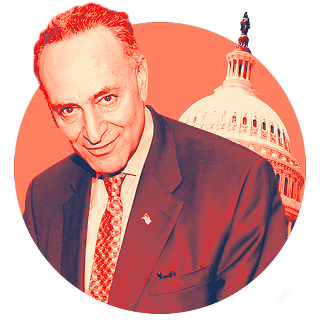
Rep. August Pfluger, Photo by Ken Cedeno-Pool/Getty Images
This week, Republican Study Committee Chairman Rep. August Pfluger (R-Texas) and Budget and Spending Task Force Chair Rep. Beth Van Duyne (R-Texas) released the RSC FY2026 Budget, entitled “Restoring America’s Golden Age.”
The Budget provides a comprehensive roadmap to grow the economy, restore fiscal responsibility, and protect working families from higher taxes, government overreach, and wasteful spending. The RSC Budget builds on the historic legislative progress achieved in the past year.
The Budget demonstrates that free market policies and limited government deliver real results.
The Working Families Tax Cut Act
A central focus of the RSC Budget is its detailed overview of the progress achieved through the Working Families Tax Cut Act, also known as the One, Big, Beautiful Bill Act (OBBBA). The Budget highlights how this legislation sealed pro-growth tax reforms that prevented the largest tax increase in history. Doing so, more money was put back into the pockets of working families.
Key successes include the permanent extension of the 2017 Tax Cuts and Jobs Act (TCJA) income tax cuts, increasing the standard deduction, expanding the Child Tax Credit, eliminating taxes on tips and overtime, and making full and immediate expensing permanent. These reforms provide certainty for families and businesses, boost wages, and strengthen competitiveness, without raising taxes or creating new federal spending programs.
Universal Savings Accounts and Long-Term Financial Security
The Budget promotes policies that help Americans save and build upon their wealth rather than grow dependent on government programs, The Budget endorses the creation of Universal Savings Accounts, which would allow families to save and invest their already-taxed income without facing additional taxation. These accounts enable Americans to plan for emergencies, education, homeownership, and retirement while reinforcing financial independence and individual responsibility
Repealing the Death Tax
The RSC Budget fully repeals the death tax. The punitive tax forces grieving families, farmers, and business owners to sell assets simply to satisfy the gluttonous IRS. Fully repealing the death tax will protect generational business, preserve family farms, and ends a tax that raises little revenue and destroys opportunity.
Codifying President Trump’s Energy Agenda
Affordable and reliable energy is essential to economic growth and household affordability. Several bills highlighted in the Budget would codify President Trump’s historic actions to unleash the American energy sector. The reforms would expand domestic production, streamline permitting, and restore coal, gas, mineral, and oil leasing. The Budget also calls for the rollback of Biden-era mandates that drove up prices and weakened grid reliability.
The RSC is embracing an energy strategy that lowers costs, strengthens national security, and ends corporate welfare disguised as climate policy.
Expanding HSAs and Promoting Medical Innovation
The Budget supports expanding Health Savings Accounts (HSAs) which allow families to save more of their own money tax-free for medical expenses. HSAs increase consumer choice, reduce reliance on government-run healthcare, and promote price transparency.
In addition, the Ensuring Pathways to Innovative Cures (EPIC) Act promotes medical innovation by modernizing regulatory pathways and ensures patients have access to cutting-edge treatments without unnecessary delays due to bureaucracy.
Protecting Retirement Savings and Ending Politically Driven Debanking
Growing threats to Americans’ financial freedom is addressed by supporting reforms that rein in federal regulatory abuse.
For example, Rep. Rick Allen’s (Ga.) Employee Retirement Income Security Act (ERISA) requires fiduciaries of employer-sponsored retirement plans to base investment decisions on financial returns only rather than environmental, social, or political considerations. This reform protects workers’ retirement savings from being diverted to advance ideological agendas unrelated to maximizing returns.
Additionally, Rep. Andy Barr’s (Ky.) Financial Integrity and Regulation Management (FIRM) Act confronts the rise of politically motivated debanking. Under the Biden Administration, financial institutions had been increasingly pressured by regulators to deny services to business and individuals based on vague “reputational risk” standards. The FIRM Act would prohibit regulators from using subjective criteria, restoring fairness and guarantees that access to financial services cannot be weaponized by bureaucrats.
Fighting Waste, Fraud, and Abuse
Federal programs require aggressive oversight to protect American taxpayers. The RSC includes targeted reforms in the Budget to combat waste, fraud, and abuse in Medicaid, SNAP, and Social Security. Measures include strengthening eligibility verification, oversight, and certifying that benefits go only to those who qualify for the programs.
In light of recent high-profile fraud cases, including massive Minnesota fraud schemes, these reforms are especially urgent. Low oversight can cost taxpayers billions of dollars. Safeguarding vulnerable populations begins with shielding taxpayer dollars.
Empowers Parents Through School Choice
Education decisions belong with parents, not the federal government or unions. The Budget promotes school choice policies that allow education funding to follow students rather than remain entrapped in a failing system. Expanding access to charter schools, educational savings accounts, and other choice-based systems families are empowered to select the learning environment best suited to their child’s needs.
The RSC Budget prioritizes reforms that maximize value for both families and taxpayers. In promoting school choice, opportunity expands, educational outcomes improve, and respects the right of parents to direct their children’s education.
Protecting Worker Freedom and Right-to-Work
The Budget takes a strong stand in defense of worker freedom by protecting right to work. No American should be forced to join or financially support a labor union as a condition of their employment. Workers should have the freedom to choose whether to support a union without coercion or penalty.
Right-to-Work laws are proven to support job growth, higher take-home pay, and increased economic opportunity. States with right-to-work legislation consistently attract more businesses and create more jobs, while forced-unionism states often see employers and employees alike pushed elsewhere. The Budget reinforces economic freedom and strengthens the labor market by defending right-to-work.
A Budget that Respects Taxpayers
The RSC FY2026 Budget proves that fiscal responsibility and economic growth are not mutually exclusive. The Budget locks in historic tax cuts, expands opportunities for saving and investment, repeals punitive taxes, unleashes American energy production, protects retirement savings, cracks down on waste and fraud, and defends worker and parental choice. The RSC presents a serious alternative to wasteful spending and regulatory nightmares.
Americans for Tax Reform applauds the Republican Study Committee for advancing a Budget that rewards hard work, protects American taxpayers, and reins in a federal government that has grown far beyond its role.