

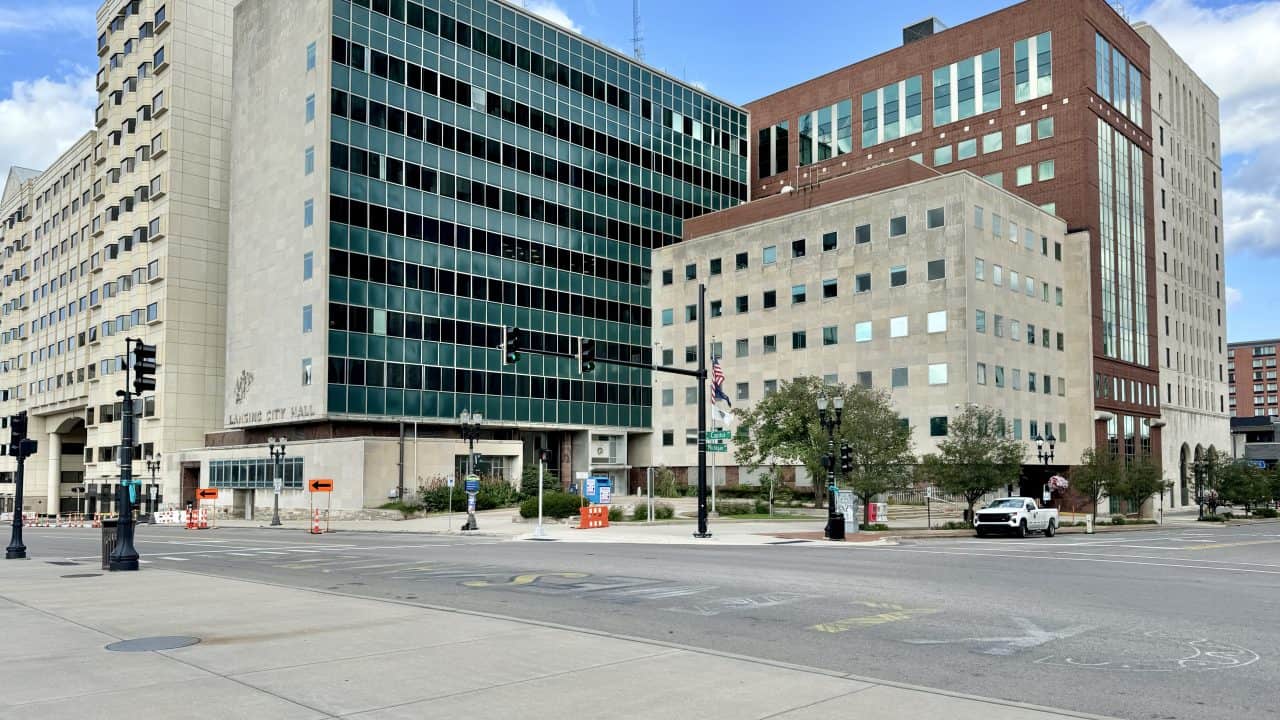
 Lansing City Hall by w_lemay is licensed under Creative Commons Attribution-Share Alike 2.0 Generic license.
Michigan lawmakers are currently considering the Housing Readiness Package, a series of bills aimed at making housing more affordable by expanding property rights, cutting unnecessary government red tape, and allowing the free market to better respond to the state’s housing needs.
One of the bills included in the package is HB 5532, introduced by Representative Joseph Aragona. This legislation would reform protest permit requirements to better reflect the opinions of local communities.
The current law enables active rent-seeking behavior. To file a protest petition for a locality, owners of 20% of the affected land area or within 100 feet of the boundary must submit it to the local legislative body to block local zoning. From there, the local government needs a supermajority to pass the change. This allows for a small group of community members, or even just one, to kill a popular rezoning by setting an excessively high threshold for it to survive a protest petition.
The overall impact is that communities do not build new housing. If a developer’s proposed project can be derailed by one person, they will just not build there. Developers want clarity and certainty that their projects will go through, and empowering bad-faith actors will only trap homebuilders in bargaining struggles with entrenched interests, increasing input costs and pushing prices up. Given that bordering states like Indiana and Wisconsin have moved away from this policy, developers will choose to build there, knowing they will face a lighter regulatory burden. Is it then no surprise that when these states are more affordable, people choose to move there?
HB 5532 addresses this issue. Under the bill, if a rezoning is meant to increase the number of units, a petition needs 60% of the owners within 300 feet of the affected land to sign on. The legislation also establishes requirements for what must be included in a protest petition and mandates transparency about the implications of signing on. With this proposal, these petitions better reflect the community’s interests rather than those of a small, mobilized faction. Groups like renters, young people, and low-income individuals are often excluded from protest petitions, and raising the required thresholds gives them a seat at the table.
At a critical time when Michigan needs more homes, the potential community benefits should not be held hostage by a small handful of people. As Michiganders reject this rent-seeking behavior, HB 5532 balances the needs of developers and local communities, enabling a smoother building process, more homes, and greater affordability.