

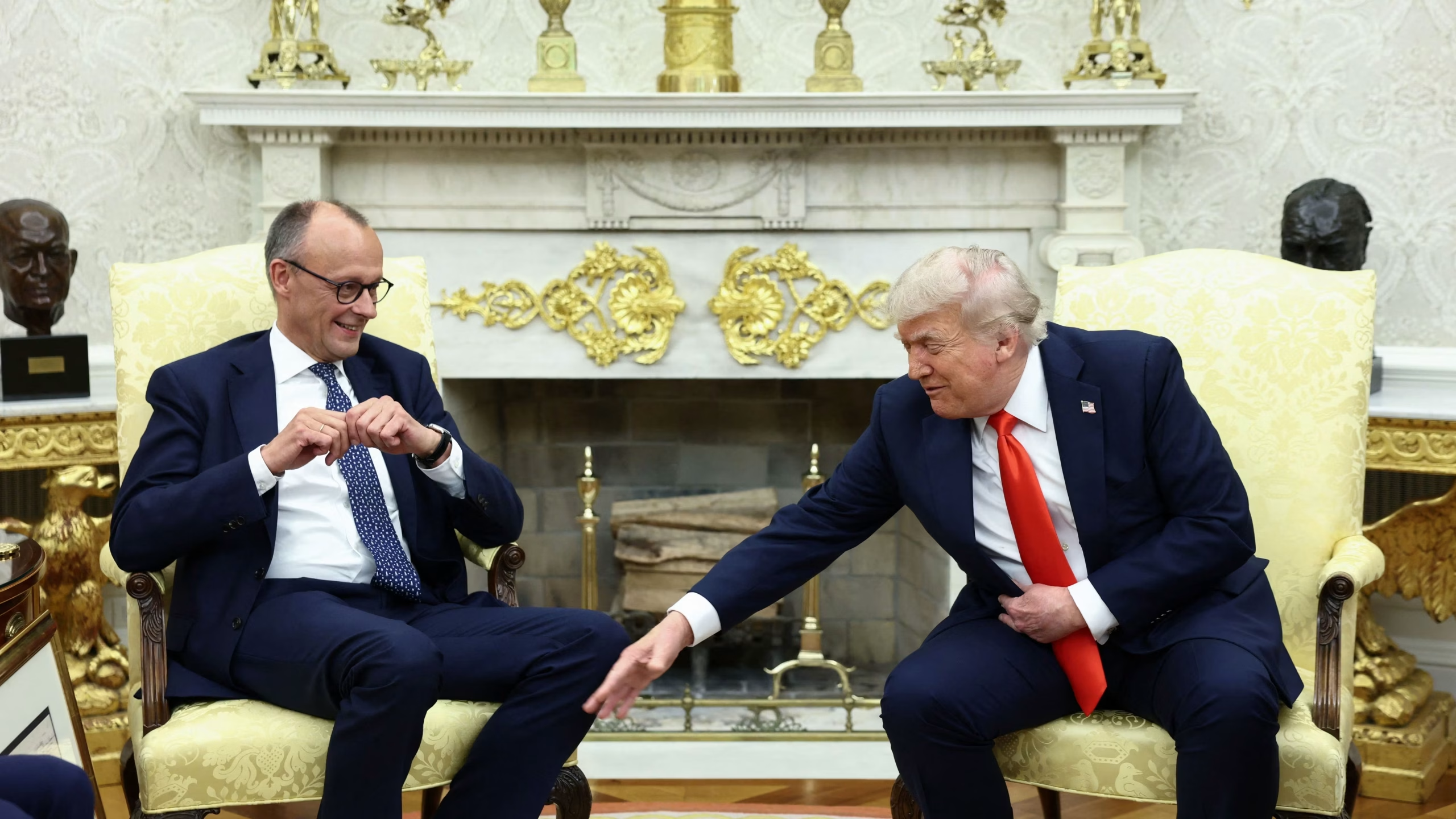
 Trump and Merz is licensed under Creative Commons.
In a rare break from Brussels’ overregulation regime, German Chancellor Friedrich Merz has aligned with President Trump’s pro-growth and pro competition agenda—speaking out against the OECD’s proposed global minimum tax and calling for an EU withdrawal from the initiative.
The policy in question is the OECD’s Pillar Two global tax framework. Long stalled out in ongoing negotiations, Pillar Two aims to impose a 15% global minimum corporate tax rate. The tax is burdening not only American business, but also stifling growth, and eroding our national fiscal sovereignty.
Raising foreign taxes not only increases the cost of doing business abroad, but equally Americans at home.
The Joint Committee on Taxation estimates if Pillar Two was implemented in 2023, the U.S. would have faced a revenue loss of $56.5 billion by 2033. If implemented without U.S. participation, costs could have risen to over $122 billion.
Meanwhile, the effective tax rate on foreign earnings would increase, with the OECD estimating that American companies would bear the majority of a $150 billion annual global tax hike, representing billions in lost productivity.
Pillar Two implementation will fall disproportionately on American businesses—despite the U.S. already maintaining domestic measures to address tax avoidance.
Introduced in the 2017 Tax Cuts and Jobs Act, the Global Intangible Low-Taxed Income (GILTI) provision already sets an effective minimum corporate tax rate on the foreign earnings of American Multinationals of 10.5% Implementing Pillar Two would only add further complexity, raise compliance costs, and undermine existing U.S. law.
President Trump has consistently criticized Pillar Two as an assault on competitive markets and American enterprise. Shortly after entering office, he took steps to withdraw from its obligations—ultimately securing an agreement with G7 countries to exempt U.S. businesses from the tax.
Chancellor Merz’s shift is a welcome change. The U.S. and Germany remain key trade partners, and a shared approach to tax policy will benefit both countries’ business interests. As this alignment progresses, cooperation must focus on eliminating unfair barriers to trade and growth—starting with Pillar Two and efforts like Germany’s proposed digital services tax.
The U.S. and Germany both stand to benefit from eliminating unreasonable barriers to trade, with expanding interconnectivity vitalizing industry, innovation, and shared prosperity.