

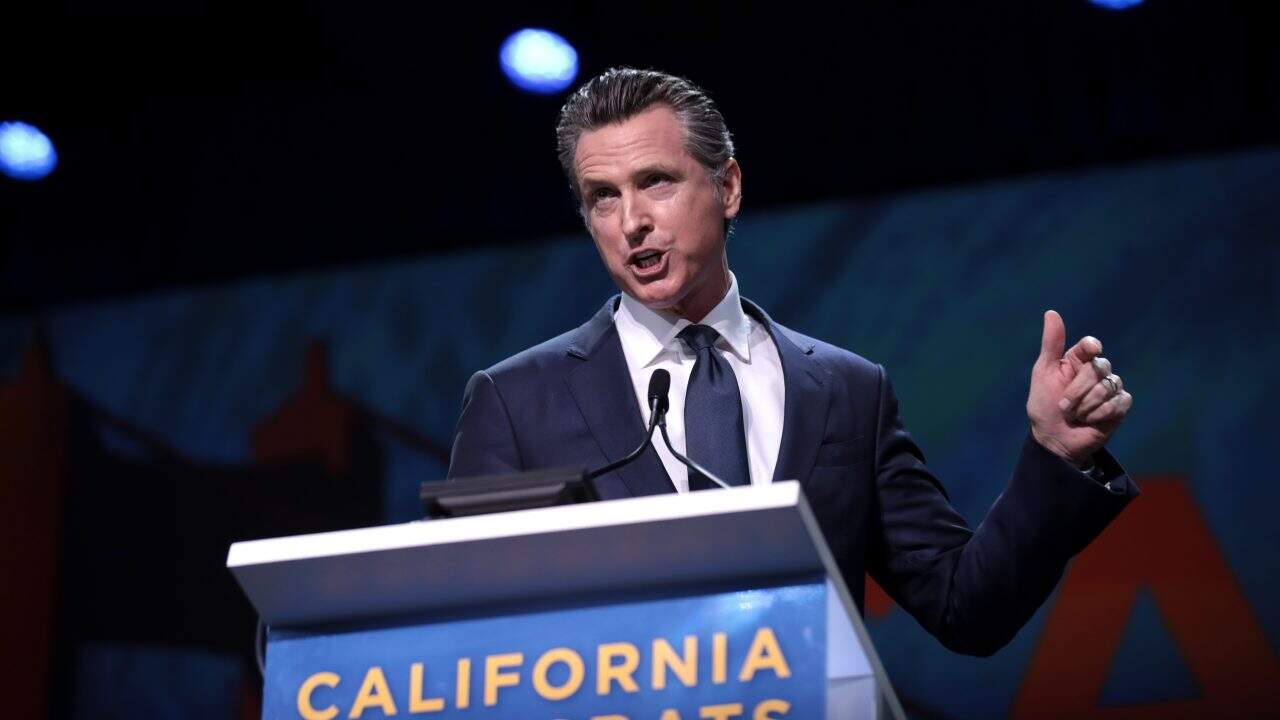
 Gavin Newsom by Gage Skidmore is licensed under CC BY-SA 2.0
A recent study by the Hoover Institute reveals how California’s proposed Billionaire tax fails on its own terms. The study can be found here.
The study estimates more than half of the eligible billionaire tax base has already left California due to just the threat of the proposal passing. Wealth is fleeing California well before the requisite signatures have been collected to place the initiative on the ballot. The damage this proposal has already done, and has the potential to do, should serve as a warning to other states wanting to pursue the same style of wealth tax.
Proponents of the tax used outdated information and flawed methodology when projecting their tax base and revenue. In calculating their projected tax base, the proponents had two major errors. First, they included three billionaires whose primary residence was not in California: Larry Ellison (Oracle), Drew Houston (Dropbox), and Lynsi Synder (In-N-Out). Second, they used directly held real estate as part of their calculations for the projected tax base. Despite the fact the wording of their own proposal explicitly excludes “real property directly held by the taxpayer” from being taxed.
These two empirical errors alone bring the true projected revenue down from $100 billion to $84.8 billion, a 15% decrease. In addition, the proponents left out a crucial factor when determining their revenue: People hate paying taxes. And people, especially billionaires, are willing and able to move somewhere else to escape them.
Six billionaires publicly left California between the day the ballot measure was filed last year, and before the January 1st, 2026 deadline to move out: Larry Page, Sergey Brin, Peter Thiel, Don Hankey, Steven Spielberg, and David Sacks. They took with them ~30% of California’s aggregate billionaire wealth, avoiding $26.7 billion in total potential taxes between the six of them. But these are only the billionaires we know about.
Hoover conducted an interview with 20 California billionaires and found that all of them have already made quiet departure plans in case this ballot measure goes through. Unlike the six above, these twenty billionaires have understandably not discussed it publicly, out of fear of backlash. If these billionaires go through with their plan, they would be leaving California after the January 1st cutoff date, theoretically making them subject to the tax. Their behavior implies that their attorneys are confident that retroactively taxing billionaires who leave after January 1st 2026 may not survive a constitutional challenge.
The retroactive nature of this tax opens the door to countless lawsuits, including a strong constitutional challenge. United States v. Carlton (1994) established the current precedent on retroactive taxes, determining that when there is “rational legislative purpose”, they are permissible. However, SCOTUS is much less likely to uphold this when the levy in question is characterized as a “wholly new tax”.
In an attempt to make the tax legally possible, the proposal amends the State’s constitution and removes California’s existing 0.4% cap on “taxes on intangible personal property”. Not only would this create a wholly new tax, but it allows unlimited future taxes on wealth, no matter one’s income. If this ballot measure passes into law, it will give Sacramento the authority to extend this tax hike down to the middle class. They will not have to wait on approval from voters.
Even at the most conservative estimate, the study found that billionaires’ ability to move to another state would drop estimated revenue of this tax to between $35 -$46 billion, down from the original $100 billion. If no billionaires move into California to replace the ones that left, the tax will forfeit six dollars in future income revenue for every dollar the wealth tax collects. This is estimated at ~$126.1 billion in potential revenue loss. This number does not consider the loss of jobs and investment that will occur once these billionaires pack up and leave for good.
The Hoover study makes clear that California’s proposed billionaire tax has failed before it has begun. Its initial projections were inflated, it has already decreased California’s future revenue without even being passed into law, and it opens the door for even more taxes by repealing key constitutional protections. Other states need to learn from California’s mistakes and ensure nothing like this proposal gets passed into law.