
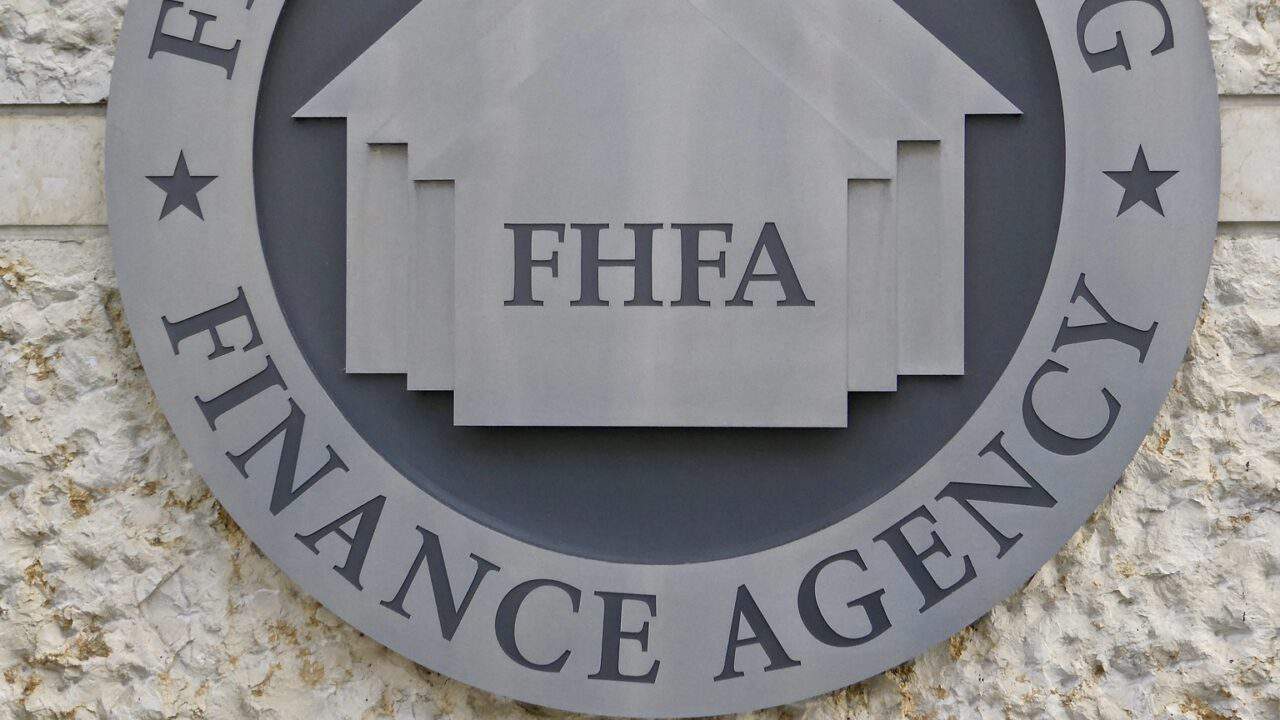
 Federal Housing Finance Agency by F Delventhal is licensed under CC BY 2.0 DEED
Bill Pulte, the director of the Federal Housing Finance Agency (FHFA), recently made an unprecedented decision that threatens to undermine the integrity of the housing finance ecosystem, eerily echoing the run-up to the 2008 housing crisis. Pulte announced that mortgages scored with VantageScore 4.0 would be treated the same as loans scored with classic FICO, even though the two credit scores do not measure risk the same way, and the same borrower often scores higher with VantageScore than FICO. VantageScore, which was recently approved for use in mortgage lending, is a vertically integrated enterprise that is owned by the three major credit bureaus. Instead of allowing free market solutions to lower prices for consumers, the FHFA seems determined to interfere in the market through contriving artificial competition with VantageScore and mispricing credit risk at the taxpayer’s expense.
Fannie Mae and Freddie Mac are government sponsored enterprises (GSEs). They are corporations in conservatorships that buy and securitize mortgages to provide liquidity to lenders. Initially, the GSEs released two different loan level price adjustment (LLPA) grids for VantageScore and FICO scored mortgages. These tables tell lenders the upfront fee that should be charged to the borrower based on their credit score to cover a loan’s credit risk. Because VantageScore tends to produce higher scores for the same borrower, the LLPA grid for VantageScore mortgages treated those scores as 20 points lower for an equivalent FICO score. In practice, this would mean a 700 VantageScore would be treated as a 680 FICO.
On September 28th, 2026, Pulte decreed by tweet that the GSEs would reverse course and use one unified LLPA grid, though no effective date has been set. This means that GSEs would no longer adjust for VantageScore’s higher scores, so many borrowers would pay a lower fee simply by switching scores, with no change in their actual risk. Because lenders can pull both scores and submit whichever is higher, analysts have called the change a backdoor fee cut. The American Enterprise Institute estimated the two-score system would cost the GSEs $1.3-1.7 billion a year in fee revenue.
Mispricing credit risk inflicts two types of damage: First, lenders collect less in fees than they need to cover expected defaults. Second, the shortfall erodes the capital cushion meant to absorb losses, increasing the risk that taxpayers wind up paying for risky loans that go bad.
Fannie and Freddie back roughly half of all home mortgages in America, and when they promise MBS investors they will be paid, taxpayers backstop that promise. Both companies have operated under federal conservatorship since 2008, and the Treasury ultimately put in roughly $190 billion to keep them from collapsing. That safety net never went away. The Treasury is still committed to covering their losses if their own money runs out, and investors buy their bonds largely because they assume Washington will step in again.
When loans go bad, the GSEs still continue to pay the principal and interest to MBS investors no matter what. Under Fannie and Freddie’s conservatorship agreements, the Treasury has committed to inject capital as a final backstop, financed ultimately by issuing new debt. Every fee Fannie and Freddie fail to collect is money that is not there to absorb defaults during the next downturn.
Washington also helped to set off the crisis of 08. The government was not the sole cause, but it helped set the stage. Federal housing goals in the 90s pushed Fannie and Freddie to buy more loans to low- and moderate-income borrowers each year, and to meet those targets the companies loosened standards and bought riskier mortgage bonds. Investors lent to them cheaply because everyone assumed Washington would never let them fail, so the companies ran on paper-thin capital, borrowing about $75 for every dollar they held. When the bill came due, taxpayers were left to cover the losses.
Private enterprises are free to take on risks that owners and shareholders deem appropriate, but when the federal government proposes rules that ultimately pass the costs of default and/or insolvency on to taxpayers, such a move deserves to be heavily scrutinized. Since the GSEs are backstopped by taxpayers, the federal government must avoid incentivizing excess risk through easier loan origination. The moral hazard posed by the Treasury backstop makes this urgent.
The FHFA has also dragged its feet on the new FICO 10T model. The FHFA validated the model in 2022, yet it still cannot be used for loans sold to Fannie and Freddie. Meanwhile, FICO has launched a direct licensing program that lets credit report resellers deliver FICO scores without going through the credit bureaus. These innovations exemplify how companies devise new products and solutions to lower costs for consumers and how red-tape restrictions and approval processes keep them from reaching consumers.
Taxpayers and policymakers should be concerned as to why the FHFA seems eager to loosen lending standards and misprice borrower risk. Underpricing risk does not make it disappear. It moves that risk off the companies that took it on and onto the American taxpayer.