
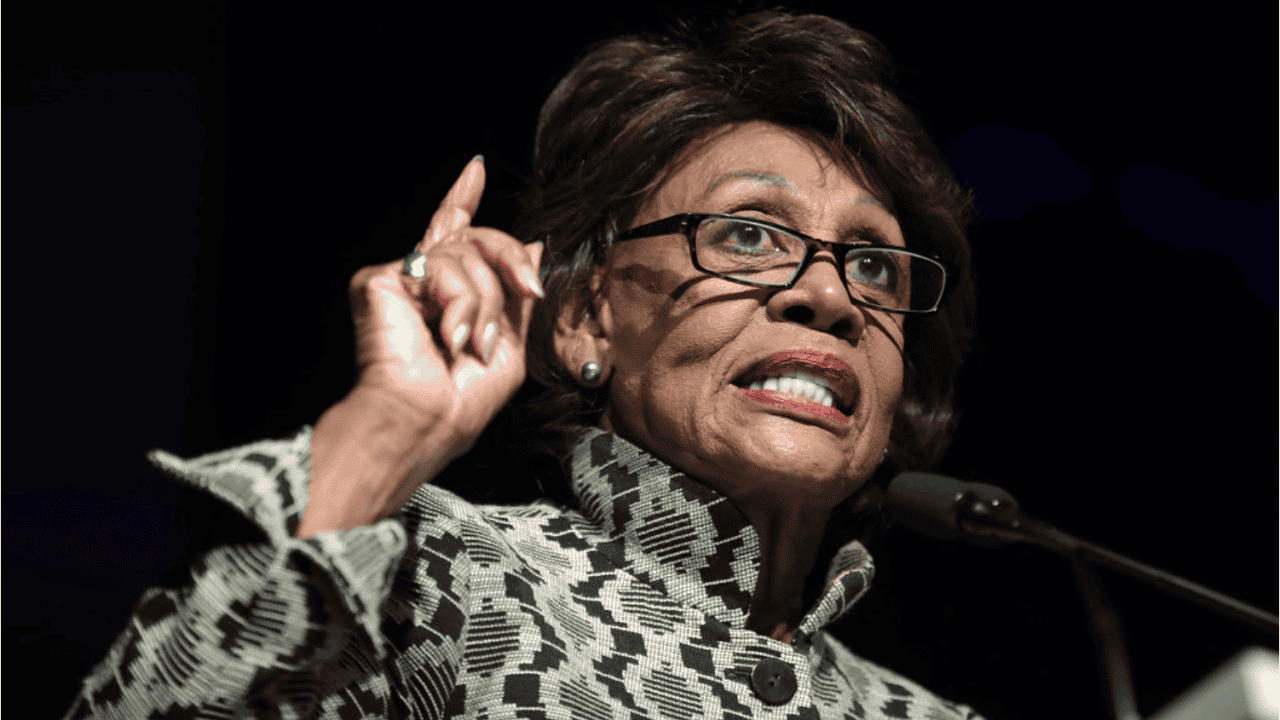
 "Maxine Waters" by Gage Skidmore is licensed under CC BY-SA 2.0
Yesterday, during a House Financial Services Committee markup, Rep. Maxine Waters (D-Ca.) offered an amendment to Rep. Andy Barr’s (R-Ky.) bill on tailoring community bank regulations. The amendment in question was a policy to limit credit card interest rates to 10% for a one-year period. Rep. Waters unsurprisingly took the opportunity to blast bank CEOs for their compensation and tried to frame 20-30% interest rates on credit cards as “usury”.
Despite the cheap theatrical rhetoric, the amendment was quickly brushed aside as Rep. Barr raised a point of order finding the amendment to be not germane to the discussion of the underlying bill. Chairman French Hill (R-Ar.) concurred with Rep. Barr and quickly closed discussion.
Interest rate caps threaten consumer credit and would worsen affordability for millions of Americans and produce a slew of unintended consequences that would be damaging to the economy. Over two-thirds of the American economy is comprised of consumer spending. Credit card spending alone accounts for 22% of US GDP.
A study by the Electronic Payments Coalition showed that up to 190 million Americans or almost 90% of cardholders risk losing credit access under a 10% interest rate cap. This is because interest reflects borrower risk, and the reality is that ordinary consumers are less likely to pay back their debt on time and are more prone to default than wealthier borrowers or large corporations. A rate cap would effectively eliminate credit for millions and potentially put the economy at risk for a recession by damaging consumer spending power.
GOP leadership in congress has expressed their opposition to rate caps. Speaker Johnson (R-La.) raised concerns that banks could very well “stop lending money and maybe they cap what people are able to borrow to a very low amount”. When asked by reporters, Senate majority leader Thune (R-Sd.) stated “I think that would probably deprive an awful lot of people of access to credit around the country.”
The left’s mistaken approach to affordability would impoverish ordinary Americans and further exacerbate affordability issues by depriving people of credit access for emergencies. Congressional leadership has made it clear that rate caps are a misguided proposal. Rate caps do not alleviate the cost pressures that lead to high prices, they reduce credit availability and remove a key financial tool households use to manage the cost of living.
Further attempts to attach heavy-handed price control mandates on credit are likely to fail in the same way Rep. Waters’ amendment failed—swiftly, procedurally, and with little consideration. Populist policies designed to generate headlines and score political points have no real support or future, which is why democrats try to sneak such policies in unrelated legislation to gain their five seconds of fame.
ATR urges lawmakers to continue ignoring democrats’ desperate attempts to establish rate caps in the consumer credit market.
