
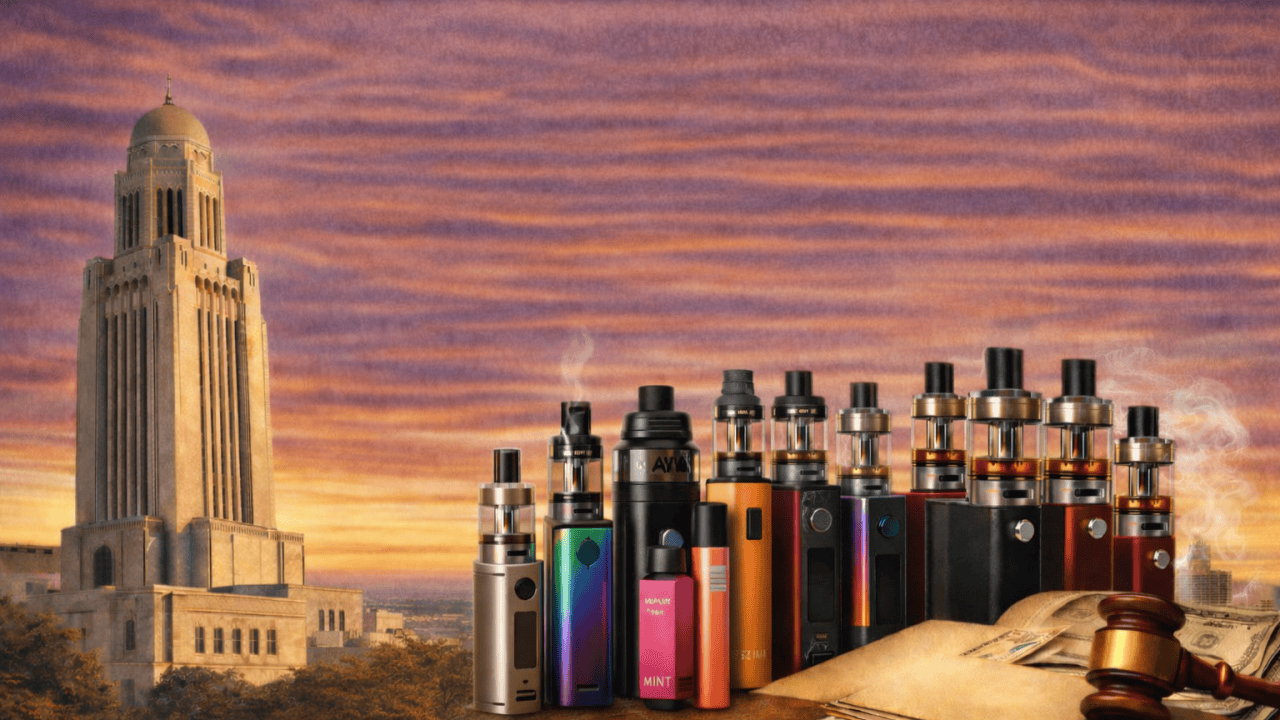
Nebraska lawmakers are currently considering legislation that would dramatically increase taxes on cigarettes and vape products. LB 1124 would more than double the state’s cigarette tax, from 64 cents per pack to $1.64, and triple the tax on vape products from 10 percent of wholesale price to 30 percent.
A recent amendment to the bill aims to strip the proposed tax increase on cigarettes yet leave in place the drastic hike on vaping products. Even with this amendment, Nebraska Senators should still reject LB 1124.
This bill, even the amended version, would have serious consequences not only for consumers, but also for Nebraska businesses when they can least afford it. At a time when businesses are already struggling with rising costs and ever-higher property taxes, dramatically increasing taxes on products that small, family-owned convenience stores, vape shops, and gas stations rely on for a significant share of their revenue would place many of these businesses under even greater financial strain.
Retailers operating on thin margins would face increased competition from lower-tax jurisdictions and untaxed sources, putting jobs and local businesses at risk across the state. This pressure would be especially acute for stores near state borders, where consumers can easily cross into neighboring states to purchase the same products at lower tax rates.
Singling out vaping products also ignores the important role they play in helping smokers move away from combustible cigarettes.
Non-combustible alternatives such as vapor products expose users to far fewer toxic byproducts than traditional cigarettes, which are responsible for the vast majority of smoking-related disease and death. As a result, many adult smokers have successfully used these products to quit smoking entirely or transition away from combustible tobacco.
Taxing vape products more heavily also weakens the incentive for smokers to switch to lower-risk alternatives. A growing body of public health research has found that e-cigarettes are substantially safer than combustible cigarettes. Research from Public Health England, for example, has concluded that vaping is at least 95 percent less harmful than smoking.
Clinical studies have also found that vaping products can be more than twice as effective at helping smokers quit compared to traditional nicotine replacement therapies such as patches or gum. A large-scale analysis from Georgetown University Medical Center estimates that if most smokers switched to vaping, 6.6 million American lives could be saved, including more than 44,000 in Nebraska alone.
For all of these reasons, Nebraska lawmakers should reject LB 1124. Even if amended, the bill would still impose significant new taxes on consumers, place additional strain on small businesses, and undermine a harm-reduction tool that has helped many smokers move away from combustible cigarettes. Nebraska taxpayers and small businesses deserve better than another targeted tax increase.