
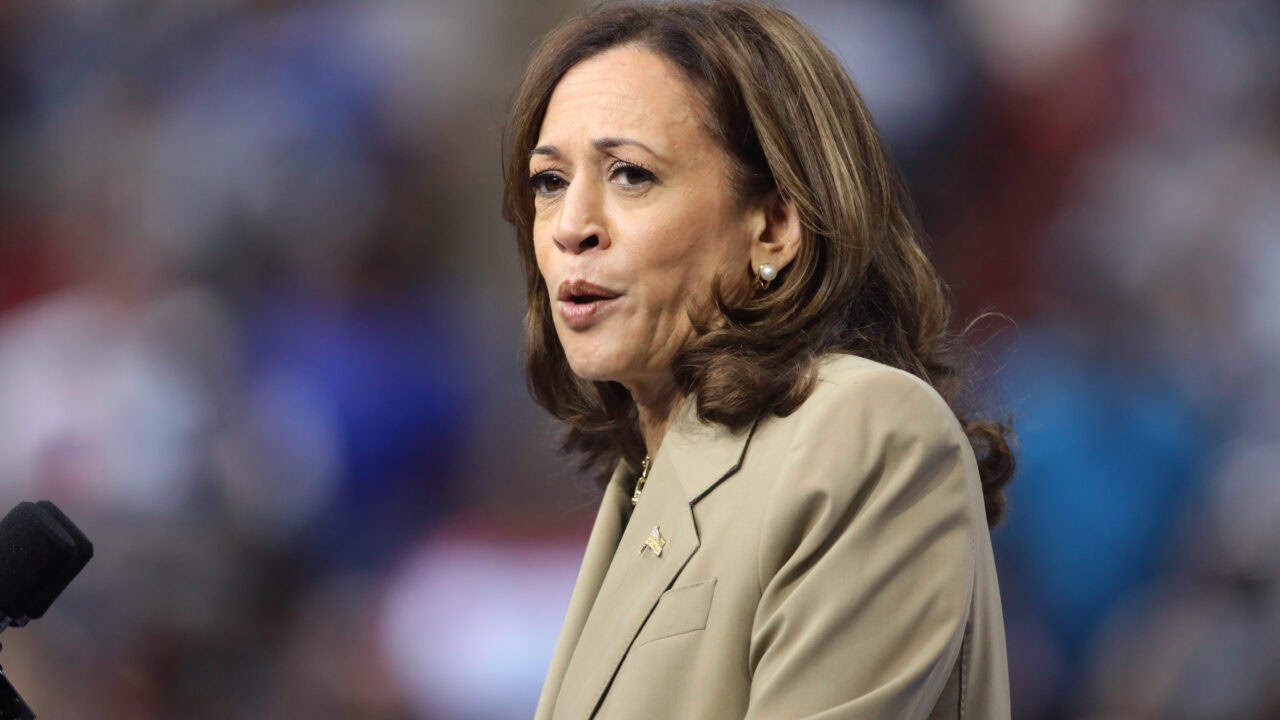
Kamala Harris delivered an address late last month to the Economic Club of Pittsburgh where she outlined her idea of an “Opportunity Economy”. The reality of her economic plans, however, would remove opportunities from American families.
During the address, Harris announced, “We shouldn’t be constrained by ideology, and instead, should seek practical solutions to problems.” She went on to say, “Part of being pragmatic means taking good ideas from wherever they come.” The rhetoric of pragmatism seems innocent enough, but the empty messaging does nothing to inspire confidence for investors, manufacturers or businesses looking to plan for the future. It is a tactic of political spin affording Harris the ability to obfuscate her plans for what a potential four years under her presidency would actually look like.
The few policies that Kamala has outlined contrast with her rhetoric of an “opportunity economy,” such as her suite of new taxes set on destroying opportunity for Americans. Her proposal to increase the corporate tax rate to 28 percent from 21 percent (a 33 percent hike) would give the U.S. one of the highest rates in the OECD, making the United States wholly uncompetitive with the European Union average of 21 percent, especially when coupled with state corporate income taxes. In fact, Kamala’s proposal would place the U.S.’s rate even higher than Communist China’s corporate tax rate of 25 percent. The abandonment of domestic production in the United States and the increased cost of intermediary goods as a result will jack up inflation and kill American jobs. Indeed, economist Stephen Entin wrote in 2017 that an estimated 70 percent of the corporate income tax is borne by American workers and laborers.
Additionally, Harris’ plan to tax unrealized capital gains flies in the face of her calls for alleged “fairness” in her economic approach. This radical policy would slash investment in venture capital and startups, to which over 54,000 American businesses owe their founding, according to the Wall Street Journal in 2024. Even Mark Cuban, an endorser of Kamala Harris, told CNBC last week that taxing unrealized gains would “kill the stock market,” further stifling innovation and the creation of small businesses.
Finally, yet perhaps most devastatingly, Harris revisited her pledge to support the PRO Act if elected, a bill which failed to pass through the current Congress. The legislation would trample on existing state right-to-work laws affecting over 160 million Americans in 26 states. Harris’ PRO Act would deny the “opportunity” for workers to opt-out of paying dues to a union and weaken business confidence. A worker’s right to privacy would be eviscerated with sensitive employee data being handed over to unions against their will, allowing organizers to intimidate laborers in a largely unfettered fashion. All of this is to the benefit of union bosses, some of Kamala Harris’ strongest backers and financiers in this election, who also seek to subsume existing contractors and freelancers into their ranks via Kamala’s PRO Act.
This move would forcibly reclassify millions of existing independent contractors as employees for the purposes of federal law, reminiscent of California Governor Gavin Newsom’s ABC test that has savaged jobs in the gig economy within the Golden State. This attack on workers in the gig economy would kill off jobs and stifle innovation which has been a leader in industries such as ride sharing, delivery driving and freelance authors. Consumers are suffering too with higher prices, in part contributing to the rapid decline in Californian net interstate migration since the introduction of the ABC test in 2019. It seems Harris, a former Senator from the embattled state, is keen to bring the most radical parts of their state law with her to the federal policy landscape if she is to be elected in November.
Given the harm to small businesses, investors and workers alike, it is hard to see who Harris’ so-called “opportunity economy” will benefit. Harris sums up her approach by invoking the words of 32nd U.S. President Franklin D. Roosevelt, who called for “bold, persistent experimentation” in the midst of the Great Depression. FDR’s New Deal was the largest expansion of the size of the federal government in American history and ended up prolonging the depression. Kamala Harris has made clear that her goal, too, is greatly expanding the government at the expense of American families.
When you make it past her rhetoric and pleas for pragmatism, Harris’ “opportunity economy” is all about giving her and her Big Labor backers the opportunity to come after your job, your income and your right to freedom of association.
Stay tuned to ATR’s Kamalanomics.org for more updates.