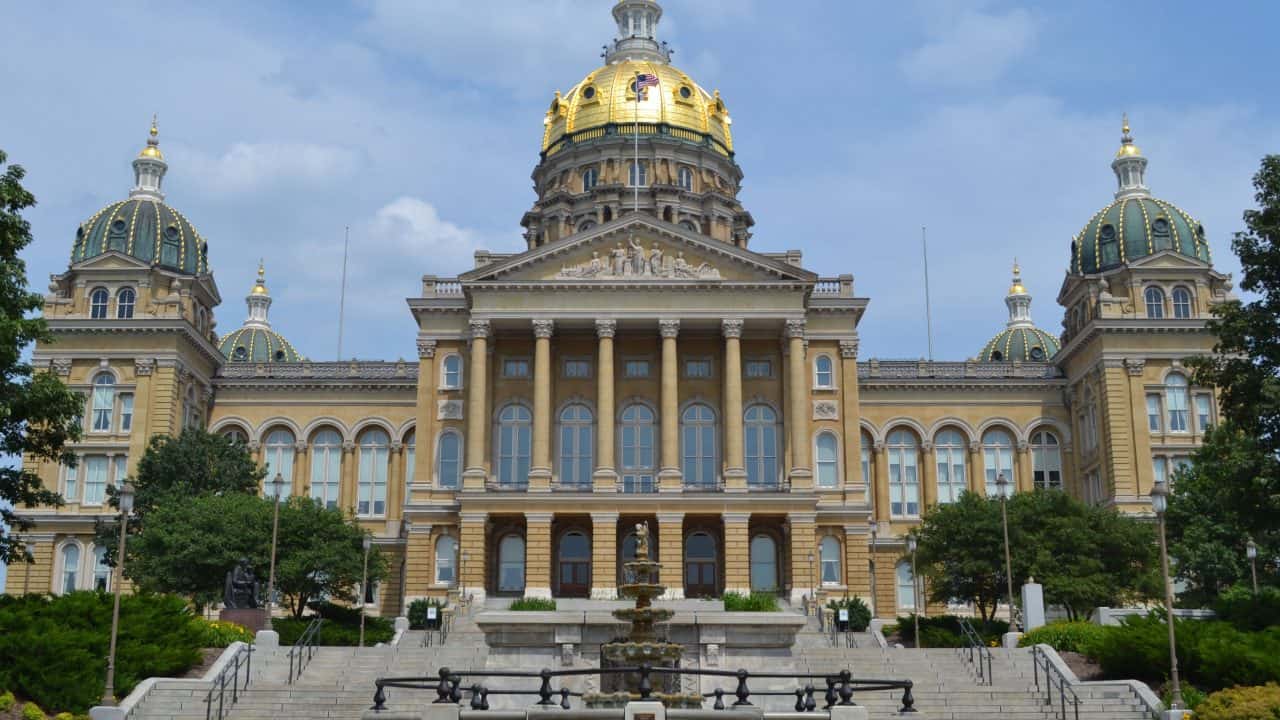
 Iowa State House by Stephen Matthew Milligan is licensed under CC BY-SA 3.0
Having now surpassed the 100th day of legislative session, the Iowa legislature has yet to agree on a comprehensive plan to address property tax reform. While Senate Republicans have already passed their version of a plan, House Republicans took a step forward this week, approving an amended proposal of their own.
House Republicans are right to insist on one key reform above all else: a hard cap on local property tax revenue growth. Any final deal that does not include a meaningful, enforceable limit on how fast local governments can grow property tax collections will fall short of delivering lasting relief for Iowa taxpayers.
Property taxes don’t rise out of thin air. They increase because local government spending continues to grow year after year. When budgets grow, tax collections follow. A hard revenue cap directly addresses this root cause by limiting how much total property tax revenue can grow annually, forcing prioritization and fiscal discipline at the local level, and providing taxpayers with predictability and protection against runaway increases. Without a firm cap, any “relief” is temporary. When constraints are weak or loosely tied to inflation, spending rises, and property taxes inevitably follow.
Additionally, the Senate’s approach to overhauling Iowa’s property tax system by eliminating the rollback mechanism is a mistake. Iowa’s rollback system plays an important role in preventing sudden spikes in assessed values from immediately translating into higher tax bills and provides a built-in check on rapid increases. Scrapping it risks creating volatility, shifting tax burdens in unpredictable ways, and weakening an existing layer of taxpayer protection. Rather than dismantling these guardrails, lawmakers should focus on constraining spending growth, which is where the real problem lies.
Even more concerning, the Senate proposal includes provisions allowing for increases in other taxes. Allowing local governments to raise the local option sales tax to 1.5% risks undermining the goals of property tax reform by enabling local governments to replace property tax reductions with higher sales taxes rather than delivering real tax relief for Iowa taxpayers.
The Senate plan also indexes the gas tax to inflation, creating automatic, ongoing tax increases. This removes accountability from lawmakers and guarantees higher costs for drivers year after year without requiring future legislative approval. At a time when families are already dealing with higher costs, building in automatic tax hikes is the wrong approach.
Iowans do not need another complex system that promises relief but delivers higher taxes elsewhere. They need a straightforward, enforceable limit on how fast property taxes can grow. That means a hard cap on local property tax revenue growth, preserving taxpayer protections like rollback, and rejecting new or automatic tax increases disguised as reform.
If lawmakers are serious about property tax relief, they must focus on the real issue: unchecked growth in government spending. A hard revenue cap does that. Iowa taxpayers are counting on House Republicans to stand firm and deliver reform that actually works, not a reshuffling that leaves them paying more in the long run.
