

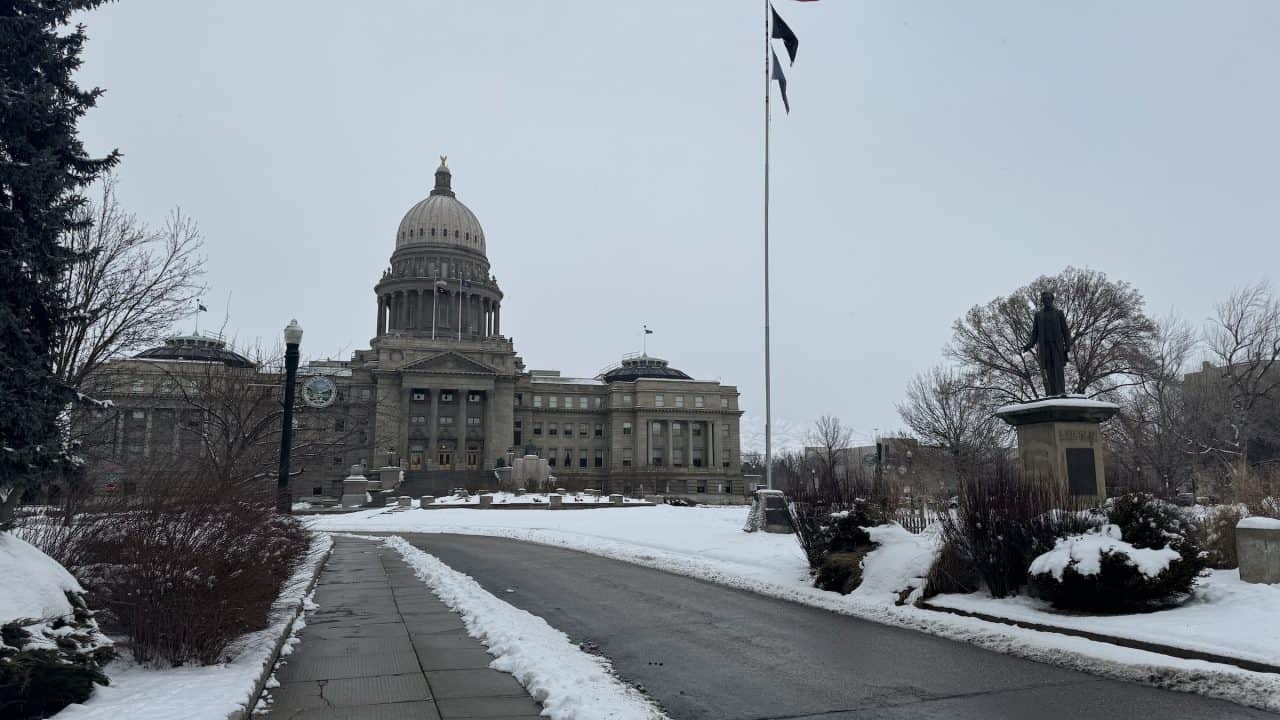
 Idaho State Capitol
After becoming the 23rd flat income tax state in 2022 and achieving steady rate cuts over the last decade, Idaho leaders are gearing up to enact another big reduction to the income tax rate as tax cut competition heats up around the country.
HB 40, which lowers the income tax rate from 5.695% to 5.3%, cleared the House with flying bipartisan colors last week in a 63–7 vote. If the GOP Senate and Gov. Little lend their support to the bill, Gem State residents will be able to keep far more of their hard-earned money, and at least $250 million will return to the productive private sector – supercharging the Idaho economy in the process.
Idaho has seen great success in reducing its income tax rate under the leadership of Speaker Mike Moyle, who has been pushing income tax cuts for nearly three decades, and Senate President Pro Tempore Kelly Anton, who shepherded at least five separate tax cut bills through the Senate as majority leader – not to mention other champions of tax reform like Majority Leader Jason Monks.
However, now is not the time for Idaho to rest on its laurels. States all over the country are putting surplus dollars toward income tax rate reduction, widening the productivity gap between red and blue states and causing residents to flock in droves to the states working to shrink the size of government. And leaders in at least twelve states have expressed a desire to get rid of their income tax once and for all.
One of those states on the path to zero is Kentucky, which was first out of the gate to cut income taxes this year with legislation to move from 4% to 3.5%. Democrat Governor Andy Beshear signed that bill into law without protest, demonstrating that the move to zero is has gained so much momentum in recent years that members of both parties are eagerly jumping on board.
On Idaho’s eastern border, Montana Governor Greg Gianforte is pushing for a historic tax cut of his own that would take the income tax from 5.9% to 4.9% – rocketing ahead of Idaho whether the tax cut now on the table goes into effect or not. That accomplishment would be all the more impressive in light of Montana’s 0% sales tax.
Meanwhile, New Hampshire became the 8th no-income-tax state on January 1 after it eliminated its tax on interest and dividends income. (Like Montana, NH also has no sales tax.) West Virginia, too, is on the path to zero, with revenue triggers that require automatic income tax rate cuts whenever tax dollars come in above a certain threshold. Other states with similar triggers include North Carolina, Georgia, and Indiana, while Kansas, Missouri, and Arkansas are all set to enact triggers of their own in the coming months.
For those who value smaller government, there is no better tool than revenue triggers. Triggers function as an effective spending cap by requiring extra dollars to go back to the wallets of taxpayers, rather than be wasted on new programs and government bloat. On top of that, they placate criticism from Democrats that tax cuts must be “responsible” by ensuring they only go into effect when cashflow is positive year over year. Most importantly, they give residents and businesses certainty that the income tax will eventually be eliminated, sparking new investment as that revenue source is cut off once and for all.
With state coffers flowing over with excess revenue and residents clamoring for more relief, Idaho is well-positioned to enact further income tax cuts this year and catch up to its GOP-led peers around the country.