

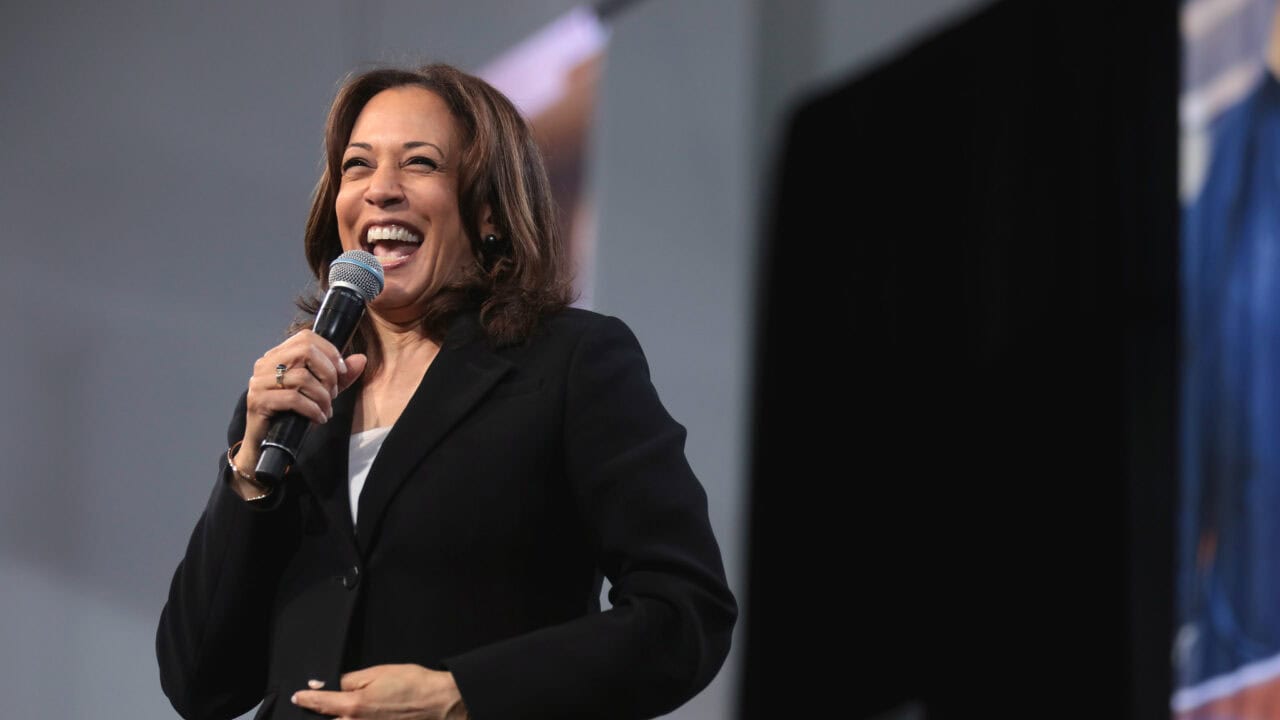
 Kamala Harris by Gage Skidmore is licensed under CC BY-SA 2.0
On Friday, Vice President Kamala Harris took to the stage in Raleigh, North Carolina to outline her economic policy agenda. Over the past few weeks, Harris has faced criticism over her lack of concrete issue positions, leaving many voters questioning her potential administration’s true vision for America. While the speech was framed as a major policy reveal, her remarks were little more than vague promises wrapped in radical rhetoric.
Harris’s proposed solutions for inflation – which Harris bears personal responsibility for as the tie-breaking vote for the Inflation Expansion Act – was the centerpiece of her address. However, rather than offering a clear strategy, she introduced a radical plan to ban “price gouging” on essential goods.
As economically illiterate as this Soviet-style price control scheme may be, we should take Harris at her word. One tool that the Biden-Harris administration is already using to lay the groundwork for grocery price controls is the revival of the Robinson-Patman Act (RPA), an ossified law from the Great Depression.
The RPA bans wholesalers and manufacturers from selling commodities of similar grade and quality to buyers at different prices. While it was originally intended to protect small businesses from unfair competition, the RPA’s track record shows that it has done more harm than good. According to a 1977 Justice Department report, RPA enforcement raised prices across the economy by chilling negotiations between buyers and suppliers. By imposing autocratic price controls on consumer goods, business innovation is suppressed while American shoppers suffer from higher prices.
Under the direction of the Biden administration, the Federal Trade Commission is already looking to revive the RPA. Chairwoman Lina Khan, who will undoubtedly continue her abysmal service in a potential Harris administration, has recently launched an investigation into “Big Grocery,” fueling speculation that the RPA will be used to institute crippling price controls. If elected, Harris will open up a much broader RPA assault on American businesses, expanding the government’s sway over the economy.
Instead of harassing American businesses for soaring prices, Harris should take a look in the mirror and acknowledge the true cause of American economic dysfunction: the policy failures of the Biden-Harris administration.
Since taking office January 2021, grocery prices have surged by 21% on Biden and Harris’s watch. Government lockdowns, combined with the inflationary impact of the $1.9 trillion “Inflation Reduction Act,” have caused grocery bills to skyrocket. Harris’s proposed price controls will only exacerbate the problem, leading to even higher costs and reduced consumer choice.
In contrast, commodity prices were stable and low throughout the Trump administration. According to AP News, grocery prices are 25% higher than pre-pandemic levels. However, over the last 12 months, grocery prices have only risen by 1.18%, undermining Harris’s claims that grocers are actively price gouging Americans. Instead, due to crippling inflation and supply-chain dysfunction, the failed economic policies of the Biden administration have kept prices high for Americans.
Harris’s vague policy proposals are a desperate attempt to mask the failures of the Biden-Harris administration. But voters should be wary of what lies beneath the surface. If Harris is elected, her administration will usher in an era of unprecedented government overreach, with devastating consequences for American workers and businesses alike.