

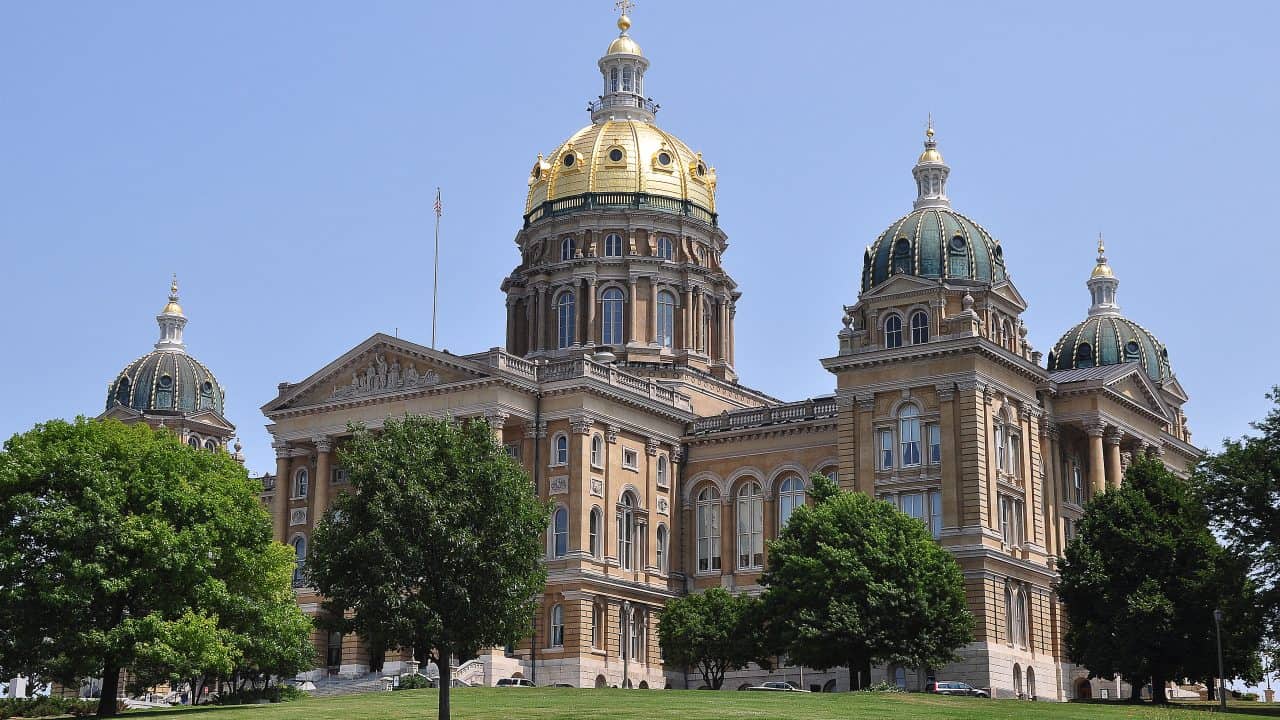
 Iowa State Capitol by Jim Bowen is licensed under CC BY 2.0
Iowa Republicans entered the 2026 legislative session with a clear priority: deliver meaningful property tax relief to Iowa taxpayers. After months of negotiations and debate, they delivered a significant reform package.
The legislation will deliver an estimated $4 billion in property tax relief over the coming years while finally addressing the underlying drivers of rising property tax bills.
At the heart of the reform package is a hard cap on the growth of most local government revenue. Under the bill, cities and counties generally cannot increase property tax revenues by more than 2 percent annually, excluding new construction and limited exceptions. That matters because it forces local governments to prioritize spending and prevents property tax collections from automatically ballooning whenever assessments rise.
Property taxes don’t rise out of thin air. They increase because local government spending continues to grow year after year. When budgets grow, tax collections follow. A hard revenue cap directly addresses this root cause by limiting how much total property tax revenue can grow annually, forcing prioritization and fiscal discipline at the local level, and providing taxpayers with predictability and protection against runaway increases.
This represents a major victory for taxpayers and for the lawmakers who spent the session insisting that any reform package needed to include real limitations on government revenue growth rather than temporary relief measures or accounting gimmicks.
Importantly, the final legislation also preserves key elements of Iowa’s rollback system, which helps ensure that rising property valuations do not automatically translate into massive property tax hikes. That protection matters because without rollback, local governments can collect significantly more revenue simply because assessed values rise, even if they never formally vote to increase tax rates.
Rollback works by automatically reducing the taxable portion of a property’s value when statewide valuations grow too quickly. In effect, it forces levy rates downward as valuations rise, helping prevent local governments from receiving a windfall from rapidly increasing assessments alone. While property tax bills can still increase under the system, rollback slows the pace of growth and creates an important check on automatic revenue expansion.
Governor Kim Reynolds and legislative Republicans deserve tremendous credit for making property tax reform a priority and staying committed to seeing it through despite difficult negotiations and significant pressure from local government interests that opposed meaningful limits on spending growth.
Over the past several years, Iowa Republicans have already transformed the state into a national leader on tax reform by moving to a flat income tax, lowering tax burdens on families and businesses, and creating a more competitive economic environment. With passage of this property tax reform package, lawmakers have now taken another major step toward protecting taxpayers and making Iowa a more affordable place to live, work, invest, and raise a family.
Rather than chasing temporary fixes or simply managing the symptoms of rising property taxes, Iowa lawmakers took aim at the core drivers of the problem. By putting meaningful limits on how fast governments can increase revenue, lawmakers delivered real structural reform that will provide lasting protections for taxpayers across Iowa.