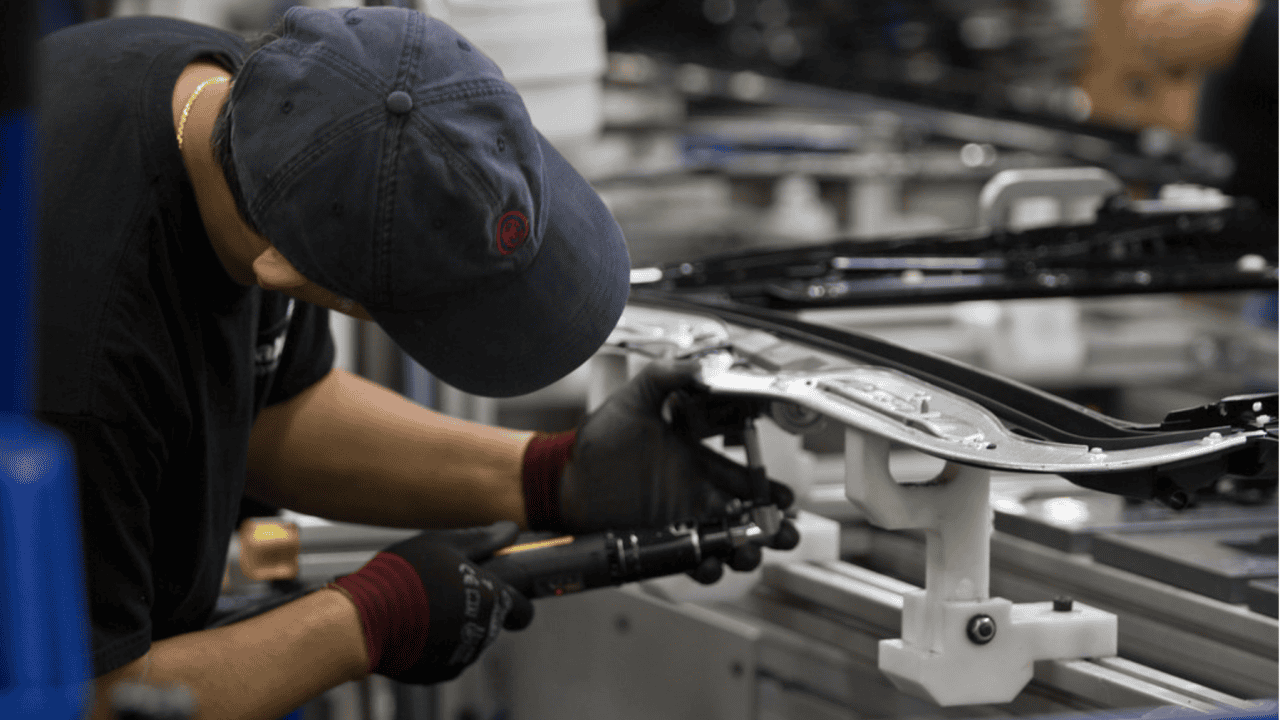
 "Workers" by Robert L. Payne, licensed under CC BY.
Americans For Tax Reform’s Mike Palicz recently authored an Op-Ed published in Townhall arguing in support of the many benefits that duty drawback provides for American manufacturers.
With a new reconciliation package on the horizon, Congress has a prime opportunity to safeguard duty drawback that would double down on the gains of President Trump’s pro-growth agenda. Strengthening this program is important for the expansion of American manufacturing, the enhancement of American global competitiveness, and an increase of United States exports.
The Trump tax cuts included in the One Big Beautiful Bill Act delivered major wins for U.S. manufacturers, including 100% bonus depreciation and full expensing for research and development costs. These provisions have already set off investment and innovation. Securing the duty drawback program will build on this momentum and further support domestic producers.
What is Duty Drawback?
Duty drawback allows United States exporters to recover tariffs paid on imported products when that product, a product incorporating the imported product as a component, or a like-kind product is exported. This practice is rooted in tradition, dating back more than 200 years, and has been a pillar of U.S. trade policy since the nation’s founding. Reimbursing tariff costs incentivizes American companies to produce and export more goods, all while reducing costs across supply chains.
Maintaining the U.S.’s competitive edge matters in manufacturing. Without duty drawback, American manufacturers would face higher costs than foreign competitors, many of whom benefit from similar programs in their nations. The European Union, Canada, Mexico, and China, for example, all offer duty drawback to their manufacturers, exemplifying its role in leveling the playing field for United States exporters.
Past Restrictions on Drawback Have Failed
Previous attempts to restrict drawback have faced fierce opposition from manufacturers and advocates for a free-market. During the Biden Administration, the National Association of Manufacturers (NAM) took the Treasury Department to court over regulatory burdens that curtailed drawback eligibility for excise tax payments. After a battle that climbed to the U.S. Court of Appeals, NAM ultimately prevailed. The court’s decision reasserted the intent of Congress to expand access to duty drawback.
Conservative Opposition to Restrictions
Over the years, Conservative grassroots organizations, including Americans for Tax Reform, have consistently defended the program. In 2018, a coalition letter including ATR, the National Taxpayers Union, Taxpayers Protection Alliance, and other groups opposed efforts to limit drawback. The letter warned that such restrictions would sabotage American competition and contradict the legislative intent of Congress, setting a dangerous precedent for possible future restrictions.
Past Republican Congresses Expanded Drawback
The Republican-controlled Congress in 2016 passed the Trade Facilitation and Trade Enforcement Act (TFTEA) to expand duty drawback. The decision to retain the program reflects a clear choice to promote United States exports and strengthen the position of American manufacturers.
By passing TFTEA, Congress actively retained drawback for excise taxes and made the program easier to administer and comply with by tying drawback eligibility from the vague and subjective standard of “commercially interchangeable goods” to goods that are classified under the same eight-digit Harmonized Trade System (HTS) number.
Duty drawback is proven to be a market-oriented policy that reduces the burden on U.S. manufacturers, lowers costs for consumers, and encourages investment in American production. As Congress soon drafts the next reconciliation package, lawmakers should build on their past success by protecting this program.
Duty drawback increases American competition on the global stage, expands the nation’s manufacturing capacity, and complements the historic tax cuts enacted under President Trump.
