
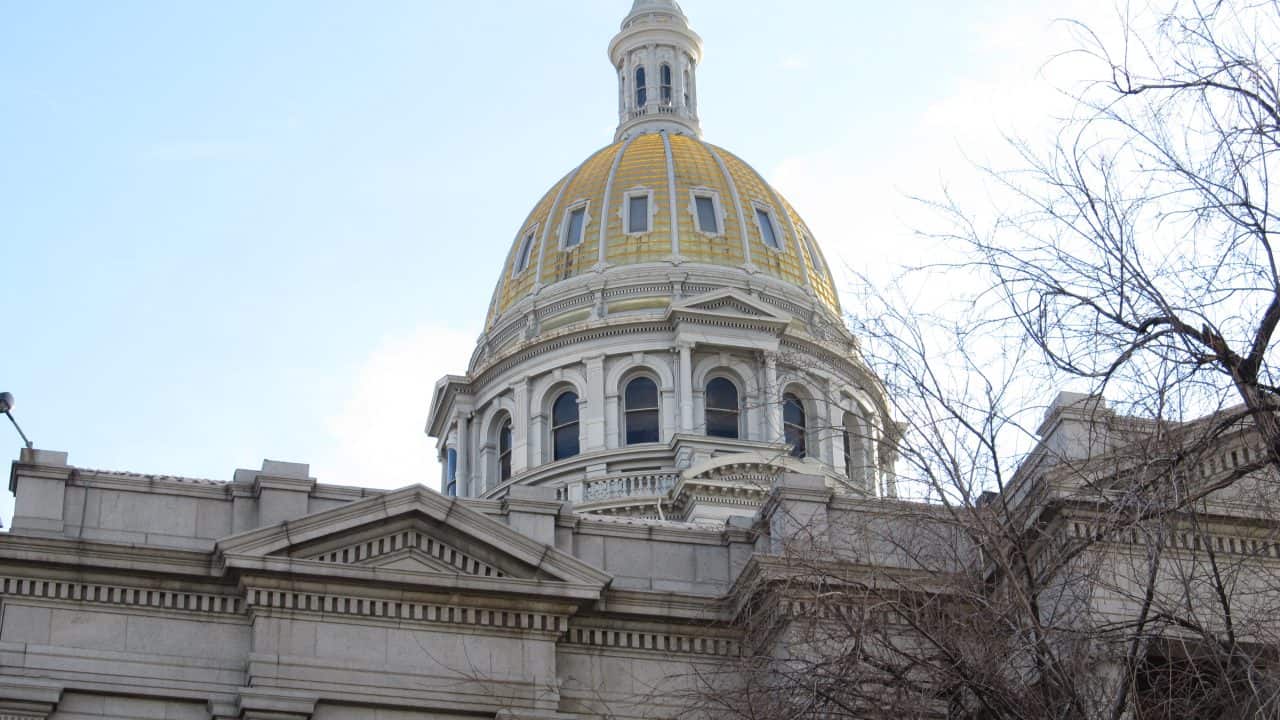
 Colorado State Capitol by Ken Lund is licensed under CC BY-SA 2.0
This November, Colorado taxpayers will face a ballot measure that would dismantle the state’s flat tax, impose nearly $2 billion in tax increases, and destroy one of the nation’s most prominent taxpayer safeguards: the Taxpayer Bill of Rights (TABOR).
Colorado currently imposes a flat 4.4% individual and corporate income tax. Amendment 87 would replace both with six tax brackets ranging from 3.7% to 8.4%, beginning in 2027. The top marginal rate would increase from 4.4% to 8.4%, a roughly 91% increase.
This is not simply a proposal to raise taxes on high-income earners. The same graduated tax structure would apply to corporations, while successful pass-through businesses could also face the higher individual rates through the individual side of the tax code. Colorado’s flat tax has provided taxpayers and businesses with a simple and predictable tax system. Amendment 87 would replace it with a system that penalizes greater income, investment, and success.
Even worse, the proposal would weaken one of Colorado taxpayers’ most important protections.
The Taxpayer’s Bill of Rights, commonly known as TABOR, currently requires taxable income to be taxed at one rate. TABOR also limits how quickly state revenue can grow, generally requiring revenue collected above that cap to be refunded to taxpayers. Amendment 87 would remove that constitutional flat-tax protection, replace it with a graduated income tax, and exempt the additional revenue generated by the new graduated system from TABOR’s normal revenue limit.
By placing nearly $2 billion in new annual tax revenue outside TABOR’s revenue limit, Amendment 87 would also effectively gut the rebate system Colorado taxpayers have come to expect. Because that revenue would not count toward the constitutional cap, it could be collected and spent without triggering the taxpayer refunds that would ordinarily result when state revenue exceeds TABOR’s limit.
The proposal also contains another problem for taxpayers. Its six tax brackets are not indexed for inflation. As wages and incomes increase over time, more taxpayer income can be pushed into higher brackets without voters ever approving another tax increase. Even the state’s official analysis warns that more income will enter the higher brackets over time.
Meanwhile, Colorado voters have consistently voted to move in the opposite direction. In 2020, voters approved Proposition 116, reducing the state’s flat individual and corporate income tax rate from 4.63% to 4.55%. Just two years later, voters approved another reduction to 4.4% through Proposition 121 by nearly a two-to-one margin. Colorado voters have also rejected previous attempts to replace the flat tax with a graduated system, including Amendment 73 in 2018.
Colorado would also be moving against a broader national trend. States across the country have spent recent years reducing individual income tax rates and moving toward flatter tax structures. Twelve states enacted income tax reductions in 2025 alone, while Ohio became the latest state to adopt a flat income tax.
Opposition to Amendment 87 is not limited to conservatives and taxpayer groups. Democratic Gov. Jared Polis has reportedly called the proposal a “big tax increase” and warned that it would be “absolutely devastating” for Colorado’s economy.
Colorado has spent decades building a competitive tax system based on low, flat rates and strong taxpayer protections. Voters strengthened that system when they cut the income tax in 2020 and again in 2022. They should not reverse that progress now.
Colorado voters should reject Amendment 87 and preserve the state’s flat income tax and TABOR protections.