

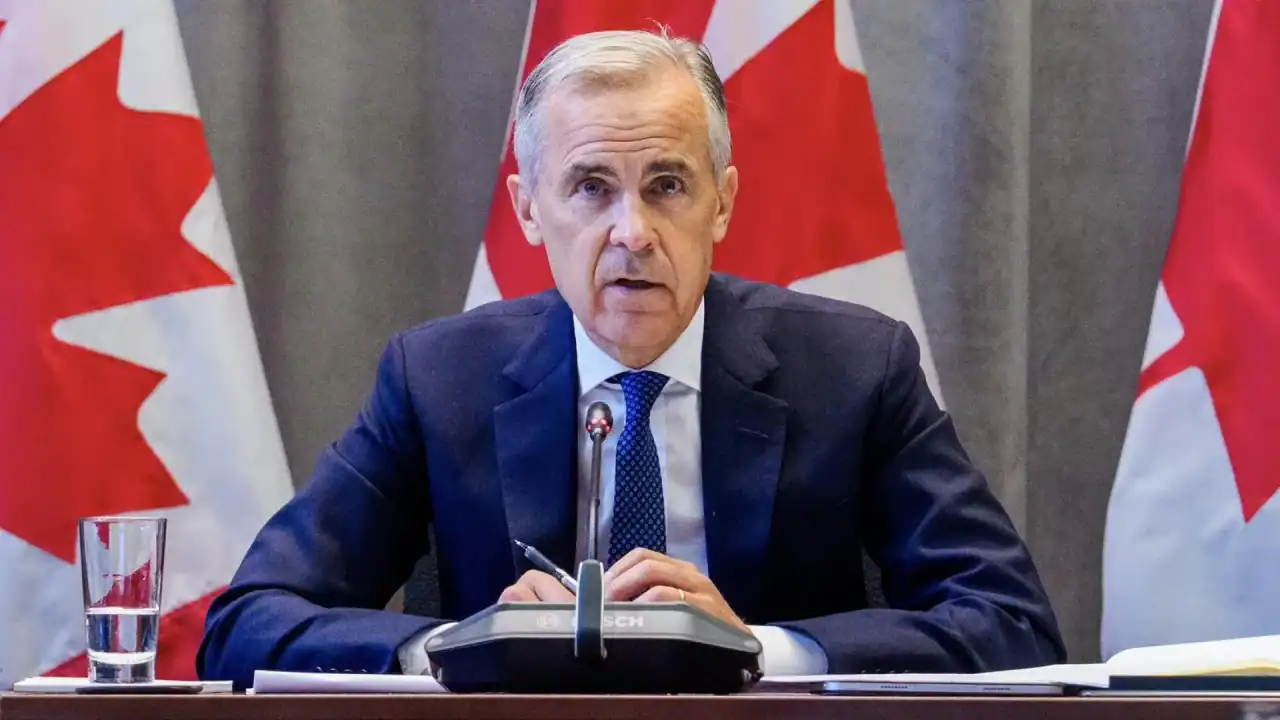
 PM Mark Carney is licensed under Creative Commons.
The province of Quebec recently re-instated a bill that imposed quotas compelling streaming services to maintain certain percentages of French-language and locally produced content. This bill compounds the issues of Canada’s 2023 “Online Services Act” (Bill C-11), which set these quotas at a national level, risking the creation of a dual track regulatory system that disproportionately harms American service providers.
Content quotas are often justified as a means to preserve and promote local culture, requiring streaming services to include a certain percentage of locally produced films in their content libraries. These quotas are detrimental to innovation and consumers: American streaming services rose to global prominence by offering a significant variety of content and robust recommendation algorithms to sort through it. Modern streaming services already provide a significant amount of foreign language and foreign-produced films on their platforms to cater to large foreign audiences.
Content restrictions are often paired with mandatory reinvestment schemes–such as Quebec’s proposed bill—that compel companies to reinvest profits into local projects. Forcing companies to comply with arbitrary quotas and siphon investment forces them to cull their diverse libraries while investing in low-risk or low-effort products to satisfy regulation.
This pattern has played out in countries that have enacted content quotas. In France, mandated local investment and quotas were responsible for an estimated 25% rise in production costs, while the EU’s own content obligations have conceded a decline in content offerings and a rise in consumer prices. Rising production costs, declining content diversity, and rising prices for consumers have left European consumers reeling from ‘content fatigue’ to cancel subscriptions en masse. In 2025, one in 10 all Europeans reportedly considered cancelling a streaming subscription, with 35% blaming recent price hikes and 55% citing a lack of “compelling content.”
Canada’s C11 Bill has already begun following the path of Europe, raising prices and trimming libraries. Quebec’s proposal further complicates Canada’s regulatory environment, stacking additional compliance burdens on American streaming companies. These restrictions are anti-consumer—reducing content offerings while causing price hikes—anti-business—raising production costs, cutting into thin margins, and forcing companies into unprofitable investments—and anti-american—targeting a sector dominated by U.S. tech companies.
At a time when the U.S. and Canada continue to work towards a more reciprocal trade relationship, laws such as Canada’s Online Services Act and Quebec’s proposed content quotas must be addressed for what they are: discriminatory practices that solely benefit government balance sheets.