

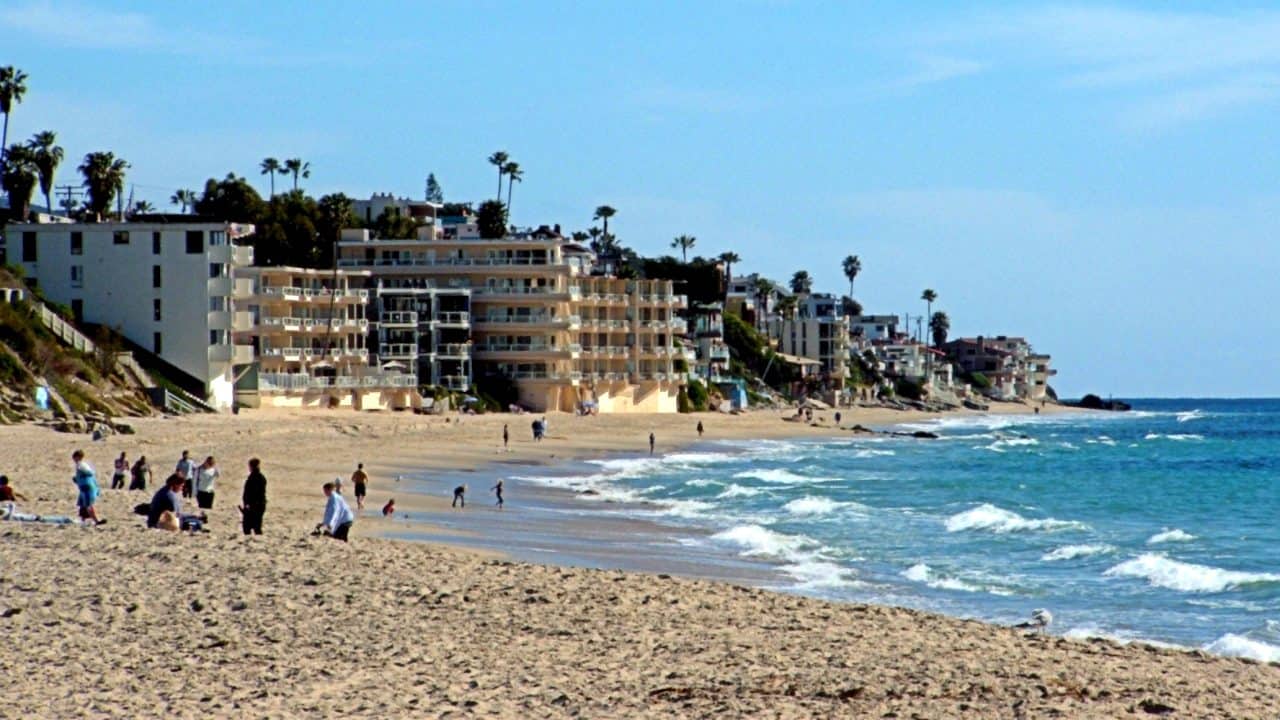
 Laguna Beach condos by Kevin Zollman is licensed under Creative Commons Attribution-Share Alike 3.0 Unported license
There is a lot going for California. Beautiful beaches, great food, and a vibrant music scene, to name a few. Unfortunately, living in paradise costs an arm and a leg: California leads the nation in cost of living, pushing Californians out of the state by the millions, particularly to lower-cost and lower-tax jurisdictions such as Texas, South Carolina, and Florida. The good news is that Republicans and Democrats alike are beginning to tackle the affordability crisis head-on with housing reforms that make it easier to build.
In a healthy market, housing suppliers would see rising prices as a signal to build more. However, onerous regulations such as the California Environmental Quality Act (CEQA) block construction by requiring years of costly reviews on top of existing federal mandates.
Luckily, legislation is working to address it. AB 1903, which passed the California Assembly unanimously and cleared the Senate Judiciary Committee, would help the state develop more condominiums and townhouses by protecting builders from frivolous lawsuits.
Under current law (SB 800), a homeowner needs only to prove that the builder of their home did not meet a given standard. This low barrier creates an environment in which opportunistic inspectors and homeowners’ associations (HOAs) can pursue claims even when a defect has not created actual risk to the homeowner or damage to the home. According to industry experts, fewer than 15% of claims involve meaningful construction defects, with most involving minor cosmetic defects (e.g., chipped paint, stucco cracking, etc.).
All of this leads to housing becoming more costly. Because of builders’ increased vulnerability to lawsuits, much of their legal costs are passed onto the consumer. According to the Terner Center for Housing Innovation and the San Francisco Bay Area Planning and Urban Research Association, condominiums and townhouses in Los Angeles pay an insurance premium of $8,100 to $18,300 due to this risk.
What makes this situation even worse is that lenders like Fannie Mae have blacklisted entire condominium complexes involved in active litigation, leading to families interested in condo units having fewer mortgage and refinancing options and shackling existing homeowners to their properties by making it harder for them to sell. Increased builder risk liability also naturally translates into less housing being built, with the Bay Area and Southern California experiencing a 90% decline in new condominium units since peaking in 2005. Under the perilous legal environment created by SB 800, it is no wonder that homebuilders and California families are packing up and moving out of the state.
AB 1903 attempts to remedy this situation by preventing homeowners from recovering investigative costs, limiting testing of structural components, and requiring an affirmative demonstration of actual damages. These legislative changes deprive HOAs and insurance companies of the opportunity to line their pockets by exploiting the law at the expense of building companies. Without the ever-present threat of frivolous lawsuits, homebuilders can invest their capital in building more housing.
AB 1903 also helps homebuilders address potential problems outside of court. Under the legislation, builders would have additional time to correct flaws and defects in new housing construction before facing litigation. Additionally, homeowners must include specific claims in their complaint, including identifying the location of the defect. This benefits builders, who can simply fix any real issues on their own volition and avoid a costly, drawn-out legal fight. At the same time, AB 1903 still allows the litigation process to occur if builders refuse to repair a defect. This balances the concerns of both parties, creating a fairer legal environment.
At a time when the California Dream has evolved into the California Nightmare, the state is at last pursuing measures to ensure housing development can proceed. AB 1903 is a step in the right direction in making sure developers are free to build starter homes without incurring unnecessary legal costs.
In addition to passing AB 1903, California should consider advancing a broader affordability agenda by repealing or limiting taxes that add friction to the housing market. For example, real estate transfer taxes, which are collected in 57 counties and 26 charter cities, serve as another constraint on development. The clearest demonstration of this is Measure ULA in Los Angeles, which implemented a tax of anywhere from 4% to 5.5% on the sale of properties valued over $5 million. Since passing in 2023, this hefty new tax has already defunded schools, reduced non-single family transactions by up to 50% and pushed developers out of the city. Fortunately for families looking to buy a new home, AB 736 would cap these taxes at 1.5%.
These solutions do not have to be purely partisan. For example, state Democrats and the Howard Jarvis Taxpayers Association have put forward a November ballot measure that would close a loophole in Prop 13, California’s existing property tax cap. This year’s measure, Proposition 43, would restrict any municipality from increasing or imposing any local taxes without the approval of a 2/3 supermajority of voters, overruling a California Supreme Court decision known as the Upland decision that allowed for a simple majority of voters to pass “special” taxes for specific purposes – a loophole that has since been heavily abused.
California’s affordability crisis will not be fixed if lawmakers stick their heads in the sand. With a fleeing tax base and exodus of homebuilders due to burdensome regulations and high costs, California’s legal system needs reform. Bills like AB 1903 and AB 736, along with Proposition 43, are a step in the right direction to creating a more affordable California.