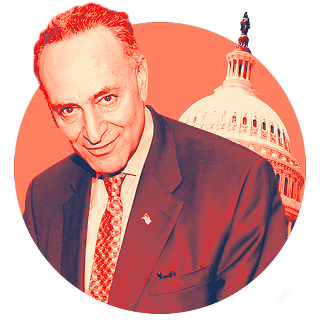
 "Bernie Sanders" by Gage Skidmore on Flickr is licensed under CC BY-SA 2.0: https://bit.ly/3Yk2Vp7
Tomorrow, the U.S. Senate Committee on Health, Education, Labor, and Pensions (HELP) will hold a mark-up on numerous bills including S. 3315, the Health Care Cybersecurity & Resiliency Act of 2025. Unfortunately, self-proclaimed socialist Senator Bernie Sanders (I-Vt.) has filed amendments to this bill which include imposing international reference pricing (a most-favored-nation drug pricing-style price control) and a ban on direct-to-consumer (DTC) advertising of prescription drugs.’
These troubling policies have no place in a bipartisan bill like S. 3315, a bill designed to prevent cyberattacks on healthcare organizations.
ATR urges Republican Senators on the HELP Committee to oppose these disastrous amendments.
In addition to doing nothing to address foreign freeloading, international reference pricing would reduce access to new cures and reduce U.S. global competitiveness, ceding ground to China. Further, banning DTC advertising would crush competition and keep patients in the dark. Consumers do not need government bureaucrats gate-keeping medical information.
Members Should Oppose Importing Foreign, Socialist Drug Price Controls
Conservatives are united against international reference pricing – a government price-control scheme that imports failed foreign policies into the U.S. healthcare system. This hurts patients, stifles innovation, and weakens America’s global leadership in biotechnology.
Americans for Tax Reform, with 52 other free market groups and advocates, recently released a coalition letter urging members of Congress to oppose the codification of most-favored-nation (MFN) drug pricing. This letter outlines four primary arguments against these price control models:
Reference pricing weakens the United States’ position as the world’s biotech leader, ceding ground to China: We cannot handicap our pharmaceutical manufacturers while China advantages their own.
Price controls have NEVER worked: From Ancient Babylon to 21st century NYC, price controls have always resulted in devastation.
Reference pricing would do nothing to stop foreign freeloading: Instead, it accepts foreign price controls as a benchmark rather than confronting the governments that impose them.
Reference pricing would reduce access to new cures: Of the 0.05 percent of drugs that make it from drug discovery to clinical trials, only 12 percent are approved by the FDA. Increasing the risk in this already-risky industry will devastate innovation.
To read the letter in full, click here.
Members Should Oppose Banning DTC Advertising
Direct-to-consumer advertising (DTCA) simply relays information to consumers. Like all ads, they must be truthful and not misleading. Outside of ensuring this basic standard, government bureaucrats have no business deciding what medical information Americans are allowed to see in ads.
DTCA empowers patients to play a meaningful role in their own care.
One poll notes that 55 percent of consumers say they have requested a specific prescription drug from their doctor after seeing an ad. Presumably, for many, this led to life-improving care they otherwise would not have gotten. Far from undermining the patient-doctor relationship, these ads strengthen it by prompting informed conversations. When patients are aware of treatment options, they are better equipped to advocate for themselves.
Outside of just increasing sales of a specific drug, DTC ads play a key role in informing patients of pertinent medical information, increasing doctor visits and diagnoses, and destigmatizing certain medical conditions.
Unbranded disease awareness campaigns make up 15 percent of DTC spend. Further, 33 percent of adults report looking for health information related to symptoms mentioned in TV ads immediately after viewing. Studies show that “DTC advertising increases the use of both promoted drugs and non-advertised generic competitors through both increased treatment initiation and improved medication adherence.” As shown by researchers from John Hopkins University, Cornell University, University of Pennsylvania, and University of Southern California, drug advertisements also increase doctor visits; in many cases, these visits don’t even result in a prescription. Shutting these ads down would mean fewer informed patients and more missed chances to catch problems early.
Banning DTCA would decrease market competition, limiting patient options and increasing prices.
Consumers being aware of alternatives supports competitive pricing dynamics, ensuring that no single drug can dominate without facing pricing pressures.
Without DTCA, most advertising activity will happen between pharmaceutical companies and doctors’ offices. Notably, only companies with established markets and/or deep financial resources can maintain extensive relationships with doctors’ offices through costly sales efforts (i.e. individual representatives making continuous visits).
Smaller or newer companies/drugs often lack these resources, relying more heavily on DTCA to reach patients. In this way, advertising can serve as a counterbalance to the influence of incumbents, increasing competition and giving consumers the ability to choose what is best for them amongst numerous options.
While these proposals are unsurprising coming from a member like Mr. Sanders, Republicans on the HELP Committee should reject these unrelated, harmful amendments. Importing foreign price controls and banning DTC advertising would undermine innovation, restrict access to new cures, limit options, and put bureaucrats between patients and their care.