

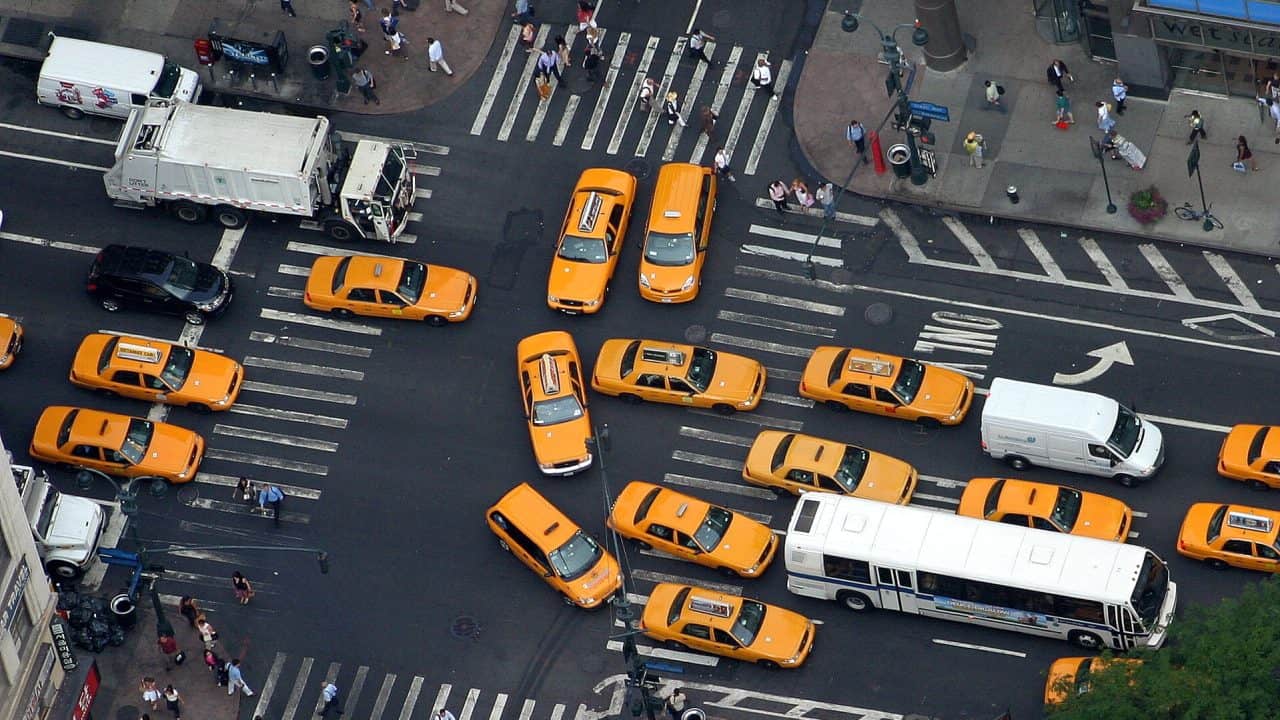
 New York Traffic, by Brian Jeffery Beggerly, licensed under CC
When Governor Kathy Hochul postponed the infamous congestion pricing program, she cited a “a fear of unintended consequences for New Yorkers.”. Between the sudden, last minute decision to pause the program and now, it’s unclear what has changed, but Hochul seems to believe something did. Just a week ago, she unleashed the policy to the public despite its nearly 70% disapproval rate.
There are numerous reasons why a congestion tax is a bad idea, which ATR has written about extensively. However, if the recent mainstream media narrative about the tax is to be believed, it’s a successful policy because 7% fewer people have been driving in the congestion zone.
This short term, almost anecdotal statistic misses all the damage the ill-conceived congestion pricing program will cause.
The congestion tax hurts local businesses, it hurts blue-collar workers, and, insultingly, it won’t plug the supermassive $33 billion budget black-hole the MTA is facing. So little, in fact, that state lawmakers will likely consider additional tax hikes or “revenue raisers” for the MTA.
As it turns out, companies truck in their goods. Congested areas are congested because they’re the way to get to midtown and downtown Manhattan. Businesses are now stuck having to raise prices for every good that must be trucked in, and storefronts and restaurants that rely on people driving to patronize them will be down revenue. Either congestion pricing hurts the economy by keeping people home or by driving up the price of everything at a time of high inflation.
Moreover, anyone who has no alternative but to commute via car — many of whom live outside of NY because of its prohibitive cost — and anyone who drives a taxi or for a rideshare service must pay a fine for merely attempting to make a living. These are the people who liberals claim to advocate for.
This congestion tax is a tax hike and bad policy. It undermines the incentive for the MTA to provide good service as fed-up riders who leave the system will still see their hard-earned dollars go to the MTA through the congestion fee.
Even Hochul herself had a moment of rare clarity… six months ago, when she made the exact same common-sense argument ATR has been touting since the affair first began.
“Though I recognize and support the need to reduce emissions for the health of our region, this goal must not be achieved by driving residents, businesses, and workers out of the city, “she said.